The Morality of a Trillionaire: Why Elon Musk’s Wealth Raises Ethical Red Flags
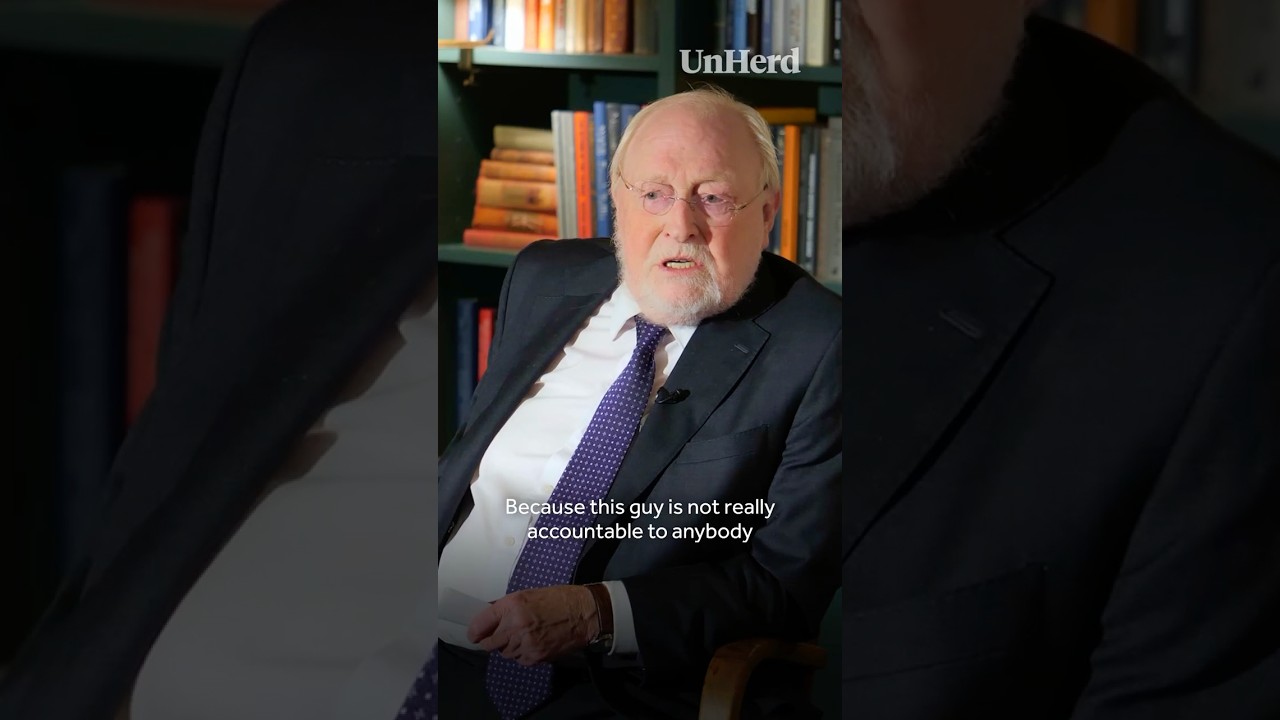
In a recent commentary, former British Labour Party leader Neil Kinnock delivered a sharp critique of extreme wealth concentration, using Elon Musk’s projected trillionaire status as his central example. Kinnock’s argument is not about personal animosity toward the tech entrepreneur, but rather a f
In a recent commentary, former British Labour Party leader Neil Kinnock delivered a sharp critique of extreme wealth concentration, using Elon Musk’s projected trillionaire status as his central example. Kinnock’s argument is not about personal animosity toward the tech entrepreneur, but rather a fundamental question of moral economy: Can one individual’s accumulation of astronomical wealth be justified while systemic poverty persists? This article distills Kinnock’s core arguments into a clear, factual analysis of why such wealth distribution is increasingly viewed as an ethical problem, not just an economic statistic.
The Core Argument: Inequality as a Systemic Flaw
Kinnock’s primary assertion is that the existence of a trillionaire is not a sign of a thriving economy, but rather a symptom of a broken distribution system. He argues that wealth of this magnitude is not created in a vacuum; it is extracted from the labor and consumption of millions. When one person controls resources equivalent to the GDP of entire nations, the balance of power shifts dangerously. This is not about envy, but about the structural inability of such a system to provide fair opportunities for the majority.
Defining the Problem: Beyond "Rich" vs. "Poor"
The critique moves beyond the simplistic binary of rich versus poor. Kinnock emphasizes that the issue lies in the scale of the disparity. A millionaire or even a billionaire can still operate within a framework where their success is theoretically replicable. A trillionaire, however, exists in a realm where their financial leverage can influence global policy, suppress competition, and create a permanent class of economic vassals. The term "trillionaire" is not just a number; it represents a concentration of power that undermines democratic processes and market fairness.
The Moral Dimension: What Wealth Owed
The ethical objection is rooted in the concept of social contract. Kinnock’s perspective suggests that wealth is a collective product—built on public infrastructure, educated workforces, and legal frameworks. When an individual captures a disproportionate share of the value generated by that collective system, they are effectively defaulting on an unspoken debt to society. The argument is not that Musk should not be wealthy, but that the current trajectory allows for a level of accumulation that is morally indefensible when basic needs remain unmet globally.
The Practical Consequence: A Distorted Future
Kinnock warns that normalizing trillionaire wealth sets a dangerous precedent. It incentivizes a race to the bottom for tax policies and labor rights, as nations compete to attract capital. The result is a future where innovation is driven not by human need, but by the speculative whims of a hyper-wealthy few. This distorts research priorities, suppresses wages, and widens the gap between the owners of capital and the providers of labor, creating social instability that ultimately harms economic growth for everyone.
Conclusion: A Question of Priorities
Kinnock’s critique forces a reevaluation of what we celebrate as success. The moral wrong is not the existence of wealth, but the societal acceptance of a system that permits such extreme concentration without reciprocal obligation. The conversation is not about tearing down successful individuals, but about demanding a structure where prosperity is a shared experience, not a hoarded privilege. As the possibility of a trillionaire becomes reality, the question is no longer whether we can afford to address inequality, but whether we can afford not to.
Related Editorials
Title: Žižek’s Provocation: Is Elon Musk an Unwitting Communist?
Slavoj Žižek, the Slovenian philosopher known for his provocative cultural critiques, has thrown a rhetorical grenade into the tech world. In a recent short video, he suggests that Elon Musk, the billionaire CEO of Tesla and SpaceX, might be functioning as a communist—albeit in a way that defies tr
Neil Kinnock’s Verdict: Why Starmer’s Labour Failed to Inspire
In a rare and pointed critique, former Labour leader Neil Kinnock has offered a stark diagnosis of why Sir Keir Starmer’s party is struggling to connect with voters. Speaking in a recent interview, Kinnock—who led Labour from 1983 to 1992—did not mince words.
The Greatest Fraud in Human History: Ron Paul on the Fiat Money System
In a recent episode of The Econoclasts, former Congressman and presidential candidate Ron Paul delivered a sweeping indictment of the modern financial system, calling it nothing short of a global deception. His argument, though familiar to libertarian circles, cuts to the core of how money is creat
The Populist Warning from a Former Labour Leader: Neil Kinnock on the Crisis of Political Trust
For decades, Neil Kinnock stood at the heart of British politics, leading the Labour Party through some of its most turbulent years. Now, speaking at an UnHerd Live event, the former leader offers a stark diagnosis of the current political landscape.