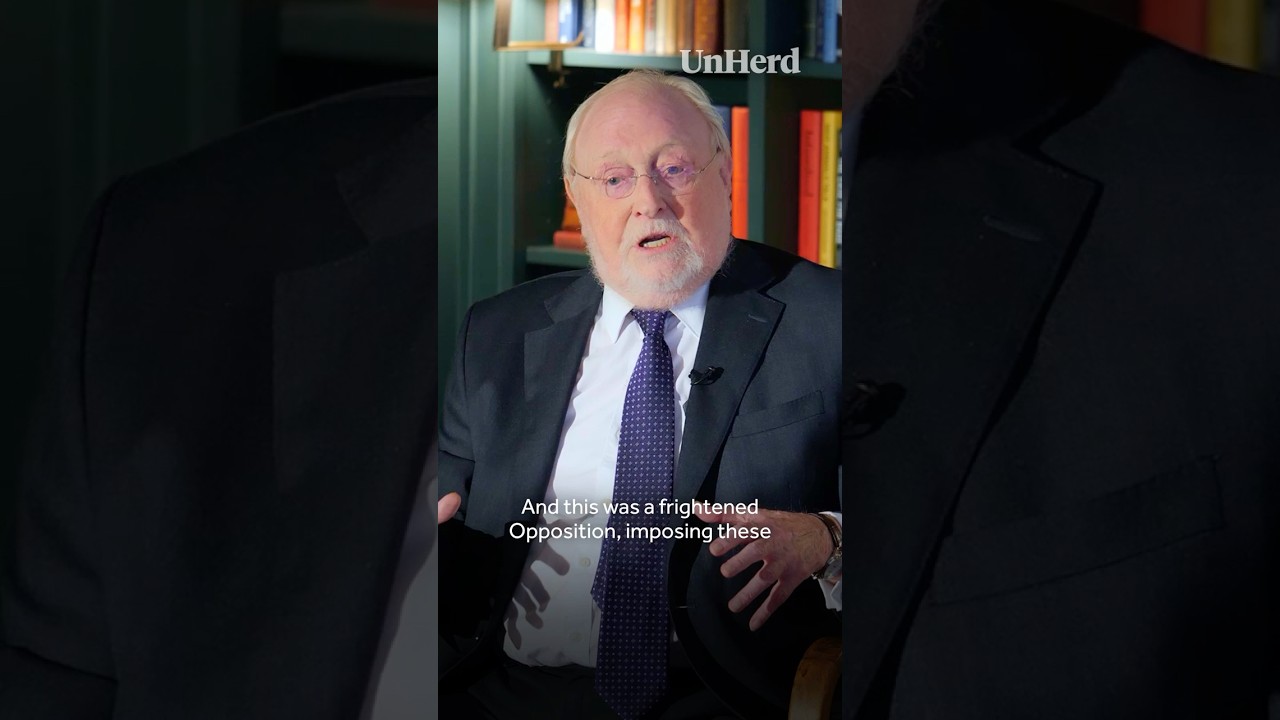
Neil Kinnock’s Verdict: Why Starmer’s Labour Failed to Inspire
In a rare and pointed critique, former Labour leader Neil Kinnock has offered a stark diagnosis of why Sir Keir Starmer’s party is struggling to connect with voters. Speaking in a recent interview, Kinnock—who led Labour from 1983 to 1992—did not mince words.
In a rare and pointed critique, former Labour leader Neil Kinnock has offered a stark diagnosis of why Sir Keir Starmer’s party is struggling to connect with voters. Speaking in a recent interview, Kinnock—who led Labour from 1983 to 1992—did not mince words. His analysis cuts to the heart of a fundamental political problem: a party that has lost its ability to articulate a clear, compelling vision.
The Core Failure: A Missing Narrative
Kinnock argues that Labour’s primary failure under Starmer is not a lack of policy detail, but a lack of narrative. “People don’t just vote for a list of promises,” he explained. “They vote for a story about the future—a story that makes sense of their lives and gives them hope.”
According to Kinnock, Starmer’s Labour has become too cautious, too managerial. The party, he suggests, has focused on proving its competence and distancing itself from the Corbyn era, but has neglected the emotional and ideological work of building a positive, unifying message. The result is a party that appears “technocratic” rather than “transformative.”
The Danger of Playing It Safe
Kinnock’s critique echoes a broader concern among Labour veterans: that the party has become so afraid of losing that it has forgotten what it stands for. He warned that in trying to appeal to everyone, Labour risks appealing to no one. “If you don’t give people a reason to be excited, they won’t turn out,” he said. “And if they don’t turn out, you don’t win.”
He drew a direct parallel to his own leadership struggles in the 1980s, when Labour was deeply divided and out of power. Kinnock’s eventual success came not from moderation alone, but from a clear, principled message that rejected extremism while still offering a distinct alternative.
The Verdict: A Party Without a Compass
For Kinnock, the current Labour leadership is making a strategic error. By focusing almost exclusively on opposing the Conservatives and managing the economy, Starmer has failed to articulate what a Labour government would actually do to change people’s lives. “The public can smell uncertainty,” Kinnock concluded. “And right now, they smell it coming from Labour.”
Without a bold, coherent story about the future, Kinnock warns, Labour will remain trapped in the political wilderness—not because the party lacks talent or policy, but because it lacks the one thing voters truly need: a reason to believe.
Related Editorials
The Populist Warning from a Former Labour Leader: Neil Kinnock on the Crisis of Political Trust
For decades, Neil Kinnock stood at the heart of British politics, leading the Labour Party through some of its most turbulent years. Now, speaking at an UnHerd Live event, the former leader offers a stark diagnosis of the current political landscape.
Peter Hitchens’ Brutal Verdict on Tony Blair: The Legacy of New Labour’s Broken Promises
Article: In a recent sharp commentary, British journalist and author Peter Hitchens delivered a scathing critique of former Prime Minister Tony Blair and the New Labour project. His argument cuts to the heart of a political era that promised modernization but, in Hitchens’ view, delivered a profoun
Why One Political Candidate Calls for a “French Revolution” in Britain
In a provocative statement that has sparked debate, political candidate Stella Tsantekidou has argued that Britain needs a radical overhaul reminiscent of the French Revolution. Speaking in a recent video, Tsantekidou did not call for literal guillotines or regicide, but rather a fundamental restru
The Morality of a Trillionaire: Why Elon Musk’s Wealth Raises Ethical Red Flags
In a recent commentary, former British Labour Party leader Neil Kinnock delivered a sharp critique of extreme wealth concentration, using Elon Musk’s projected trillionaire status as his central example. Kinnock’s argument is not about personal animosity toward the tech entrepreneur, but rather a f
Britain’s Dangerous Delusion: Peter Hitchens on a Nation in Denial
In a sharp critique that has sparked debate across the political spectrum, British journalist and author Peter Hitchens argues that the United Kingdom is suffering from a profound and dangerous case of self-deception. Speaking in a recent interview, Hitchens contends that the country’s political an
Britain’s Real Crisis Isn’t a Bad Leader—It’s a Broken State
For years, the world has watched Britain cycle through prime ministers with alarming frequency, from Brexit turmoil to the brief, chaotic tenure of Liz Truss. Yet focusing on the failures of individual leaders misses the deeper, more systemic problem.