The Greatest Fraud in Human History: Ron Paul on the Fiat Money System
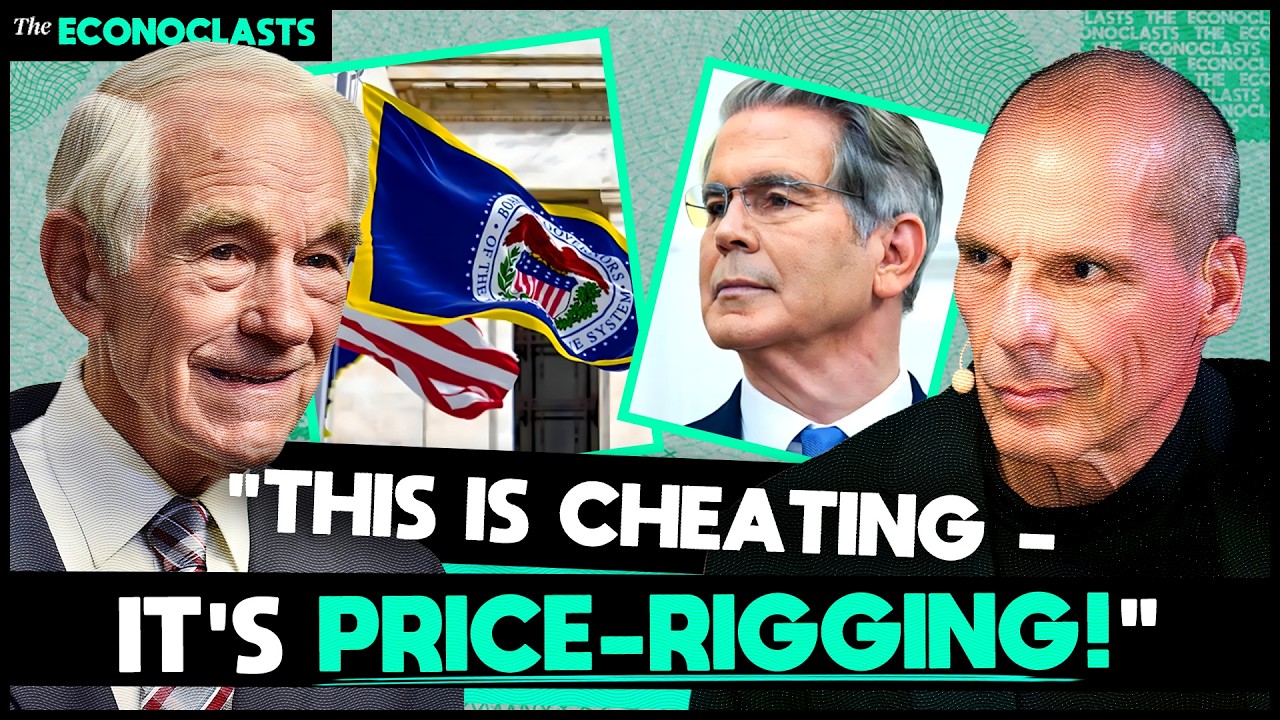
In a recent episode of The Econoclasts, former Congressman and presidential candidate Ron Paul delivered a sweeping indictment of the modern financial system, calling it nothing short of a global deception. His argument, though familiar to libertarian circles, cuts to the core of how money is creat
In a recent episode of The Econoclasts, former Congressman and presidential candidate Ron Paul delivered a sweeping indictment of the modern financial system, calling it nothing short of a global deception. His argument, though familiar to libertarian circles, cuts to the core of how money is created, valued, and controlled. For the uninitiated, Paul’s thesis is stark: the current monetary order is not a system of stable value, but a mechanism of silent wealth transfer.
Paul’s central target is the fiat currency system—a monetary regime where money has no intrinsic value and is not backed by a physical commodity like gold. Instead, its worth is derived solely from government decree and public trust. While this system allows for flexible monetary policy, Paul argues that it has been weaponized by central banks and governments to manipulate economies and erode purchasing power over time.
The former Texas lawmaker does not mince words. He describes the transition away from the gold standard—completed in the 20th century—as the enabling act for this "fraud." According to Paul, when currencies were tied to gold, governments faced a hard constraint on their spending. They could not print money at will because every new note required a corresponding reserve of the precious metal. The removal of this anchor, he contends, gave governments a blank check to fund deficits and wars without immediate public backlash.
The mechanism of this alleged fraud is inflation. Paul explains that when a central bank expands the money supply, it does not create wealth; it merely dilutes the value of existing currency. This process acts as a hidden tax, disproportionately harming savers, the elderly, and those on fixed incomes. The working class sees wages rise, but prices rise faster, leaving them in a perpetual race they cannot win. Meanwhile, those with access to cheap credit—often the wealthy and large corporations—can acquire assets before the price increases, effectively benefiting from the very system that punishes the prudent.
Paul also draws a direct line from monetary policy to geopolitical conflict. He argues that the ability to finance wars through money printing, rather than through immediate taxation, removes the necessary friction of public consent. If citizens had to pay for a war directly through higher taxes, he suggests, they would be far less likely to support it. The fiat system, by deferring the cost, allows for endless military engagements without immediate economic consequence for the electorate.
The interview also touches on the psychological aspect of this system. Paul emphasizes that the "fraud" persists because it is institutionalized. People trust the dollar, the euro, or the yen because they have never known an alternative. This trust, however, is misplaced. He points to historical examples, from the Roman denarius to the German Reichsmark, where currencies were debased to the point of worthlessness, leading to social collapse.
Despite the grim diagnosis, Paul does not offer a simple prescription for reform. He concedes that a return to the gold standard is politically unlikely in the current climate, given the entrenched interests of central banks and the financial sector. However, he advocates for a radical shift in mindset: a return to sound money principles, which he defines as currency that holds its value over time and cannot be manipulated by political whims.
For the average reader, Paul’s critique raises uncomfortable questions about the nature of economic growth. If inflation is constant, are we truly getting richer, or are we just running faster on a treadmill? His answer is clear: unless the money supply is anchored to something real, economic "growth" is often an illusion, fueled by debt and speculation rather than actual productivity.
The conversation serves as a reminder that the debate over monetary policy is not just a technical issue for economists. It is a fundamental question about power, accountability, and the social contract. Whether one agrees with Paul’s call to end the Federal Reserve or his advocacy for competing currencies, his central warning is difficult to dismiss: a system that quietly erodes the value of your labor and savings is a system that deserves scrutiny.
In a world where digital currencies and central bank digital currencies (CBDCs) are on the horizon, Paul’s warnings feel increasingly prescient. The tools of monetary control are becoming more sophisticated, but the underlying dynamics remain the same. The question is whether the public will continue to accept the illusion of stability—or begin to demand a monetary system that is honest by design.