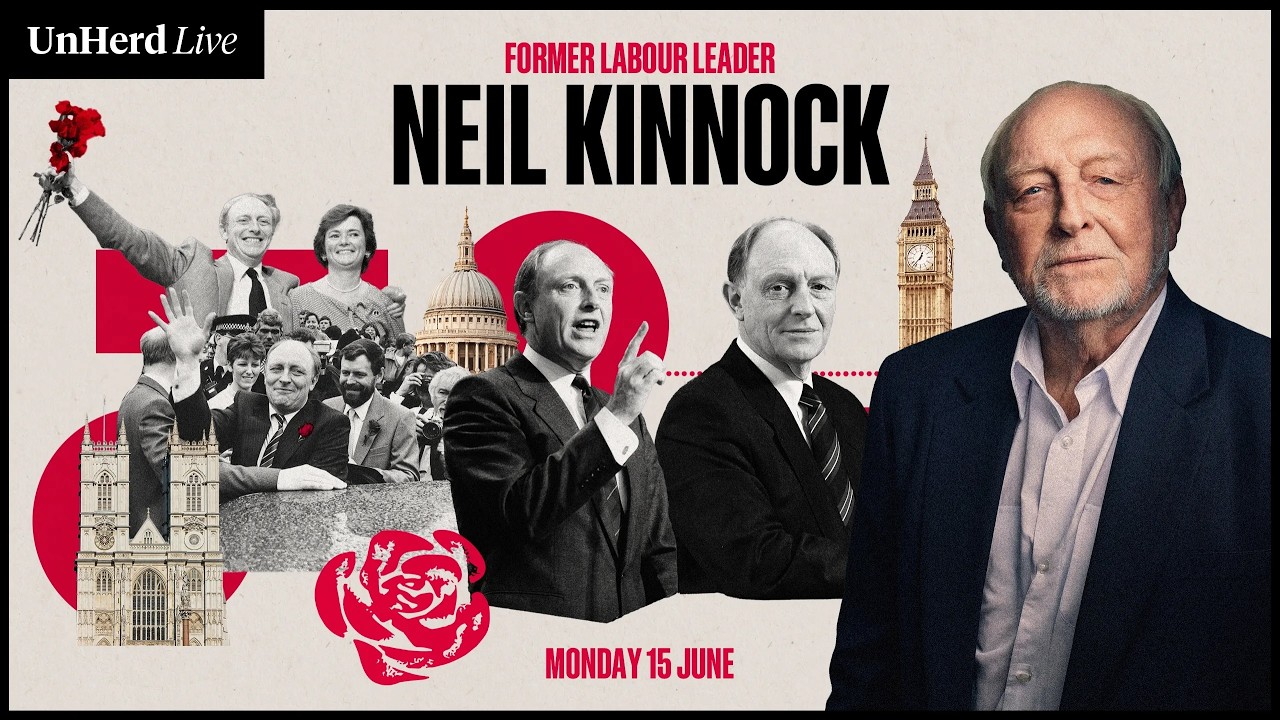
### The Populist Warning from a Former Labour Leader: Neil Kinnock on the Crisis of Political Trust
For decades, Neil Kinnock stood at the heart of British politics, leading the Labour Party through some of its most turbulent years. Now, speaking at an UnHerd Live event, the former leader offers a stark diagnosis of the current political landscape.
For decades, Neil Kinnock stood at the heart of British politics, leading the Labour Party through some of its most turbulent years. Now, speaking at an UnHerd Live event, the former leader offers a stark diagnosis of the current political landscape. His message is not about policy specifics, but about a deeper, more dangerous rot: the collapse of trust and the rise of a politics driven by anger rather than reason.
Kinnock argues that the political establishment has failed to keep pace with the lived reality of ordinary citizens. The core problem, he suggests, is not simply economic inequality, but a profound sense of abandonment. Many people feel that the institutions designed to represent them—from Parliament to the media—no longer listen. This vacuum of credibility is the breeding ground for populism.
The former leader draws a clear distinction between healthy political debate and the corrosive nature of modern populism. Healthy politics, he notes, involves compromise, evidence, and a respect for democratic processes. Populism, by contrast, thrives on simplification. It offers easy enemies and immediate solutions to complex problems. It tells people that their frustrations are the fault of a corrupt elite, and that only a strong, unaccountable leader can fix it.
Kinnock warns that this dynamic is not limited to one country or party. It is a global phenomenon, fueled by the speed of digital communication and the decline of traditional gatekeepers. When people feel that their vote does not change their circumstances, they become vulnerable to voices that promise to tear the system down. The danger, he emphasizes, is that this anger can be weaponized against democracy itself.
He points to a specific failure of modern governance: the inability to deliver tangible improvements in public services. When schools, hospitals, and infrastructure visibly decline, the promise of a better future rings hollow. People do not need grand ideological visions, Kinnock insists. They need to see that their taxes translate into functional services and secure jobs. The disconnect between political rhetoric and daily reality is the fuel for the populist fire.
The solution, according to Kinnock, is not to shout louder or to mimic the tactics of populists. It is to rebuild trust through competence and honesty. Politicians must be willing to admit mistakes and to explain the trade-offs inherent in any decision. They must stop treating the electorate as consumers to be marketed to, and start treating them as partners in a shared, difficult project.
Kinnock’s analysis is not a party-political attack. It is a warning from a veteran of the political trenches. He has seen the pendulum swing before. But he fears that the current erosion of trust is deeper and more dangerous than anything in recent memory. The institutions of democracy, he concludes, are only as strong as the belief people have in them. Once that belief is gone, the future becomes unpredictable—and potentially very dark.
This is not a story of left versus right. It is a story of trust versus contempt. And if the establishment does not learn to listen, Kinnock warns, it will be replaced by those who promise to burn it all down.
Related Editorials
Title: Neil Kinnock’s Verdict: Why Starmer’s Labour Failed to Inspire
Introduction In a rare and pointed critique, former Labour leader Neil Kinnock has offered a stark diagnosis of why Sir Keir Starmer’s party is struggling to connect with voters. Speaking in a recent interview, Kinnock—who led Labour from 1983 to 1992—did not mince words.
Title: Britain’s Dangerous Delusion: Peter Hitchens on a Nation in Denial
In a sharp critique that has sparked debate across the political spectrum, British journalist and author Peter Hitchens argues that the United Kingdom is suffering from a profound and dangerous case of self-deception. Speaking in a recent interview, Hitchens contends that the country’s political an
The Real Social Care Crisis: Why the Funding Debate Is Asking the Wrong Question
When Andy Burnham, the Mayor of Greater Manchester, speaks about social care, the nation listens. His recent interventions have centered on a familiar and pressing issue: the chronic underfunding of a system struggling to support an aging population.
The UK’s Economic Stagnation: A Global Warning
The United Kingdom is currently serving as a cautionary tale for developed economies worldwide. After decades of policy missteps, structural stagnation, and a loss of strategic direction, the nation finds itself trapped in a cycle of low growth, declining living standards, and political instability
Title: Britain’s Real Crisis Isn’t a Bad Leader—It’s a Broken State
Introduction For years, the world has watched Britain cycle through prime ministers with alarming frequency, from Brexit turmoil to the brief, chaotic tenure of Liz Truss. Yet focusing on the failures of individual leaders misses the deeper, more systemic problem.
Labour Says It Wants Jobs—So Why Is It Destroying Them?
The British Labour Party has long positioned itself as the party of workers. Its rhetoric champions employment, economic security, and the protection of livelihoods.