EU Races to Secure Arctic as Russia and China Circle
The European Union has unveiled a new Arctic strategy to counter growing Russian and Chinese influence as melting ice opens up new shipping routes and resource opportunities.
The European Union has launched a new strategy to expand its economic and military influence in the Arctic, as climate change opens new sea routes and intensifies global competition for resources [266751]. The plan, presented by European Commission President Ursula von der Leyen and EU foreign policy chief Kaja Kallas, places security at the center of Europe's Arctic priorities [266751].
"The Arctic has become a frontline in the global competition for power," Kallas said [266751]. Von der Leyen added that "new sea routes and resources are fueling strategic competition" [266751].
The strategy comes after the United States, Denmark and Greenland signed an agreement that significantly expands American military presence and influence in the region [266751]. Last week, President Donald Trump claimed on social media that "a massive oil, gas and mineral exploration is being prepared to begin in our new and beautiful Greenland" [266751]. Greenland's deputy mining minister, Jørgen Hammeken-Holm, disputed that characterization, saying "there are activities by American companies, but far from a gigantic exploration" [266751].
Despite plans for more economic and military activity, Brussels insists that "oil, coal and gas will remain underground, including in Arctic regions" [266751]. The EU says it remains committed to the Paris Agreement and a fair transition away from fossil fuels — a stance that puts it at odds with Trump's push for increased fossil fuel exploration [266751].
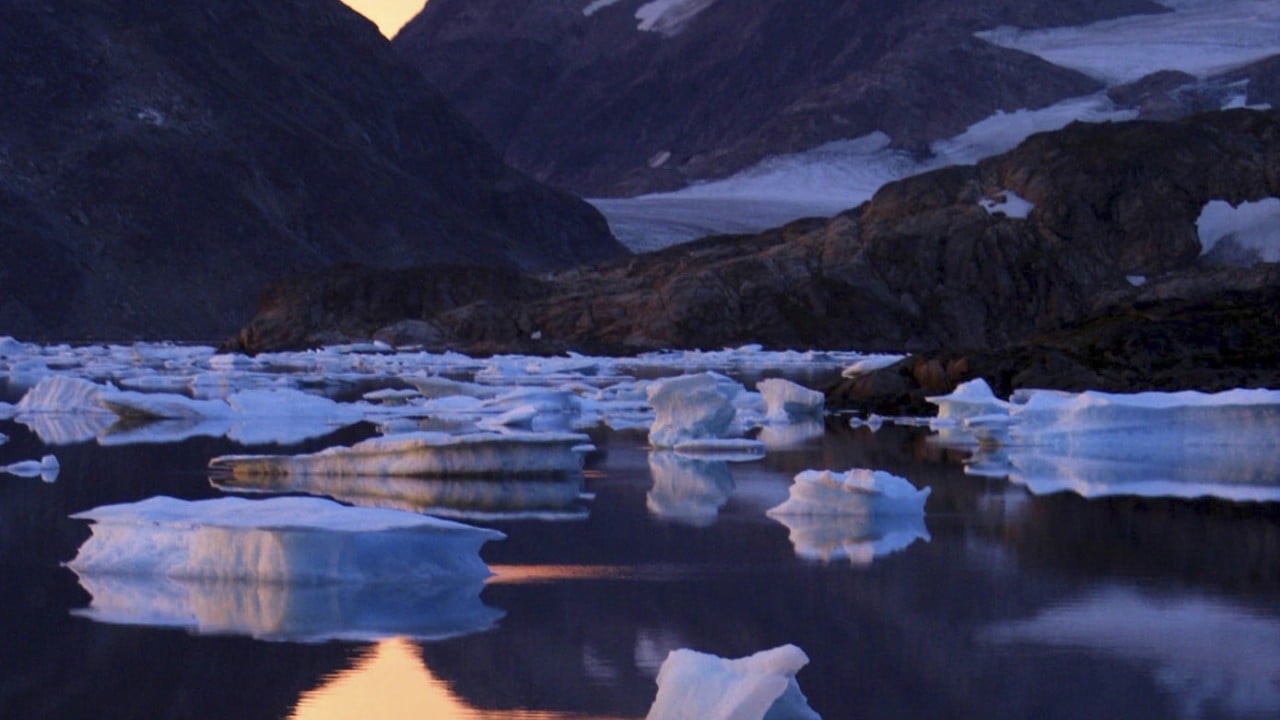
The Arctic is warming nearly four times faster than the global average [266751]. EU officials warn that changes there — including sea-level rise and disrupted weather patterns — directly affect Europe, which is heating at twice the global rate [266751].
Russia controls half of the Arctic's land and sea territory north of the Arctic Circle, and two-thirds of the region's inhabitants live on Russian soil [266751]. Moscow has the world's largest fleet of icebreakers, including nuclear-powered vessels [266751]. Since its 2022 invasion of Ukraine and the resulting Western sanctions, Russia has increased its use of the polar route to ship oil and gas to China [266751]. Beijing has shown strong interest in expanding shipping through what it calls the "polar silk road" [266751]. In 2024, China and Russia began joint patrols in the Arctic [266751].
The EU plans to work with NATO to protect critical infrastructure and boost Europe's ability to operate in Arctic conditions, including by expanding its icebreaker fleet [266751]. A new Maritime Security Hub will help member states share information and monitor maritime activity [266751]. The bloc will also support an Arctic Cable Hub to monitor and protect undersea cables in the North Atlantic and Arctic — infrastructure that has been targeted in Russian hybrid warfare against Europe [266751].
The Arctic is already heavily militarized. A report by the Simons Foundation counted up to 60 military bases in the region — about 30 belonging to Russia and 36 in NATO countries, mostly in Norway with 15, followed by Canada with 9, the United States with 8, and Greenland and Iceland [266751].
Economically, Brussels aims to develop renewable energy, rare earths and critical minerals, dual-use transport, digital connectivity and sustainable marine industries in the Arctic [266751]. It also plans to strengthen European infrastructure links — ports, rail connections, energy terminals and satellite and digital networks — within new Arctic trade and transport routes [266751]. A new EU Polar Research Hub will connect science with policymaking [266751].
More than half a million EU citizens live in the Arctic region [266751]. Denmark, Finland and Sweden are EU member states with Arctic territories, and the bloc maintains close ties with Norway, Iceland, the United Kingdom, Canada and the United States [266751].
"Events in the Arctic directly affect Europe's security, climate and prosperity," the European Commission said [266751].