Arctic Showdown: EU Moves In as Trump, Russia and China Circle
Part of composite article EU Races to Secure Arctic as Russia and China Circle View full article →
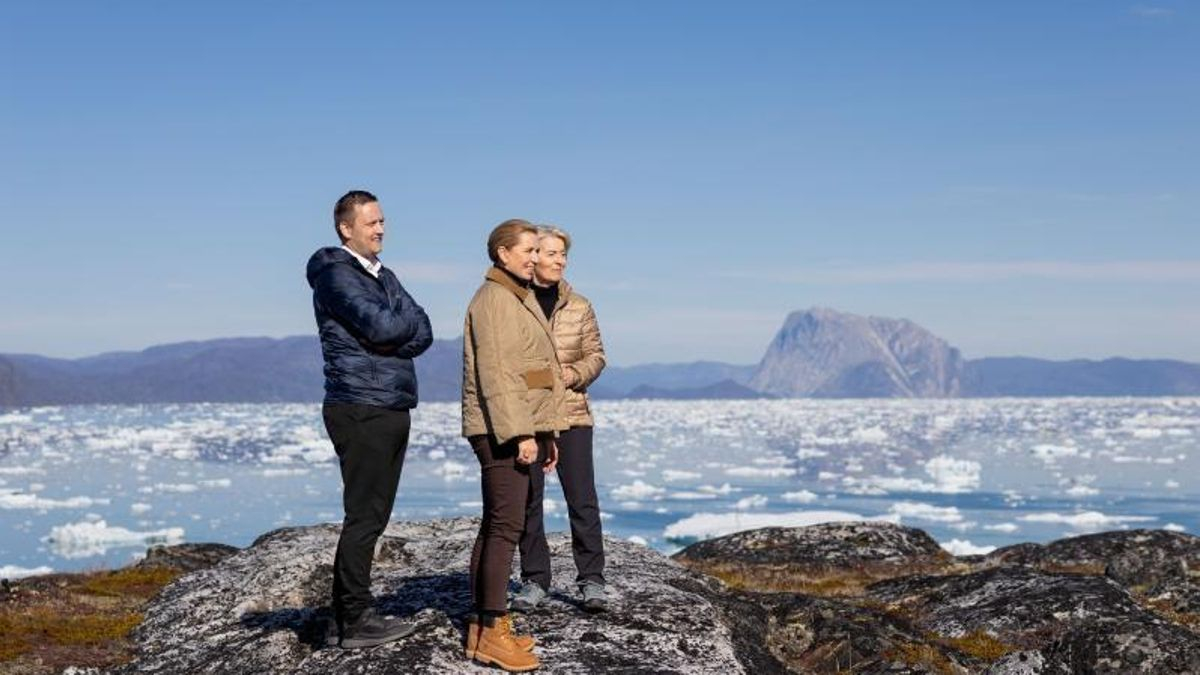
The European Union has launched a new strategy to expand its economic and military influence in the Arctic, as climate change opens new sea routes and intensifies global competition for resources.
European Commission President Ursula von der Leyen and EU foreign policy chief Kaja Kallas presented the plan on Tuesday. It places security at the center of Europe's Arctic priorities.
"The Arctic has become a frontline in the global competition for power," Kallas said. Von der Leyen added that "new sea routes and resources are fueling strategic competition."
The strategy comes after the United States, Denmark and Greenland signed an agreement that significantly expands American military presence and influence in the region. Last week, President Donald Trump claimed on social media that "a massive oil, gas and mineral exploration is being prepared to begin in our new and beautiful Greenland."
Greenland's deputy mining minister, Jørgen Hammeken-Holm, disputed that characterization. "There are activities by American companies, but far from a gigantic exploration," he said. "Many smaller explorations are underway, but it could take years before they become operational."
**Oil, Coal and Gas to Stay Underground**
Despite plans for more economic and military activity, Brussels insists that "oil, coal and gas will remain underground, including in Arctic regions." The EU says it remains committed to the Paris Agreement and a fair transition away from fossil fuels — a stance that puts it at odds with Trump's push for increased fossil fuel exploration.
The Arctic is warming nearly four times faster than the global average. EU officials warn that changes there — including sea-level rise and disrupted weather patterns — directly affect Europe, which is heating at twice the global rate.
**Russia and China's Growing Role**
Russia controls half of the Arctic's land and sea territory north of the Arctic Circle, and two-thirds of the region's inhabitants live on Russian soil. Moscow has the world's largest fleet of icebreakers, including nuclear-powered vessels.
Since its 2022 invasion of Ukraine and the resulting Western sanctions, Russia has increased its use of the polar route to ship oil and gas to China. Beijing has shown strong interest in expanding shipping through what it calls the "polar silk road." In 2024, China and Russia began joint patrols in the Arctic, according to CNN.
**Security and Infrastructure**
The EU plans to work with NATO to protect critical infrastructure and boost Europe's ability to operate in Arctic conditions, including by expanding its icebreaker fleet. A new Maritime Security Hub will help member states share information and monitor maritime activity.
The bloc will also support an Arctic Cable Hub to monitor and protect undersea cables in the North Atlantic and Arctic — infrastructure that has been targeted in Russian hybrid warfare against Europe. The EU will invest in smart technologies to detect threats, track "ghost fleet" vessels, detect illegal fishing and pollution, and improve search-and-rescue coordination.
The Arctic is already heavily militarized. A report by the Simons Foundation counted up to 60 military bases in the region — about 30 belonging to Russia and 36 in NATO countries, mostly in Norway (15), followed by Canada (9), the United States (8), Greenland and Iceland.
**Economic Ambitions**
Economically, Brussels aims to develop renewable energy, rare earths and critical minerals, dual-use transport, digital connectivity and sustainable marine industries in the Arctic. It also plans to strengthen European infrastructure links — ports, rail connections, energy terminals and satellite and digital networks — within new Arctic trade and transport routes. A new EU Polar Research Hub will connect science with policymaking.
More than half a million EU citizens live in the Arctic region. Denmark, Finland and Sweden are EU member states with Arctic territories, and the bloc maintains close ties with Norway, Iceland, the United Kingdom, Canada and the United States.
"Events in the Arctic directly affect Europe's security, climate and prosperity," the European Commission said.