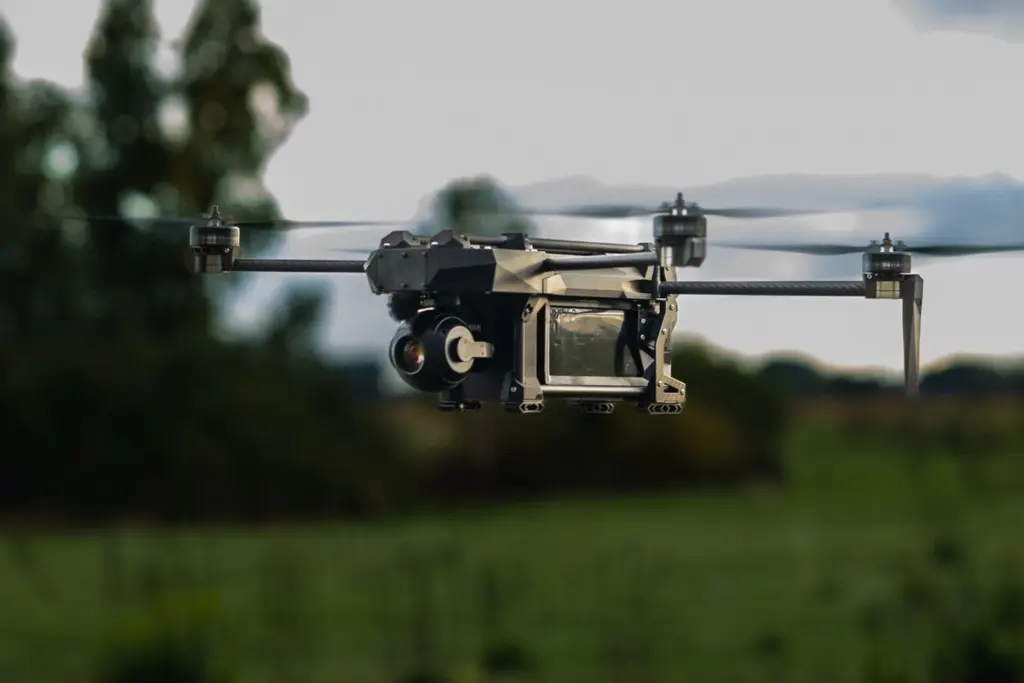
Russia’s New Jet Drone Hits 425 km/h as Ukraine’s Interception Rate Collapses Below 50%
Russia's Geran-5 drone is overwhelming Ukrainian air defenses with jet speed and jam-proof navigation, while Moscow's new Rassvet satellite network threatens to erase Ukraine's electronic warfare advantage entirely.
Russia has introduced a new jet-powered drone that is dramatically reducing Ukraine's ability to shoot it down, while simultaneously building a satellite network that could permanently end Kyiv's ability to jam Russian communications, according to multiple reports.
The new drone, called the Geran-5, flies at speeds of up to 425 kilometers per hour, powered by a jet engine rather than a standard propeller [253067][253056]. Ukraine now intercepts just over half of these drones — a steep drop from the more than 90% success rate Ukrainian forces previously achieved against older Shahed drones [253067]. Ukrainian interceptor drones have often failed to catch the Geran-5 since January, and Russia is building these jet drones by the thousands [253067].
A monitoring channel reports that the Geran-5 may also be able to resist satellite jamming, which Ukraine has relied on for years to disable Russian drones and battlefield communications [253081]. The drone can guide itself by matching images of the ground below, making it harder to disrupt electronically, and its higher speed compounds the challenge for Ukrainian interceptors [253081]. Ukrainian officials have not confirmed the system [253081].
The threat extends beyond the drone itself. Russia is developing a new satellite network called Rassvet, which works like Russia's own version of Starlink — the satellite internet service built by Elon Musk's SpaceX that uses thousands of small satellites in low orbit to provide internet access anywhere on Earth [253082]. Rassvet aims to do the same for Russia's military [253082].
Ukraine has spent years successfully jamming or shutting down Russian battlefield communications, but Rassvet may be the first system it cannot stop [253082]. Sanctions against the company building Rassvet will not halt the project, experts say — the firm can still move forward, though restrictions may make every satellite slower and more expensive to produce [253082]. If Russia launches the network quickly, Ukraine could lose a key advantage it has held for years on the electronic battlefield [253082].
The developments come as Russia has raised its military spending by 27%, setting a record budget as it prepares to expand its war effort into 2027 [253056]. Russia is launching mass drone attacks in a strategy aimed at forcing Ukraine's surrender by spring 2027, according to a new report [253073]. The strategy seeks to break Ukraine's will to fight through sustained pressure on cities and infrastructure [253073].
Despite these pressures, Ukrainian forces continue to fight back. On the Pokrovsk front, Ukrainian marines cleared 5 square kilometers of territory and captured two Russian soldiers [253073]. Ukrainian crews have also managed to shoot down a Geran-5 jet drone traveling at 425 kilometers per hour, demonstrating that interception remains possible even against the new threat [253056].
The drone threat is also affecting Ukraine's neighbors. Poland will now allow its military to engage aerial targets based on radar data alone, removing the requirement to visually confirm a target before firing [253065]. The change follows a Russian jet-powered drone that struck near Yahodyn, only 1.5 kilometers from the Polish border [253065]. Warsaw says the decision is a direct response to the incident, which raised concerns about the war spilling across the border [253065].
Meanwhile, Russia's new capabilities are forcing Ukraine to adapt its own tactics. A Ukrainian company, Vyriy Industries, has developed a homegrown alternative to Chinese commercial quadcopters like the Mavic, which have become a staple for both sides of the war [253059]. By building locally, Ukraine aims to reduce its reliance on foreign suppliers and adapt its equipment to combat needs [253059].
Ukraine is also offering its battlefield-tested drone knowledge to other countries in return for air defense systems it cannot produce itself [249868]. President Volodymyr Zelenskyy made the offer to Japan, seeking air-defense technology while proposing Ukraine's drones as payment, and is also courting Chile as part of a push to expand partnerships in Latin America [249868]. The shift marks a change for Kyiv — once reliant on donated weapons, Ukraine now uses its combat experience with drones as a bargaining chip to secure the protection and partners it still lacks [249868].