Nepal’s Floods Killed 1,300 — Now It Wants $20 Million From the World’s Climate Fund
Nepal is demanding international climate aid after catastrophic Himalayan floods killed at least 1,300 people and left more than 5,000 missing. The disaster has become the first major test of a United Nations fund created to help poor nations pay for climate damage.
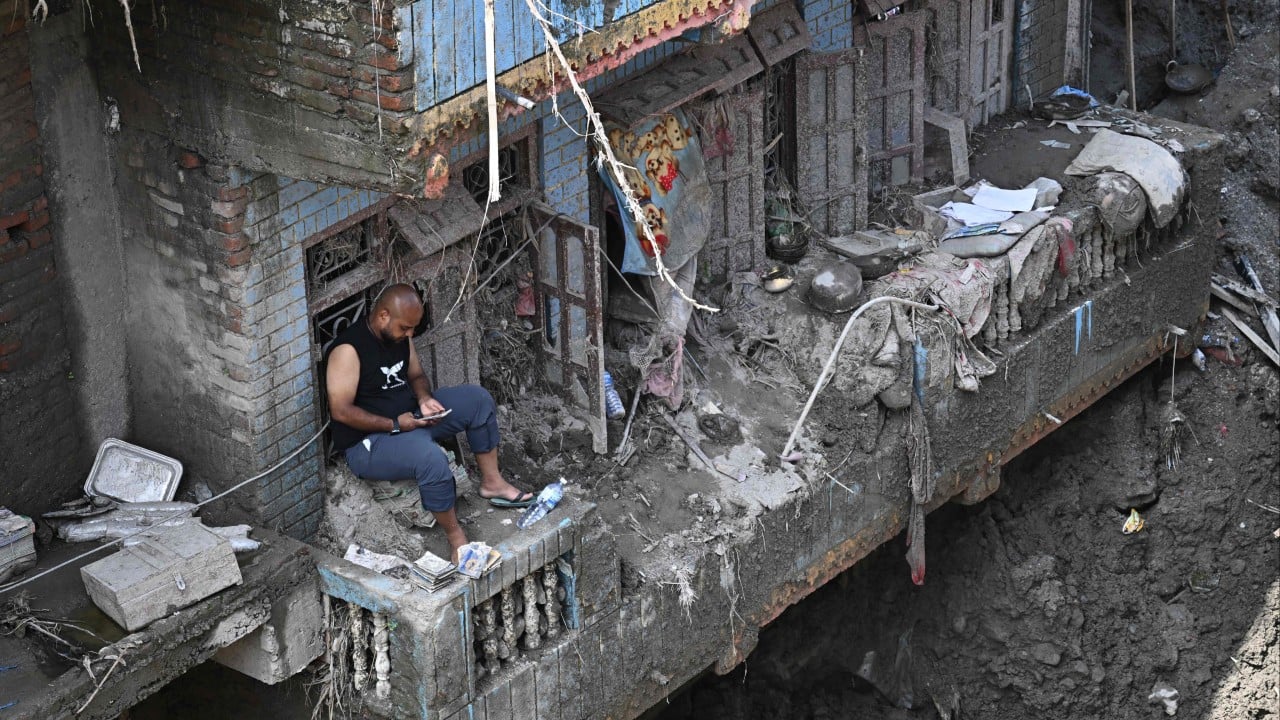
Nepal is seeking $20 million from a United Nations-backed fund to help rebuild after devastating Himalayan floods that killed at least 1,300 people and left more than 5,000 missing, including workers trapped in tunnels at damaged hydropower plants [244100]. The disaster, which swept through valleys along the Nepal-Tibet border in August, destroyed critical infrastructure, cut off roads and communications, and forced thousands from their homes [243804][247763].
Scientists say human-caused climate change played a decisive role in the collapse. A study by World Weather Attribution and international glaciologists found that decades of fossil fuel burning raised temperatures around the Himalayan slope by 1 to 1.5 times the global average, triggering a chain of events that destabilized the mountain [243476]. The report concluded there is "absolutely no doubt" that rising global temperatures set the stage for the disaster [243183].
The collapse involved a massive flow of semi-frozen mud, boulders, trees, and other debris that moved at high speed through populated valleys [243183]. Researchers identified multiple contributing factors: melting permafrost weakened the frozen rock, the retreat of the Langtang-Lirung glacier removed support from the mountain's base, water from melting snow and ice seeped into cracks and built pressure, and a magnitude 7.8 earthquake in 2015 had already fractured the rock mass [243476].
"This event demonstrates that the limits of adaptation are already being reached, and transformative actions are needed at local and global levels to avoid, minimize, and address losses and damages," the authors warned. "Until fossil fuel emissions reach net zero globally, this risk will continue to increase" [243476].
The disaster has revived demands for climate justice. Nepal's Environment Minister, Geeta Chaudhary, said Kathmandu is calling for compensation from the UN-backed Loss and Damage Fund [247339]. Foreign Minister Shisir Khanal plans to formally request $20 million from the fund to support a rebuilding effort expected to cost around $5 billion, including the replacement of up to 20,000 homes [244100].
The Loss and Damage Fund was created by wealthy nations — which produced most of the pollution that warms the planet — to help poorer countries that suffer the worst effects of climate change [247763]. Nepal's floods are the first major crisis to test whether the fund works in practice. The world is watching to see if the money arrives quickly and reaches the people who need it most [247763].
The human toll extends beyond the immediate area. In Gyirong county, in the Tibet autonomous region, the flood struck a major border crossing, and rescue teams faced one of the most physically difficult environments imaginable [243804]. The disaster also revealed serious weaknesses in how authorities communicate during a crisis [243804].
For young Nepalis, the floods have deepened fears about a changing climate. Alina B.K., a 21-year-old forestry student who coordinates the Pokhara network of Nepalese Youth for Climate Action, said the news made it hard to focus on her exams. "With the floods and deaths happening around us, it is really..." she said, describing how the disaster deepened her fears [245054].
The disaster has faded from global headlines, but for Nepal, the crisis is far from over. Families of the missing are still waiting for news [244100]. The answers will show if the international climate fund is a real solution or just a promise. For the people of Nepal, the answer cannot come soon enough [247763].