Trump’s Midterm Meltdown: Court Losses, $5,000 Bribes, and a Fed He Called ‘Hostile’
Trump is battling courts, the Federal Reserve, and his own approval ratings as Republicans fight to keep Congress in the November 3 midterms.
President Donald Trump is facing a series of setbacks ahead of the November 3 midterm elections, including Supreme Court defeats on mail-in voting, a Federal Reserve rate hike he called “hostile,” and historically low approval ratings that have prompted him to promise $5,000 checks to American adults if Republicans win [242214][242862][240008].
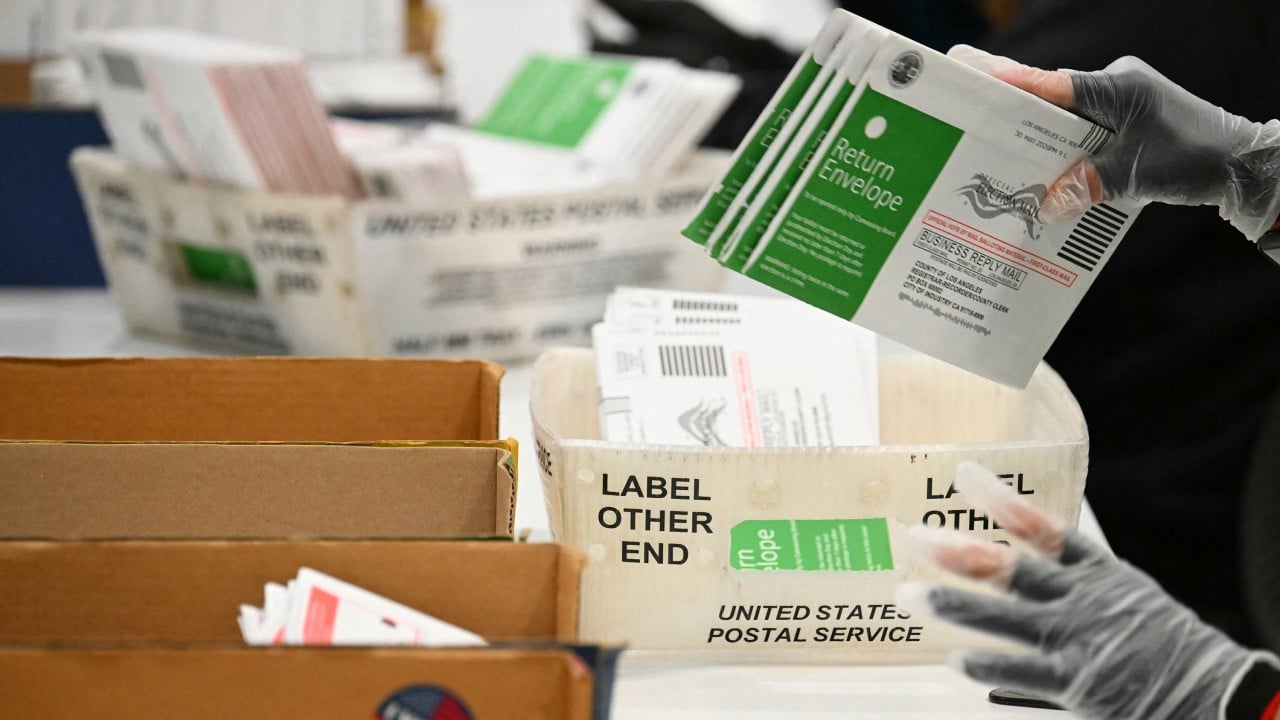
The Supreme Court rejected Trump’s efforts to restrict mail-in voting just weeks before the midterms, ruling 7-2 against the proposed limits [241209]. Trump attacked the court on Truth Social, calling the decision “a great defeat for Republicans and for the United States” and claiming it “makes it much easier for the radical left to cheat with mail-in ballots” [242214]. He did not provide evidence of mail-in voting fraud [242214].
A second federal judge also blocked Trump’s administration from enforcing a new US Postal Service (USPS) rule that would tighten mail-in voting requirements [241300]. US District Judge Carl Nichols issued the ruling late Sunday, adding another legal obstacle as the administration tries to put the rule into effect [241300]. The Supreme Court is still reviewing the administration’s request to overturn a separate order that also blocks the rule [241300].
Separately, Trump criticized the Federal Reserve’s decision to raise interest rates, calling the board “hostile” and saying it acted “only for political reasons” [242862]. The rate increase, the first since 2023, was approved by a board led by Kevin Warsh, whom Trump himself appointed as chair [242862]. Trump denied that Warsh had defied him by voting for the hike, saying he had advised Warsh to vote that way [242862]. The comments raise questions about the independence of the Federal Reserve, which is designed to make rate decisions without political pressure [242862].
With 50 days until the midterms, Trump promised $5,000 for every American adult if Republicans win on November 3 [240008]. The announcement, made at the Republican convention, would cost over $1.3 trillion if paid to all 270 million American adults [240008]. The Treasury already runs an annual deficit of nearly $1.8 trillion, and national debt has passed $40 trillion this year [240008].
Trump’s approval rating has hit historic lows, with only one-third of American adults approving of his job performance, according to a July poll by The Associated Press-NORC Center [240008]. That is down from 42% when he took office [240008]. The war in Iran has pushed diesel prices above $6 a gallon in the U.S. [240008].
At the convention, Trump framed the midterms as a personal referendum. “On election day, November 3, you have to do me a favor,” he told the crowd. “You have to go out and vote, and imagine I am on the ballot. Because, in a way, I am on the ballot” [240008]. He also joked about cheating. “I promise I will try to cheat like hell, just like they do,” he said, while asking supporters to raise their right hands in a pledge of loyalty to him [240008].
Trump now says Congress may not need to approve the payments. “We think we don’t,” he told CBS, though he did not explain how he could spend over a trillion dollars without legislative approval [240008]. Later, at an airport in Dallas, he denied the money was meant to mobilize voters — despite having said it would be paid “if Republicans win” [240008].
In another blow, the Supreme Court rejected a new electoral map for Missouri that Trump and his allies had supported [240008]. They hoped the map would help Republicans win an extra seat on November 3 [240008]. An appeals court also upheld a block on his decree limiting mail-in voting, agreeing that the president lacks authority to regulate state election policy [240008].
A Quinnipiac University poll released Thursday found that 46% of registered voters believe the Democratic Party is more in touch with the concerns of most Americans, while only 35% said the same about the Republican Party [240008].
Trump has promised to campaign hard for Republicans in tight races over the coming weeks [240008]. But his popularity may be a double-edged sword. Loyalty to Trump can help in Republican primaries, where his supporters hold strong influence. In a general election, however, it could hurt candidates — especially if Trump’s approval numbers do not recover [240008].