Russia 'Very Likely' Planning Attack on NATO Country, Poland Warns of War Escalation in 7-8 Months
European leaders face mounting warnings that Moscow is preparing for a direct confrontation with the North Atlantic Treaty Organization (NATO), as researchers and officials point to hybrid warfare, troop buildup, and new military tactics.
Researcher Elena Davlikanova has issued a stark alert, stating that "it is very likely that Russia is planning an attack on a NATO country" [1]. She argues that Moscow is already waging a full-scale hybrid war against the West, combining conventional military force with cyberattacks, disinformation, and political pressure [1]. Davlikanova urges European governments to prepare for possible direct confrontation rather than assuming dialogue alone can prevent it [1].
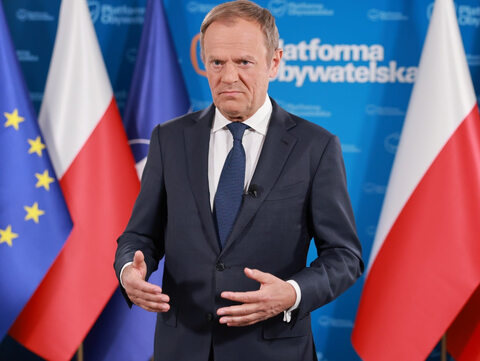
Her warning aligns with a statement from Poland’s prime minister, who said there are clear signals of serious Russian preparation for a new phase of the conflict, placing the critical window for escalation at seven to eight months [2]. The Polish leader’s comments follow a high-level visit to Moscow by the director of the United States Central Intelligence Agency (CIA), though details of that meeting have not been made public [2]. Poland, a NATO member and direct neighbor of Ukraine, has been one of the most vocal allies in warning against Russian aggression [2].
Concerns over a major troop increase are also growing. Russian President Vladimir Putin has dismissed reports that Moscow is preparing another wave of military mobilization, but Ukrainian officials warn that Russia could still call up as many as 600,000 additional soldiers [3]. Ukrainian intelligence says Russia is preparing for a major troop increase despite Moscow’s public reassurances [3]. Russian officials gave similar assurances before the Kremlin’s 2022 call-up, which saw hundreds of thousands of reservists drafted, and that decree authorizing mobilization was never formally revoked [3].
The military threat is evolving on the ground as well. Moscow has escalated its attacks with ballistic missiles and jet-powered drones that Ukraine’s air defenses cannot intercept [4]. New military tallies for August show the cost of that strategy: roughly 42,020 Russian troops killed or wounded, along with 1,827 artillery systems and 89 tanks destroyed [4]. The shift to faster, harder-to-shoot-down weapons suggests Russia is willing to accept heavy losses in exchange for trying to break Ukrainian supply lines and morale [4].
These new jet-powered drones are more destructive, significantly faster, and far harder for Ukrainian defenses to intercept than the propeller-driven models Russia previously relied on [5]. Military analysts say the new drones are designed to overwhelm air-defense systems by closing distances quickly and striking with greater force [5]. Ukrainian commanders report that the new drones have forced them to adjust tactics and deploy additional resources to protect critical infrastructure and frontline positions [5].
Russian forces are also exploiting terrain changes. Small groups of Russian soldiers are slowly advancing across the dried-out bed of the Kakhovka reservoir in southern Ukraine, which they flooded by blowing up the dam in June 2023 [6]. These troops are carrying out reconnaissance missions, using the vast, empty area to gather information on Ukrainian positions without committing to a full offensive [6]. The same terrain could become a staging ground if Russia decides to push further [6].
Western allies are responding with firm diplomatic actions. Sweden’s government has summoned the Russian ambassador following Germany’s formal accusation that Moscow was responsible for a drone incident in Leipzig [7]. Defense Minister Pål Jonson issued a stark warning, stating, "Russia will continue to escalate if we do not give clear answers" [7]. The move signals a firm diplomatic stance from Stockholm, aligning closely with Berlin’s position [7].
Estonia’s parliament has also demonstrated unity in defiance of Moscow, electing legal scholar Ülle Madise as the country’s next president with support from a portion of the parliamentary opposition [8]. Madise, a constitutional law expert, will take over leadership of the NATO and European Union member state at a time of heightened regional tension, underscoring how Estonian politicians are setting aside rivalries to present a united front against external pressure [8].
The warnings and actions point to a growing consensus among European leaders that the threat from Russia is real and requires an active, prepared response, not passive observation.