EU Summons Russian Envoy After Leipzig Drone Attack—France Follows Suit
The European Union has formally summoned a Russian envoy following a failed drone attack in Leipzig, Germany, which the bloc’s top diplomat described as bearing “all the hallmarks of state-sponsored terrorism.” France has also announced it will summon a Russian representative in a separate but coordinated move [234076].
The incident, which occurred at Leipzig/Halle Airport on August 4, involved a drone packed with explosives discovered near a Ukrainian cargo aircraft. German security teams defused the device, and Berlin formally accused Russia of involvement [232619]. EU foreign policy chief Kaja Kallas announced the diplomatic step, stating the attack was a serious breach of international norms [234076].
NATO and the European Union issued a joint warning over the attack, with NATO Secretary General Mark Rutte and European Commission President Ursula von der Leyen calling it a new escalation on European Union soil. “It was an attack carried out with military-grade material by Russian agents on the territory of the European Union. We will not tolerate it,” they said in a joint statement [233527].
German Interior Minister Alexander Dobrindt said the event fits the pattern of Russian hybrid operations in Europe [233527]. Moscow has dismissed the accusation as unfounded, and Russian President Vladimir Putin called Germany’s accusation a “serious mistake” [233527]. Russia has also summoned Germany’s top diplomat in Moscow to hand over a formal protest, rejecting the accusations as “baseless” [233381].
Von der Leyen warned that European infrastructure must now be seen as a frontline target. “We must consider our infrastructure as first-line targets and protect it. We will support any member state that is attacked by Russia,” she said [233527]. Rutte noted an increase in hostile activity, including drones and missiles entering European airspace along the eastern flank and arson at factories producing defense materials for Ukraine [233527].
The EU has also received a new request from Ukraine for funding to cover air defense needs, including advanced Patriot PAC-3 systems. European Commission President Ursula von der Leyen confirmed the bloc’s member states will discuss the proposal on 7 September. The request reportedly covers two possible purchase volumes: 190 or 580 Patriot missiles, with the larger order potentially costing roughly $580 million. However, since Patriot missiles are manufactured in the United States, Washington controls the export license for every sale [234017].
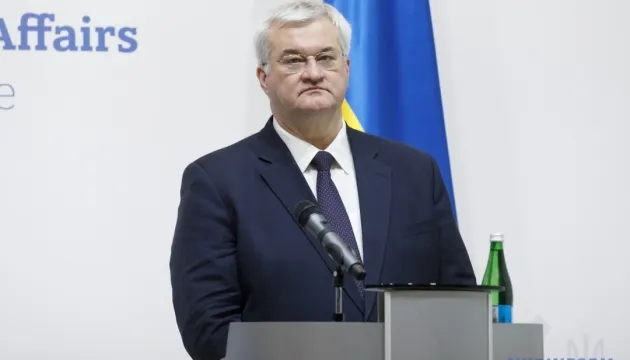
Separately, Ukraine has formally notified the International Civil Aviation Organization (ICAO), the UN body that sets global flight safety standards, that Russian airspace is becoming increasingly dangerous. Foreign Minister Andriy Sybiga announced the notification, saying, “Against the backdrop of Russia's drastic escalation of terror against Ukraine, Russian airspace is becoming increasingly unsafe. We urge everyone to avoid it” [234046]. Ukrainian President Volodymyr Zelenskyy has also issued direct warnings to airlines, stating that Russian airspace will “effectively be closing” for commercial carriers [232808].