Poland Blames Russia for Starlink Fire as Denmark Warns of Escalating Hybrid Attacks
Poland says a fire at a Starlink satellite station serving Ukraine was sabotage, while Denmark's military intelligence warns Russia will intensify hybrid attacks on NATO countries in the coming months.
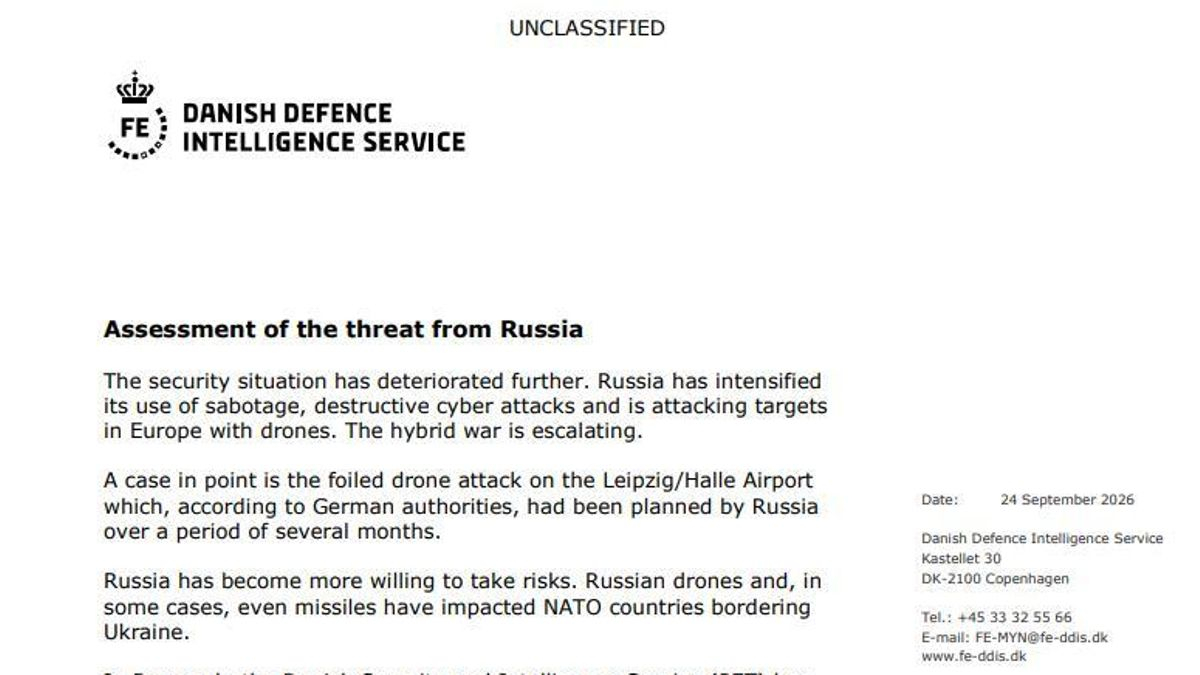
Poland has accused Russia of sabotage after a fire broke out at a Starlink satellite station that provides internet coverage to neighboring Ukraine [249543]. The allegation came as Denmark's military intelligence service released an annual assessment warning that Russia will intensify "hybrid attacks" against Western countries and NATO members in the coming months [249305].
The Danish Defense Intelligence Service (FE) said these attacks will become more frequent and cause "greater consequences" than before. It warned of "destructive cyberattacks that paralyze critical social functions, as well as acts of sabotage that carry a high risk of causing casualties" [249305]. Hybrid attacks refer to actions that fall below the threshold of open military conflict, such as cyberattacks, sabotage, and disinformation campaigns.
FE chief Thomas Ahrenkiel told a press conference: "It is unlikely that Russia will launch a real invasion of a NATO country, but we can no longer rule it out" [249305]. The report cited a "growing" but still "low" risk that Russia will carry out "limited military attacks" against NATO countries, especially those sharing a border with Russia [249305].
Separately, the Danish Agency for Security announced it has raised its threat level for a destructive cyberattack from medium to high. "Russia is waging a hybrid war against the West and is taking increasing risks. That is why we have raised the threat level," the agency said in a statement [249305]. The Danish Security and Intelligence Service (PET) also warned of increased Russian espionage, sabotage, and influence campaigns [249470].
French President Emmanuel Macron said Russian hybrid attacks against Europe are intensifying and that he has ordered his government to protect critical infrastructure and defense industry sites [244972]. Polish Prime Minister Donald Tusk told parliament that intelligence assessments suggest Russia may launch drone or missile strikes on NATO territory in the coming months, aiming to show that NATO's Article 5 is "more theoretical than practical" [246252]. Article 5 is the alliance's core promise that an attack on one member is treated as an attack on all.
Poland's foreign minister said he warned Moscow that NATO would strike back if Russia attacked, saying the warning was meant to stop Russia from taking any action that could start a wider conflict [247308]. NATO's top military leaders met in Copenhagen to reaffirm support for Ukraine, with the committee's chief warning of Russia's "reckless behaviour" as fears grow that Moscow may strike a NATO country next [247288].
Moldova has recorded 39 Russian drone incursions in the past eight months, more than double the 17 incursions counted in all of 2025 [247301].