Ceuta Clears Beach Camp, Moves 1,700 Migrants—But Hundreds Return Hours Later
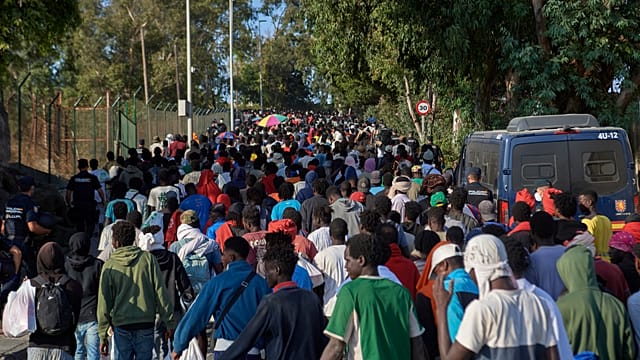
Spain has begun relocating migrants from a makeshift beach camp in Ceuta to new temporary shelters, with around 1,700 people moved on Thursday morning—but hundreds returned to the beach by evening, exposing the limits of the government’s response.
The operation at El Trampolín beach began at 9:45 AM, with police escorting migrants in two groups to newly prepared facilities [223243]. People from sub-Saharan Africa were directed to Loma Margarita, while North Africans walked to Loma Colmenar, near the Tarajal border crossing [223243]. The Spanish Ministry of Inclusion, Social Security and Migration said both locations have combined capacity for about 1,800 people [223243].
Many migrants said they were not told where they were being taken. “We don’t know what will happen to us or where they are taking us,” said Ahmed, one of the last to leave [224523]. Keriz, a 24-year-old barber from Fez who had lived on the beach for over 20 days, said he ate once a day and feared being sent back to Morocco: “I don’t know what will happen, but anything but going back there” [224523].
By late afternoon, hundreds had reoccupied the beach. Police sources say most are migrants who had been scattered across the city’s streets, hoping that staying at the beach will help them secure a spot in official reception facilities [224521]. Ramses Mohamed, spokesperson for the association Elín, confirmed this pattern: “They see the beach as a reference point while waiting to know their future. They will keep returning as long as there are no places to house them” [224521].
The government has prepared five sites in total—Loma Margarita, Loma Colmenar, the Hípica facilities, the Montesa field, and the old guano factory—with projected capacity exceeding 5,000 places [223243]. The Ministry emphasized that transfers are voluntary and that the facilities offer adequate and safe conditions [223243].
The crisis began on July 30, when an estimated 70,000 people entered Ceuta from Morocco [220872]. Most have since returned, but between 5,000 and 8,000 remain, sleeping rough in overcrowded conditions [223124]. Human Rights Watch (HRW) said on Thursday that Spain is failing to provide basic shelter and safety for thousands, urging authorities to act urgently and give migrants the chance to apply for asylum [224287].
“Thousands of people have been in the streets in a legal vacuum, exposed to sexual violence and without adequate shelter, food, or sanitation for almost three weeks,” said Judith Sunderland, senior associate director for refugee and migrant rights at HRW [224287]. HRW spoke with 76 migrants during a research trip from August 15 to 18 [224287].
Women among those still waiting to be registered say they face a constant threat of sexual harassment [223124]. Doctors told HRW they treated eight women and girls for rape and sexual assault, and the public prosecutor’s office received 13 cases of sexual assault between July 30 and August 17 [224287].
Unaccompanied minors remain a critical concern. Spain’s Secretary of State for Youth and Children, Rubén Pérez Correa, said it is “feasible” to transfer 500 unaccompanied migrant minors from Ceuta to mainland Spain within weeks [224521]. He estimated 1,400 minors are currently sleeping in city facilities, but acknowledged “many more are on the streets, unregistered” [224521]. The Ceuta government says it has taken charge of 1,385 minors, while police have registered 2,168 [224287].
Spain’s Health Minister Mónica García denied that the health system has collapsed, saying medical staff have treated 5,800 people over the last 15 days [220872]. “There is no health collapse,” she said, while acknowledging a “humanitarian crisis” and a “risk to health” [220872]. She added that 28 migrants remain hospitalized and that hospital capacity has been increased from 175 to 212 beds [220872].
The first burials for migrants who died trying to reach Spanish territory took place Friday at the Muslim cemetery of Sidi Embarek [224522]. Eighteen bodies were buried with numbers 5412 through 5430, as most remain unidentified [224522]. Of the more than one hundred migrant bodies held in the morgue, only six have been identified, and none have been transferred to Morocco because the Moroccan government refused [224522].
Spain Moves 1,000 Migrants From Beach to Army Tents in Ceuta Spain clears migrant beach camp after three-week crisis # Ceuta Migrants Relocated: Police Move 1,700 From Beach Camp # Migrants Return to Ceuta Beach After Eviction, Overwhelming Local Shelters Title: “Anything but Morocco”: Migrants forced to leave makeshift camp in Ceuta Migrants in Ceuta Face Hunger and Homelessness as Shelters Expand Spain’s U-Turn: 500 Migrant Children to Leave Ceuta for Mainland Moroccan families camp at Ceuta border seeking missing migrants Migrant Women in Ceuta Face Sexual Harassment While Waiting in Limbo Ceuta Migrant Crisis: Spain Accuses Local Leader of Blocking Aid Thousands of Migrants Sleeping Rough in Spanish Enclave, Rights Group Says Title: Ceuta on the Brink? Minister Denies Health System Collapse Amid Migrant Crisis