18 anonymous graves opened in Ceuta as migrant burials begin
Part of composite article Ceuta Clears Beach Camp, Moves 1,700 Migrants—But Hundreds Return Hours Later View full article →
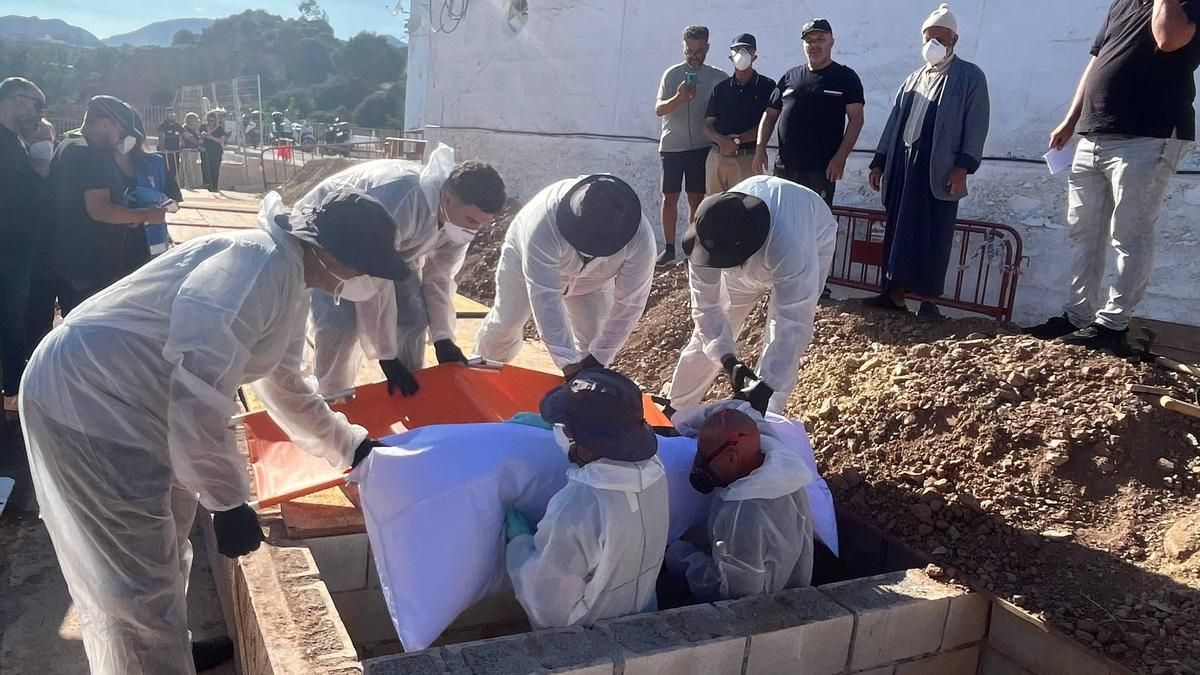
The Muslim cemetery of Sidi Embarek in Ceuta, a Spanish autonomous city on the North African coast, held its first burials on Friday for 18 migrants who died trying to reach Spanish territory from Morocco on July 30.
The cemetery sits on a steep hillside in the Sidi Embarek neighborhood. Many of its graves have no names—only numbers. While some belong to local residents, hundreds, even thousands, hold migrants who perished at sea attempting to reach Spanish soil. The 18 bodies buried Friday received numbers 5412 through 5430.
Around 6 p.m., five volunteers waited at the site. They had prepared a row of earth about twenty meters wide and two meters long to receive the bodies, which could no longer remain in the morgue due to advanced decomposition.
A hearse was expected to arrive. Before it came, Ceuta's councilor Nabila Benzina and deputy Navil Rahal, who is also associated with the funeral home, appeared. A young man on a motorized tricycle carried canvas stretchers in the back, which would hold the deceased migrants.
Just after 5:20 p.m. local time, the first remains arrived. Workers opened the trunk and said, "The legs are on the right." They wore disposable suits, masks, and even gas masks. Four workers carried each body on their shoulders. The air was humid and very warm.
After lifting the bodies, the workers gathered around a magnet, stood close together, and prayed: "Allahu Akbar, Allahu Akbar, Allahu Akbar" (God is great). They looked down at the four migrants resting on stretchers—the first to be buried. Behind them, a green area with trees stretched toward neighboring Morocco, the country the deceased had left.
After the first prayer, the equipped workers moved the bodies one by one into their designated spaces. Five people stood on the excavated earth, continuing to pray. Once each body was in place, workers threw a handful of white chemical powder over it. They then placed thin, long bricks to seal the grave. Finally, earth was piled on top, and a white stone with the number was set in place.
The process repeated until all 18 were buried. Of the more than one hundred migrant bodies held in the morgue until today, only six have been identified—a seventh was confirmed but died at the University Hospital. None have been transferred to Morocco because the Moroccan government refused. More burials are therefore expected as the cemetery's count of anonymous dead continues to grow.