Europe’s Rivers Are Drying Up: €180 Billion Blow as Heatwaves Wreck Farms and Fuel Shortages Hit France
Europe is being roasted by record-breaking heatwaves, with major rivers like the Rhine and Po dropping to historic lows, triggering fuel shortages in France and threatening the continent’s largest harvest failure in decades.
The extreme weather gripping the continent is no longer just a climate warning—it is a direct economic catastrophe. The European Union is projected to lose roughly 1 percent of its economic output this year, a blow that could erase over $200 billion in growth [216239]. Triodos, a Dutch sustainable finance bank, warns the losses could shrink the EU’s gross domestic product by 1 percent in 2026, equaling roughly €180 billion [218568]. The UK is bracing for its worst harvest season on record in 2026, with crop failures threatening food supplies and farmer incomes [216239].
The Rhine River, a critical shipping artery for goods like coal and fuel, is dropping so fast that experts warn it may literally split in two in some areas [216714]. In eastern France, 14 percent of filling stations in the Grand Est region are reporting empty pumps because oil tankers must carry lighter loads to avoid running aground in the shallow water [219875]. Italy’s Po River has also dropped to historically low levels, exposing wide stretches of dry riverbed near Pavia and raising new concerns about water supplies and farming across northern Italy [217492].
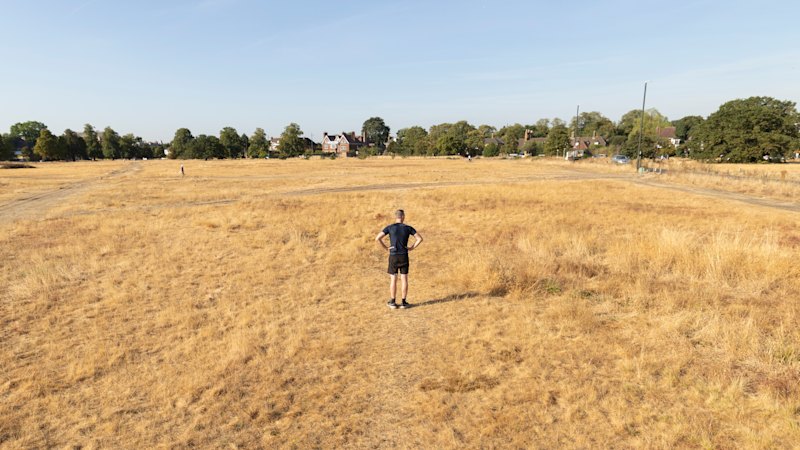
The drought is devastating harvests across the continent, from potatoes in the Netherlands to corn in Bosnia [218568]. Satellites have captured the damage, revealing scorched landscapes, shrinking glaciers, and even a long-submerged shipwreck resurfacing in a dried-up riverbed [220138]. Soil moisture levels across Western Europe are already falling far below those recorded in July 2022, the last summer marked by a severe drought, signaling a potentially worse crisis ahead [215701].
The human toll is equally severe. Europe is warming at twice the global average rate, and tens of thousands of people have died in heatwaves across the region this summer [216907]. In Paris, new figures show that living under the city’s iconic zinc rooftops makes death four times more likely during the heat, with residents describing the conditions as "like a sauna" [220114].
Centuries-old "hunger stones" are emerging from receding rivers, carved during historic droughts to mark catastrophic low-water levels. The most famous, located in the Elbe River, bears a haunting message: "If you see me, weep" [219264]. The reappearance of these stones is a direct visual indicator of the current extreme drought conditions gripping the continent.
European companies are feeling the burn as well. A record number of businesses have flagged the financial impact of extreme heat, drought, and wildfires during their quarterly earnings calls with investors [220151]. From logistics and manufacturing to insurance and tourism, executives are increasingly forced to account for the direct costs of a hotter planet [220151].
Even the Champagne region is not spared. This year’s grape harvest began in mid-August, the earliest start in recorded history, disrupting the delicate balance of acidity and sugar that defines the drink’s crisp character [219497]. Winemakers are scrambling to adapt, testing new pressing techniques and adjusting fermentation times to preserve the signature taste [219497].
The crisis is not solely the fault of climate change, according to researchers. Human decisions—like draining wetlands, building dams, and overusing water for irrigation—make rivers more vulnerable [218893]. Experts say restoring natural riverbanks, improving water storage, and cutting unnecessary consumption can ease the strain [218893]. The question is not whether rivers will recover—but whether governments will act before the next dry summer arrives [218893].