Climate Change Is the Biggest Health Threat, Experts Warn
Health experts are calling for a major shift in how countries prepare for future crises, moving from treating sickness to preventing it. Speaking at a health conference organized by elDiario.es, they warned that climate change is now the world's most serious health risk.
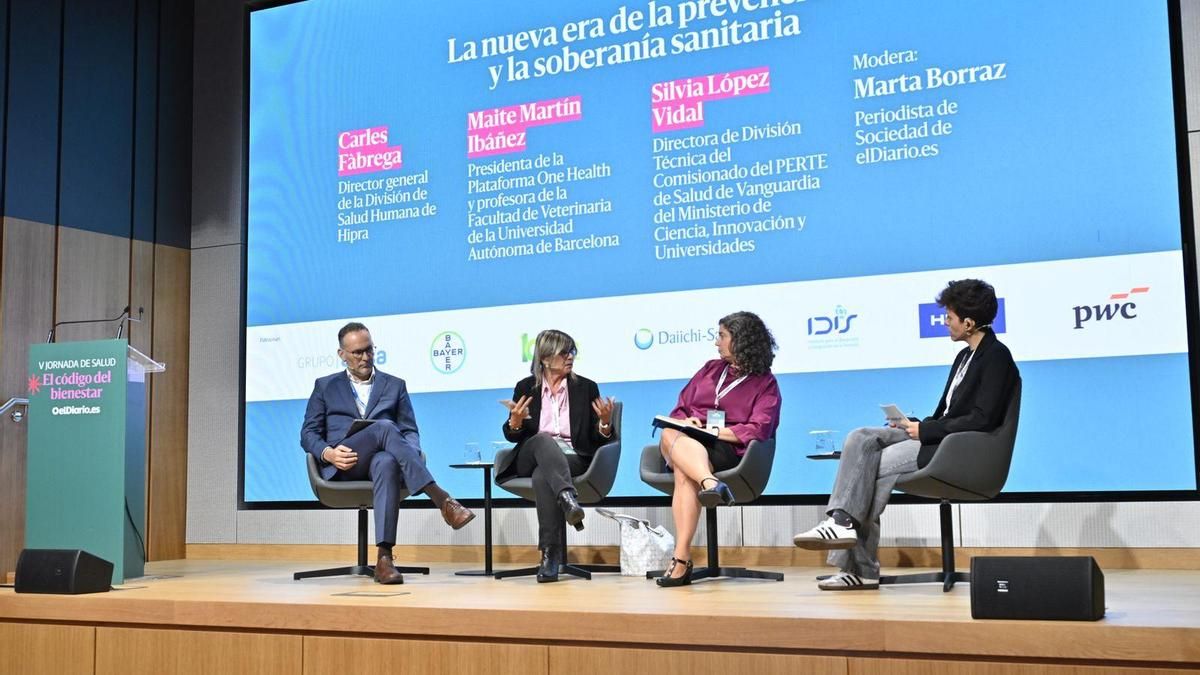
"The biggest health risk we have right now is climate change," said Maite Martín Ibáñez, president of the One Health platform and a professor at the Autonomous University of Barcelona. She explained that climate change causes chain reactions that harm human health, and that treating symptoms alone is not enough.
The conference panel, titled "The New Era of Prevention and Health Sovereignty," focused on how Spain and Europe should prepare for global health emergencies.
Silvia López Vidal, from Spain's Ministry of Science, Innovation and Universities, introduced the idea of "health security." She said that a shortage of essential medicines or a new pandemic is not just a regulatory issue — it is a national security problem that can paralyze a country. She pointed to progress since 2020, including new precision medicine programs and high-security laboratories.
Carles Fàbrega, from the pharmaceutical company Hipra, said the 2020 pandemic showed that "Spain had not done its homework, and Europe in general had not done its homework." He called for better preparation, arguing that countries should invest in flexible vaccine technologies that can adapt to many types of viruses, not just one.
**One Health: Linking Human, Animal, and Environmental Health**
The panel highlighted the "One Health" approach, which recognizes that human health is closely tied to animal and environmental health. Martín Ibáñez noted that 60% of human infections come from animals, and she urged stronger monitoring of wildlife for diseases like bird and swine flu.
She also proposed that governments use their buying power to support responsible products — those that meet environmental, social, and ethical standards, not just the lowest price.
**Funding and Fairness**
López Vidal detailed a Spanish government plan investing 2.5 billion euros in health innovation, including data systems and advanced therapies. She also supported European efforts to bring medicine production back to the region, reducing dependence on China and India for key ingredients.
Fàbrega questioned whether current public purchasing rules give companies enough reason to invest in research and production in Europe. "What incentive does a company have today to invest in R&D and production in Europe if the only criterion for public purchase is price?" he asked.
The discussion also covered global fairness. López Vidal called for sharing vaccines and data with lower-income countries, saying it is a matter of both justice and scientific effectiveness.
**Looking Ahead**
In closing remarks, López Vidal summarized her vision as "data intelligence to predict, and industry to respond." Martín Ibáñez called for better communication with the public, warning that misinformation is damaging health progress. Fàbrega highlighted his company's goal of producing new vaccines within 100 days and said that having more companies with these capabilities in Spain would make the country better prepared.