El Niño and Broken Markets Push 266 Million People to the Brink of Starvation
A growing climate and economic crisis is driving millions into hunger as El Niño damages crops and poor nations run out of money to cope.
The world's poorest countries are being hit by a triple crisis — extreme weather from El Niño, high energy costs, and rising borrowing costs — that could push tens or even hundreds of millions of people back into poverty, the United Nations Development Programme (UNDP) warned [259620]. The agency's administrator, Alexander De Croo, called for "solidarity and global action" ahead of the International Monetary Fund (IMF) and World Bank annual meetings in Bangkok [259620].
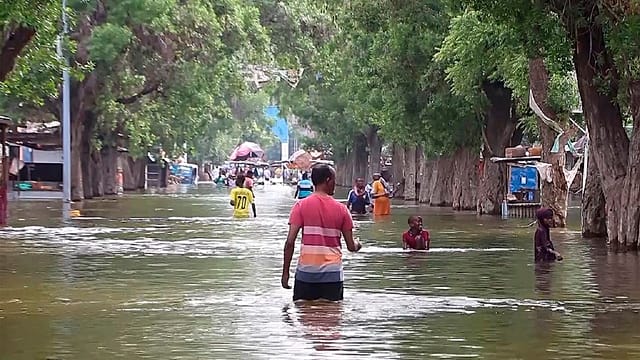
El Niño is a climate pattern that heats the Pacific Ocean and changes weather worldwide, causing floods in some regions and droughts in others. Both destroy crops [263886]. The IMF warns that these weather shocks will raise food prices and threaten supplies, especially in poorer countries that already face hunger. It is urging governments to prepare now with early warning systems, emergency food reserves, and support for farmers [263886].
The numbers are staggering. On World Food Day, the humanitarian organization Action Against Hunger reported that 266 million people face acute hunger, with two out of every three hungry people living in just 10 countries hit hardest by food crises [263594]. The report points to war, displacement, and the climate crisis as the main causes — and says hunger is not caused by a lack of food, but by conflict and instability that prevent people from accessing it [263594].
Somalia, consistently ranked as one of the world's most at-risk regions during El Niño cycles, is bracing for growing hunger as the weather pattern strengthens [262121]. In Yemen, fighting has already cut off food aid to 800,000 people, and the UN World Food Programme (WFP) is asking for $268 million to keep its operations running through 2027 [262168].
The crisis extends beyond farms and conflict zones. Disruption to the Strait of Hormuz — a narrow waterway where roughly one-fifth of the world's oil passes — is driving up food prices across Africa. A new UN Women analysis warns that 11.7 million more women and girls could face food insecurity by the end of 2026 [261724]. Women and girls often eat last and least when food runs short, the report says, and they carry most household duties, leaving them less able to earn income as costs climb [261724].
At sea, Peru has suspended all anchoveta fishing, threatening global fishmeal and fish oil supplies. The government stopped fishing boats from going to sea on 10 June 2026, and by mid-August the temporary suspension became a total closure [262810]. Peru's anchoveta has made up about 10% of the entire global commercial fishing catch since 1970 — more than any other fish — but warming seas and decades of overfishing now spell disaster for the industry [262810].
In Senegal, fishermen are losing their livelihoods as fish stocks decline. The fishmeal industry is consuming vast amounts of small fish, leaving less food for local communities. As food becomes scarce, more people are risking the dangerous journey from Africa to the Canary Islands — and many never arrive [263595].
Scientists are also launching new research into how a powerful "Super" El Niño affects the world's ecosystems, with findings published in the journal Science in October 2026 highlighting growing concern about how extreme events damage forests, oceans, and wildlife [263233].
The IMF says that without action, millions more people could face severe food shortages [263886]. The UNDP's warning highlights the growing pressure on poorer nations as they struggle with costs they did little to create [259620].