The Neoliberal Mindset: What Elites Really Think About Ordinary People
In 2006, the International Monetary Fund invited me to Slovenia to debate flat tax policy before the country's treasury officials and ministers. The event was part of a broader push to promote neoliberal economic reforms across Eastern Europe.
In 2006, the International Monetary Fund invited me to Slovenia to debate flat tax policy before the country's treasury officials and ministers. The event was part of a broader push to promote neoliberal economic reforms across Eastern Europe. I won that debate against Alvin Rabushka, one of the architects of the flat tax concept. But what I learned from him during an interview afterward revealed something far more significant than tax policy. It exposed the fundamental worldview that underpins neoliberal thinking, a worldview that has shaped Western economies for decades and that we must understand if we hope to challenge it.
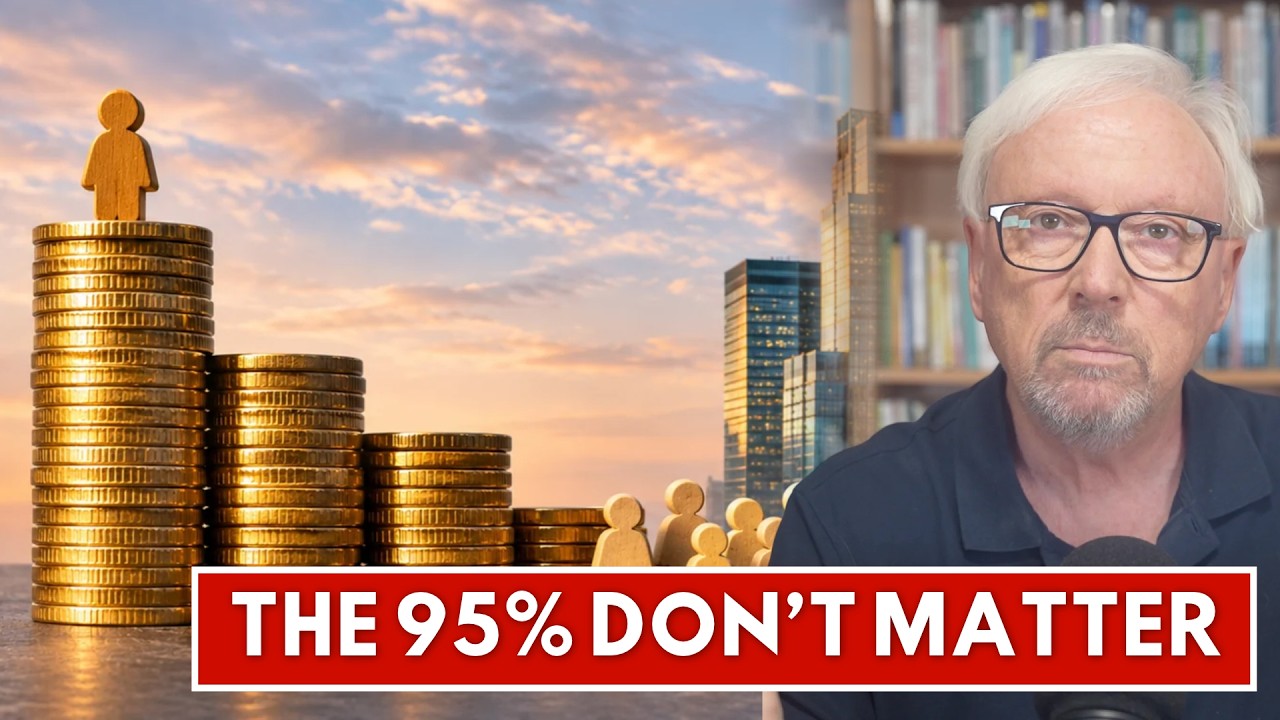
Rabushka's perspective on economic priorities was startling in its clarity. He believed that wealthy individuals create all economic prosperity and that ordinary working people are merely dependent upon them. In his own words, which I recorded and transcribed, he stated: "The only thing that really matters in your country is those 5% of the people who create the jobs that the other 95% do. The truth of the matter is a poor person never gave anyone a job and a poor person never created a company and a poor person never built a business and an ordinary working class guy never drove economic growth and expansion."
This worldview treats the vast majority of citizens as economically insignificant. Their aspirations are dismissed as trivial, reduced to nothing more than wanting "a house and a car and going to the pub." Inequality, in this framework, becomes an acceptable price for growth. Rabushka suggested that if some middle-income people pay more tax in the short term, their children and grandchildren will benefit in the long run.
The implications of this thinking extend far beyond taxation. When asked what government should do, Rabushka advocated for a radically reduced state. He called for the elimination of welfare programs, state pensions, public schools, public hospitals, public roads, and public transportation. He argued that government "shouldn't be doing any of that stuff" and that if it stopped, it "wouldn't need all of that tax money." His vision replaces collective provision with private services that individuals must purchase in the marketplace, regardless of their ability to pay.
This is not economics. It is political ideology dressed in economic language. The claim that the wealthy create all prosperity while ordinary people contribute nothing ignores the fundamental reality that economic activity depends on everyone's participation. Workers build the products, staff the services, and drive the consumption that sustains businesses. Without them, the wealthy would have no enterprises to profit from.
Not all neoliberals share Rabushka's explicit contempt for ordinary people, but many do. When I spoke recently with Mark Littlewood following a BBC Radio 2 broadcast, he argued that the problem with neoliberalism is that "we've never done it." What he meant was that we have not yet implemented the radical privatization and dismantling of public services that Rabushka advocated. This is the direction they want to move in. This is what neoliberals really think.
Understanding this worldview is essential to challenging it. We cannot defeat neoliberalism without naming it and confronting its core assumptions. The alternative must be built on a different foundation: care. Rabushka clearly did not care about the 95% of people he treated as expendable. We need a politics in which everybody counts, where everyone has the chance to participate in life and no one is left behind.
This does not mean treating everyone identically or demanding identical outcomes. It means recognizing that in the real world, if we do not care for one another, people suffer. The neoliberal experiment has dominated our societies for too long, shaping economies and policies around the interests of a privileged few. It is time to challenge that dominance with a vision grounded in collective responsibility and genuine concern for all citizens, not just those at the top.
Related Coverage
Related Editorials
Title: The French Paradox: Is the Republic Quietly Dismantling Its Own Social Model?
Introduction For decades, France has stood as a defiant exception to the Anglo-Saxon economic consensus. With its generous welfare state, powerful unions, and deep-seated suspicion of free markets, the Republic has long resisted the tide of neoliberalism.
The Cracks in the Neoliberal Order: Is the Free-Market Consensus Finally Breaking?
For nearly half a century, neoliberalism has served as the invisible architecture of the global economy. It is the doctrine that championed deregulation, privatization, and the primacy of the free market over state intervention.
# Is France Abandoning Neoliberalism? A New Economic Era Takes Shape
For decades, France has been a loyal practitioner of neoliberal economics—a model built on free markets, deregulation, privatization, and fiscal austerity. But recent political and economic shifts suggest the country may be charting a different course.