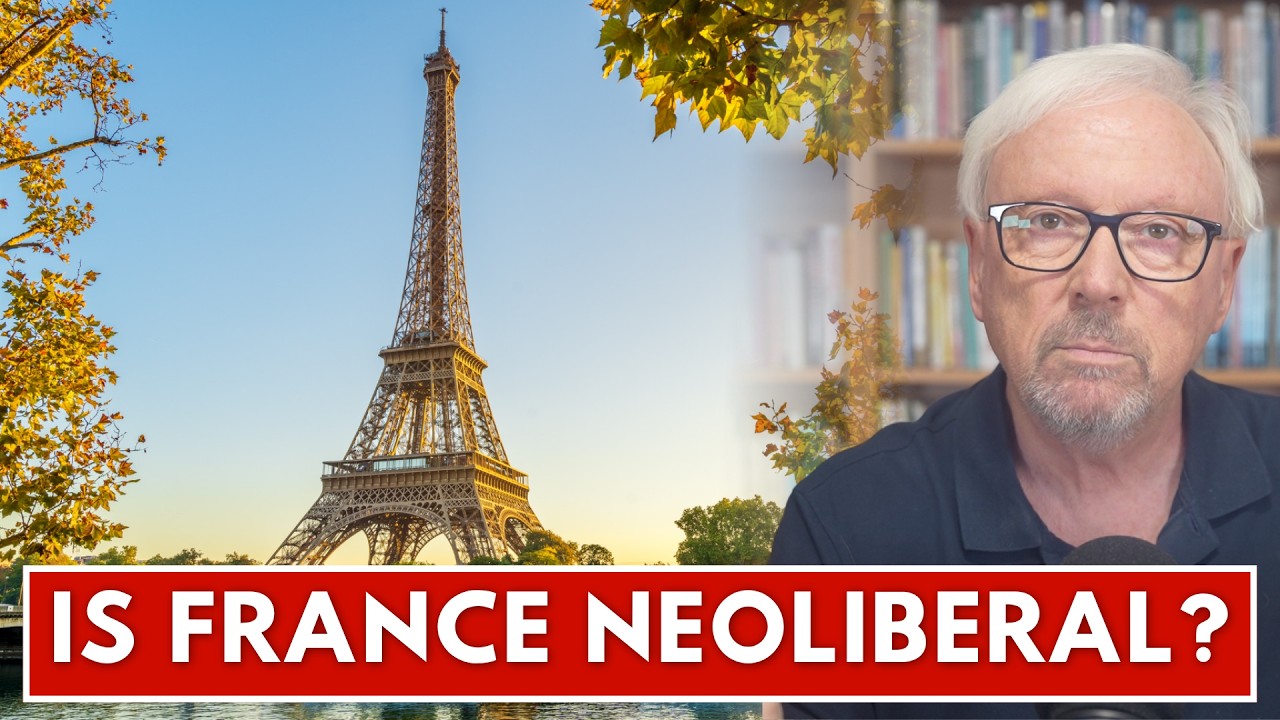
Title: The French Paradox: Is the Republic Quietly Dismantling Its Own Social Model?
Introduction For decades, France has stood as a defiant exception to the Anglo-Saxon economic consensus. With its generous welfare state, powerful unions, and deep-seated suspicion of free markets, the Republic has long resisted the tide of neoliberalism.
Introduction
For decades, France has stood as a defiant exception to the Anglo-Saxon economic consensus. With its generous welfare state, powerful unions, and deep-seated suspicion of free markets, the Republic has long resisted the tide of neoliberalism. But is that resistance finally breaking? While the streets of Paris may still fill with protests at the mention of pension reform, a quieter, more profound transformation is taking place within the state apparatus itself. The question is no longer whether France can be neoliberal, but whether it has already become one—and whether the French people have noticed.
The Illusion of the "French Exception"
France often presents itself as the antithesis of the neoliberal state. The term "neoliberalism" itself is frequently used in French political discourse as a slur, a catch-all term for the perceived cruelty of the market. However, this rhetorical hostility masks a complex reality. The French state is not a monolith; it is a vast bureaucracy that has, over time, adopted market mechanisms to manage its affairs. To understand the current landscape, one must look beyond the slogans and examine the structural shifts that have occurred over the last thirty years.
The Shift Toward Market Logic
The transformation of the French state began not with a sudden revolution, but with a gradual evolution. Since the 1980s, regardless of the political party in power, the state has increasingly adopted the language and tools of the private sector. This phenomenon, often described as the "managerialization" of the state, has seen public services subjected to performance metrics, audits, and budget cuts that mirror corporate restructuring.
The state has effectively become a regulator of competition rather than a direct provider of goods. This is evident in the privatization of key assets, including highways, airports, and formerly state-owned monopolies like France Télécom (now Orange). Even the railways, a symbol of national unity, have been opened up to competition, forcing the historic operator, SNCF, to operate more like a commercial entity.
The Role of the European Union
One cannot discuss the French economy without addressing the influence of the European Union. France is bound by EU treaties that prioritize free competition and strict budgetary discipline. The Stability and Growth Pact, which limits government deficits, forces France to adopt austerity measures that align with neoliberal orthodoxy.
Brussels has effectively acted as an external anchor, locking in market-friendly reforms that might otherwise have been reversed by domestic politics. When the French government attempts to intervene in the economy—such as protecting national champions or subsidizing industries—it often finds itself constrained by European competition laws. This has led to a situation where the French state acts as a handmaiden to the market, ensuring that domestic regulations comply with the liberalized European framework.
The "Social" State vs. The "Competitive" State
Perhaps the most striking evidence of France's neoliberal shift is the rhetoric surrounding the welfare state. Traditionally viewed as a safety net, the French social model is increasingly being reframed as a "cost" that undermines national competitiveness. Recent reforms to labor law, particularly under the Macron presidency, have focused on making the labor market more "flexible"—a euphemism for making it easier to hire and fire.
These reforms are justified by the need to attract foreign investment and reduce structural unemployment. The debate has shifted from protecting workers to promoting employability. The goal is no longer to shield citizens from the market, but to equip them to compete within it. This represents a fundamental ideological shift: the state is no longer the protector of the weak against the strong, but the facilitator of a competitive economy.
The Centralization of Power
Paradoxically, France remains a highly centralized, bureaucratic state. The irony of French neoliberalism is that it is enforced by a powerful, technocratic elite. The state has not shrunk; it has simply changed its function. It no longer runs the economy directly, but it sets the rules of the game to ensure market stability and competitiveness.
This top-down approach creates a unique tension. The French state is powerful enough to impose unpopular reforms, yet it is constrained by global market forces and European regulations. This has led to a form of "state-led neoliberalism," where the government uses its authority to dismantle barriers to capital accumulation, often bypassing democratic debate through the use of executive decrees and specialized procedures.
Conclusion
The question of whether France is a neoliberal state is ultimately a matter of definition. If neoliberalism means the total absence of state intervention, then France is not neoliberal. However, if it refers to a state that actively organizes society around the principles of market competition and private property, then France has moved significantly in that direction.
The "French exception" is fading. The state has become an instrument for market integration, prioritizing efficiency and competitiveness over solidarity and equality. While the rhetoric of social protection remains strong, the structural reality tells a different story. The challenge for the future is not whether France will adopt neoliberal policies, but how the French public will respond to the gradual erosion of the social model they hold so dear.
Related Editorials
# Is France Abandoning Neoliberalism? A New Economic Era Takes Shape
For decades, France has been a loyal practitioner of neoliberal economics—a model built on free markets, deregulation, privatization, and fiscal austerity. But recent political and economic shifts suggest the country may be charting a different course.
The Cracks in the Neoliberal Order: Is the Free-Market Consensus Finally Breaking?
For nearly half a century, neoliberalism has served as the invisible architecture of the global economy. It is the doctrine that championed deregulation, privatization, and the primacy of the free market over state intervention.
Iceland’s Quiet Revolt: The End of Europe’s Political Illusion?
For decades, the European Union has sold itself as a project of perpetual integration—a political and economic engine designed to smooth over national differences and deliver shared prosperity. Yet, according to two of Europe’s most prominent economic thinkers, the recent actions of a small Nordic
Labour Says It Wants Jobs—So Why Is It Destroying Them?
The British Labour Party has long positioned itself as the party of workers. Its rhetoric champions employment, economic security, and the protection of livelihoods.
France on the Brink: Is This the Unravelling of a Nation?
France is once again convulsed by violent unrest, and the question echoing across its cities is whether this is merely another episode of social turmoil—or something far more serious. The riots have forced the government into crisis mode, exposed deep fractures in French society, and raised doubts
Canada’s Economic Crisis: A Global Warning
Canada has long been held up as a model of stability—a wealthy G7 nation with abundant natural resources, a strong banking system, and universal healthcare. Yet beneath this veneer of prosperity, a quiet crisis has been unfolding.