Syria's Desperate Gamble: Why Damascus Is Sending Troops to Yemen
Syria is deploying thousands of troops to support the Saudi-led coalition in Yemen, according to reports citing Yemeni defense officials. The first phase involves approximately 3,000 soldiers, with up to 10,000 potentially deployed over time.
Syria is deploying thousands of troops to support the Saudi-led coalition in Yemen, according to reports citing Yemeni defense officials. The first phase involves approximately 3,000 soldiers, with up to 10,000 potentially deployed over time. The move raises a pressing question: why would a fragile, cash-strapped state embroil itself in a distant and increasingly unwinnable war?
The answer lies not in Yemen itself, but in Damascus's ambitions to join a new regional military alliance—and in its fears closer to home.
Understanding the Mecca Pact
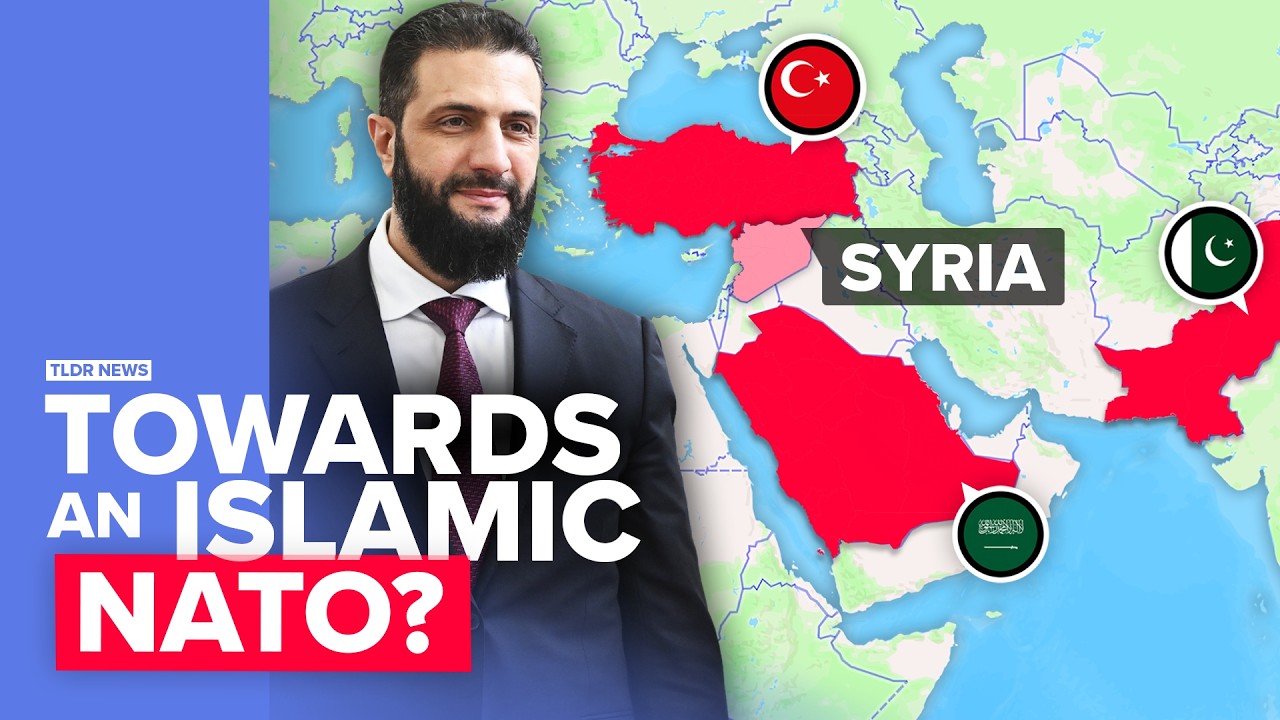
The Mecca Pact, formally known as the Mecca Joint Defense Agreement, is a military alliance between Saudi Arabia, Pakistan, and Turkey announced in early August. It includes a mutual defense clause modeled on NATO's Article 5, stating that an armed attack against any member shall be regarded as an attack against all.
From the outset, founding members signaled that the alliance would expand. Turkish President Recep Tayyip Erdogan stated at signing that any country seeking regional peace and stability could participate. Turkish Foreign Minister Hakan Fidan later described the three members as the core of a structure open to further growth. In early October, Pakistani Foreign Minister Ishaq Dar claimed at least six additional countries wanted to join. Reports since then indicate that Egypt, Bangladesh, Syria, Qatar, Kuwait, Bahrain, and Iran have all expressed some level of interest.
No expansion has yet occurred. The founding members are still establishing the alliance's operational framework, as demonstrated by their uneven response to the Saudi campaign against the Houthis. Saudi Arabia requested assistance, though it remains unclear whether the mutual defense clause was formally invoked. Turkey and Pakistan initially appeared enthusiastic but subsequently limited their commitment to a modest defense deployment, arguing that the pact was not yet active because their respective parliaments had not ratified it.
The Yemen conflict has deterred most prospective applicants. It has exposed uncertainty about how binding or effective the alliance truly is. Moreover, joining a mutual defense pact while a founding member is at war could automatically draw new members into that conflict.
Syria, however, has made clear it remains undeterred.
Syria's Persistent Interest
Syrian Foreign Minister Faisal Al Miqdad first raised the possibility of joining the Mecca Pact in August during a visit to Pakistan. He reiterated the intention weeks later at the IISS Manama Dialogue in Bahrain.
Over the weekend, Syrian state media published a carefully worded statement from a Syrian diplomat responding to the AFP report. The statement effectively confirmed that Syria was sending troops to Saudi Arabia but denied they had crossed into Yemen. More significantly, it claimed the deployment was occurring under existing cooperation agreements that could ultimately pave the way for Syrian membership in the Mecca Pact.
In this context, the deployment should be understood as a signal from Syria to other pact members: Damascus remains committed to joining, even if an ongoing conflict obliges members to become involved in another war.
Security Guarantees and the Israeli Threat
Syria's interest in the Mecca Pact stems partly from obvious calculations. The country remains relatively insecure and economically weak. Security guarantees from larger, wealthier, and better-armed neighbors are valuable.
But the more specific motivation is Israel. Since the fall of the Assad regime in late 2024, Israel has been occupying an expanding security zone in southern Syria. This has become an increasingly acute issue. Large anti-Israel protests erupted last month after Israeli forces killed a disabled Syrian man during a military incursion. The frequency of such incursions has risen markedly since August.
Recent weeks have brought a flurry of reports that Israel may be planning military escalation in coordination with its Druze allies in the region. This may explain why Jordan suddenly conducted a series of airstrikes in southern Syria in late October and bolstered its military presence along the border. At the time, the strikes appeared to come without warning and provoked a diplomatic rift between Jordan and Syria. It is possible that Jordan received intelligence of an impending escalation and responded by increasing its security presence in anticipation of unrest.
Syria presumably views the Mecca Pact as its best hope for deterring further Israeli territorial occupation or military escalation in the south.
Obstacles to Membership
This calculation may give other Mecca Pact members pause. Accepting Syria could risk triggering a war with Israel—a prospect that makes formal Syrian membership unlikely in the near term.
However, if Israel continues its hawkish policies in Syria and elsewhere, the calculus could shift. Other pact members may eventually conclude that any chance of lasting peace in the Middle East requires checking Israel's expansionist ambitions. An expanded Mecca Pact could, in that scenario, serve as an effective deterrent.
For now, Syria's troop deployment represents a costly gamble: a bid to demonstrate commitment to a nascent alliance in exchange for security guarantees that may never materialize.
Related Coverage
Syria Just Dissolved Kurdish Forces and Sent in Its Own Security Units
A new phase in Syria’s transition is underway: the government has dissolved Kurdish forces and deployed hundreds of its own security personnel in Hasakah, while officials warn the country is still fragile [232902][232878].
Israel Pushes Deeper Into Syria: Troops, Raids, and New Bases Near Golan
Israel is expanding its military footprint inside Syria, sending troops deeper into the Quneitra province and carrying out overnight raids that have led to the detention of young men. The incursions come days after Israeli forces reportedly entered residential areas and seized at least two people [224477]. In the latest operation, Israeli units crossed into Syria’s southern Daraa province, surrounding homes in the countryside west of Daraa city before taking several men into custody [220799]. Witnesses described troops moving through the area, though no official statement has been released by either side [219853].
Yemen's Houthi Rebels Seize Key Shipping Lane, 125,000 Flee in Two Weeks
Iran-backed Houthi forces have captured a strategic Red Sea strait and sent tens of thousands of civilians running for their lives.
Yemen's Houthi Advance Forces 86,000 to Flee Homes as 2,000 Escape to Djibouti
More than 86,000 Yemenis have been displaced since July as Houthi rebels seize territory, with thousands crossing the sea to Djibouti.
Haiti Deploys 2,000 Salvadoran Troops as 6 Million Starve and Election Dates Set
Haiti is facing a severe hunger crisis with nearly six million people going hungry, while 2,000 El Salvadoran troops arrive to bolster security and new election dates are announced.
Russia Sends Wounded Soldiers Back Into Battle as 30,000 Troops Lost Monthly
Russia is deploying wounded and disabled soldiers into frontline assaults as Moscow struggles to replace staggering losses of 30,000 troops per month, with recruitment raids and door-to-door searches now targeting men who avoided service.