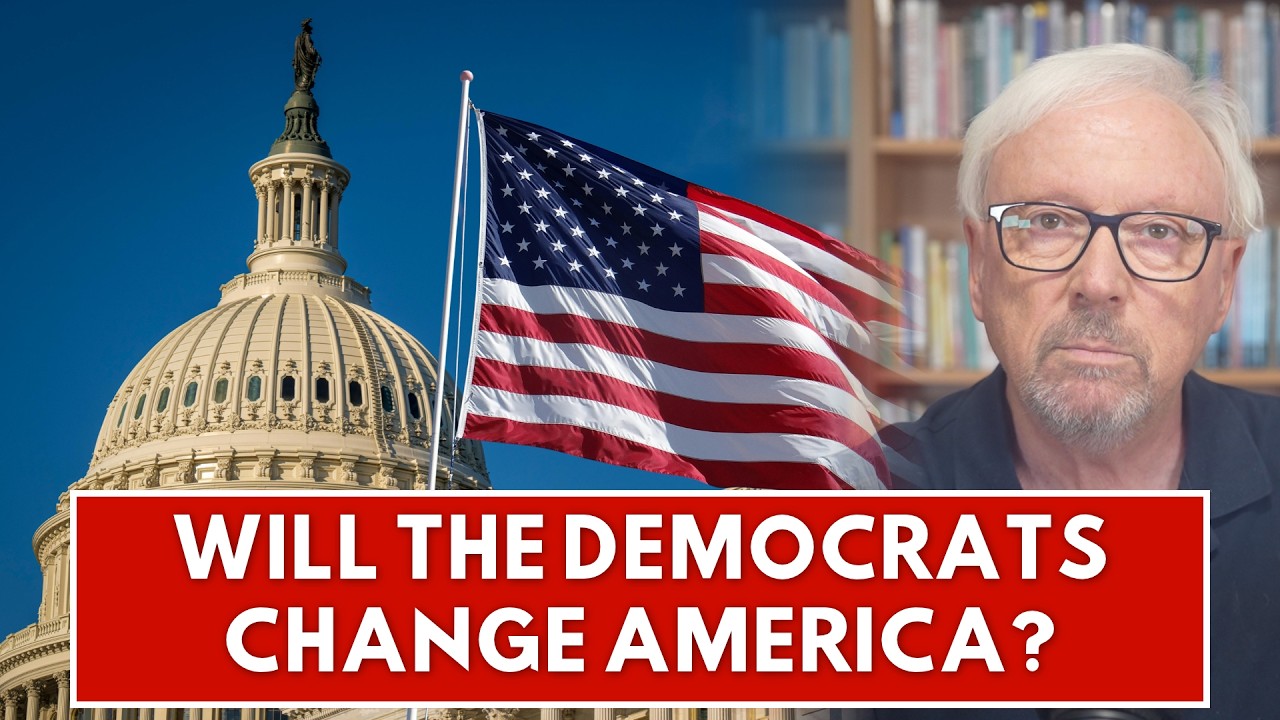
Democrats Won the Election. Can They Break Corporate America’s Grip?
The Democratic Party has good reason to celebrate. It now controls both the Senate and the House of Representatives, and its midterm gains were extraordinary by any measure.
The Democratic Party has good reason to celebrate. It now controls both the Senate and the House of Representatives, and its midterm gains were extraordinary by any measure. Yet victory is not the same as change. Politics is ultimately about power: setting the agenda, rewriting the rules, and delivering results. The question that matters is whether the Democrats will use their new position to challenge the corporate interests that have shaped American politics for decades, or simply manage the existing system more competently than their opponents.
The Republicans suffered a major defeat, but they remain in power. Voters rejected Donald Trump’s politics and his corruption. His response has been to promote Stephen Miller and to double down on a deeply right-wing, aggressive program. American politics will therefore remain largely unchanged for now, apart from new conflict between the White House and Congress. The political system itself is also unchanged, and the same powerful interests still control it. That is the central point.
It would be unfair to say the Democrats do not recognize the problem. The politics of hope has returned, at least among some newly elected members. James Talarico, newly elected to the Senate from Texas, delivered a remarkable victory speech. He noted that he had defeated enormous financial and political opposition. Elon Musk spent roughly $300 million trying to prevent his election, and Talarico won anyway. That alone represents a significant challenge to a power hierarchy long associated with the ability to spend. In his speech, he challenged the power of billionaires. He argued that the divide between left and right is over, and that the real split in politics is now between top and bottom. He identified a group at the top trying to oppress everyone else, and said plainly that he represents those at the bottom. Talarico offers a politics of love. The question is whether that can become a politics of care. His version is faith-based; it needs to be broader. To his credit, he recognizes this himself.
Not every Democrat is saying the same thing, however. The problem of delivery remains, because money still controls US politics. The 2010 Citizens United ruling by the Supreme Court transformed campaign finance. Billionaires can now exert enormous electoral influence. The AI tech entrepreneurs know which side their interests lie with, and they align with the Republicans. Corporate lobbying still shapes all political priorities. Many Democrats are as wedded to this system as Republicans are. Only a minority stand out from the crowd. They may be the ones we notice, but the reality is that US politicians, almost without exception, now depend on wealthy donors. In the midst of that, ordinary people struggle to make themselves heard. Candidates on the campaign trail say they are listening. Will they still listen once they reach Washington? That is the open question.
The Democrats therefore face a fundamental choice. They can manage the existing political system, or they can seek to transform it. These are the alternatives before them. Electoral reform must challenge the power of corporate money. Gerrymandering, which has been used to undermine fair political representation, must be reversed. Democracy must serve people, not corporations. For far too long it has served corporate interests, and much American legislation is written for the benefit of companies rather than citizens. The Democratic Party is not united on this issue. The progressive wing, associated with figures such as Zohran Mamdani and Alexandria Ocasio-Cortez, represents those who want to reject corporate power. Then there are the so-called corporate Democrats, and the label is accurate: they are as embedded with large corporations as the Republicans are.
Corporate power is the real problem, and not only in politics. Monopolies increasingly dominate American economic life and well-being, because politicians allow it. Corporate profits take priority over public well-being. This is visible in US healthcare. It is visible in harmful products that damage people and the planet, including ultra-processed foods. Lobbyists defend these interests in Washington. Neoliberalism protects this concentration of power, and it remains the culture of many Democrats who subscribe to it willingly and call it the American way. But it is not working.
In the face of this challenge, good politicians are not enough. I have no doubt about the good faith of some newly elected Democrats. Their commitment to public service and to people appears real. But corporate interests will still seek their attention, and political institutions reward compromise with established power. Will their conviction survive what one military strategist called contact with the enemy? Will challenging corporate power remain a reality? The next two years will test the Democrats, and they will be particularly difficult. During that period, Trump can veto any legislation the Democrats pass in either chamber. Democrats will face competing political demands. They will also be building toward the 2028 presidential campaign, and investigating corruption and abuses will divert attention from the future agenda. Immigration enforcement, tariffs, and border walls will demand attention too. But structural reform of politics and of American society more broadly must remain the priority.
These issues matter, but the priority must be setting out what the Democrats would do if they won all three centers of power in 2028: the presidency, the Senate, and the House. They must communicate that program now by putting forward legislation, even knowing Trump will veto it. The United States needs a different kind of politics. Many countries do, but the case is particularly poignant in America, because corporate influence over elections must be curtailed if change is to happen. Success there could lead change elsewhere. Lobbying must be made genuinely accountable. Monopoly power must be challenged. Teddy Roosevelt did this early in the twentieth century; someone must do it now, and there is no obvious champion at this moment. Bernie Sanders is looking toward retirement. Political corruption must face real consequences. The politics of care must replace neoliberalism, and that process should start in 2027, not later, even if Trump rejects it in the meantime. Doing so would draw a clear and absolute distinction between the Democrats and the Republicans, which will be essential in a presidential campaign.
So the question is whether the Democrats have the courage. Last week’s victories created genuine hope, but without radical reform the Democrats could achieve very little. They must therefore promise fundamental political change and confront the power of money. Will the Democrats change America, or will they merely govern it within the existing rules? That is what I do not know, and what most people in the United States do not know. I hope they will change the country, and I believe many Americans share that hope. By turning out in record numbers for a midterm election, they showed that they do not want a perpetuation of the neoliberal hierarchy of power that Trump represented.
Related Coverage
Democrats Flip Over 40 House Seats, Seize Full Congress in Stunning Rebuke to Trump
Democrats won control of both the House and Senate in Tuesday's midterm elections, flipping more than 40 Republican-held House seats and ending Republican dominance of Congress. The victory sets up a direct collision course with President Donald Trump in the final two years of his term.
Democrats Flip Over 250 House Seats and Senate in Historic Midterm Wave
Democrats have won control of Congress in the 2026 midterm elections, flipping more than 250 House seats and picking up five Senate seats. The sweeping victory, driven by voter anger over inflation, the Iran war, and tariffs, has Republicans searching for answers and Democrats planning investigations into President Trump.
Democrats Flip Six Senate Seats, Win House and Senate in 2026 Blue Wave
Democrats won control of both the House of Representatives and the Senate in the 2026 midterm elections, flipping six Senate seats and dealing a major blow to President Donald Trump's power. The result, widely described as a "blue wave," reshaped the balance of power in Washington.
Democrats Seize Congress in Midterm Landslide, Dealing Major Blow to Trump
Democrats won control of both the House and Senate in the 2026 midterm elections, ending Republican dominance and reshaping the final two years of Donald Trump's presidency.
Democrats Sweep Both Chambers as Trump’s Grip on Congress Breaks
Democrats have won control of both the House and the Senate in a historic midterm result, according to live coverage, dealing a major blow to President Donald Trump's hold on Washington.
Democrats Flip 7 Senate Seats, Elect First Muslim Senator and First Texas Democrat in Decades
Democrats won control of both chambers of Congress in a historic midterm wave, flipping seven Republican-held Senate seats and electing a record number of historic firsts.
Related Editorials
Blue Tsunami: Democrats Storm House and Senate in Historic Rebuke of Trump
Democrats have seized control of both chambers of Congress in a sweeping midterm victory, delivering a stinging rebuke to Donald Trump and fundamentally reshaping the balance of power in Washington for the remainder of his term. What began as expectations of a modest blue wave became something clos
Democrats Won Big. Here's Exactly Who Abandoned Trump.
Earlier this week, Trump and the Republican Party suffered a historic defeat in the midterms. The Democrats took control of the House of Representatives by a wide margin and were on track to win at least 55 Senate seats, with a 56th possible if Mississippi, still being counted at the time of record