The 2028 Presidential Race Begins Now: What the Midterms Revealed
The US midterm elections are over, and for a brief moment, Americans could be forgiven for wanting to forget about politics. That moment has passed.
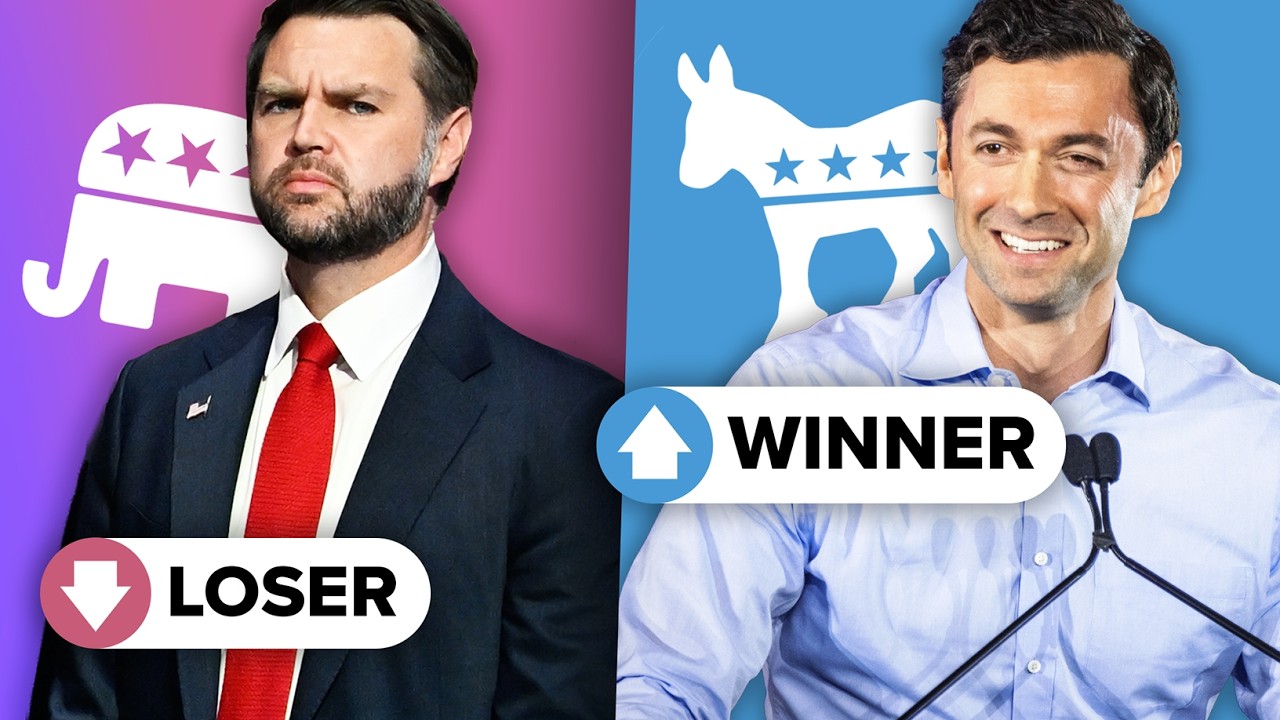
The US midterm elections are over, and for a brief moment, Americans could be forgiven for wanting to forget about politics. That moment has passed. The midterms have effectively launched the 2028 presidential election cycle, and both parties are already positioning themselves for the battle ahead. Buoyed by stunning victories, the Democratic Party has its sights set on completing a trifecta by winning the presidency. Meanwhile, the Republican Party must plot a comeback after its midterm defeats and navigate a difficult transition into the post-Trump era.
For the Democrats, the midterm results have energized the party and elevated several prospective 2028 candidates. Chief among them is Georgia Senator Jon Ossoff, who won a second term with an 18-point victory margin. Ossoff has much working in his favor: he is a fundraising powerhouse, young, telegenic, and able to win comfortably in a key Southern state. He is unafraid to confront Republicans, speaks in a style reminiscent of Barack Obama, and effectively combines an anti-corruption message with economic grievances. He sits closer to the party's moderate wing than its left, yet seems able to bridge that divide. Ossoff has downplayed his presidential ambitions and promised to serve out his six-year term, though he would not be the first to break such a promise. With Democrats winning Georgia in the midterms, he could safely vacate his seat to run in 2028, knowing his replacement would be appointed by a Democratic governor.
Another Democrat whose 2028 prospects have improved is New York Congresswoman Alexandria Ocasio-Cortez, known as AOC. She won re-election to a fifth term with 78 percent of the vote, and these midterms affirmed her status as a national figure. The 37-year-old progressive is seen as the heir to the Bernie Sanders movement and has not ruled out a 2028 presidential bid, though she might prefer to aim for the Senate instead. She is also a major fundraiser who helped provide cash infusions to Democratic candidates across the country during the midterm campaigns. Critics argue her progressivism would have limited appeal in a national race, but AOC is already pushing back. An internal memo from her campaign touts the power of her endorsement, citing her backing of successful candidates in diverse environments such as Troy Jackson in Maine, Sam Forstag in Montana's first district, and most notably Abdul El-Sayed in Michigan.
Current polling for the 2028 Democratic primary places older establishment figures ahead, such as former Vice President Kamala Harris and outgoing California Governor Gavin Newsom. However, the emergence of so many fresher faces on the Democratic side during these midterms, whether rural, urban, progressive, or moderate, might dampen enthusiasm for the Harris and Newsom types. Expect anyone who matters in Democratic circles to start jockeying for position. Immediately after the midterms, Illinois Governor J.B. Pritzker published a 75-page plan detailing an aggressive legislative and oversight agenda that the new Democratic-controlled Congress should pursue. Former Transportation Secretary Pete Buttigieg, another prospective 2028 candidate, was an in-demand campaigner during the midterms, touring the nation to support Democrats while honing his message and skills. Kentucky Governor Andy Beshear, as chair of the Democratic Governors Association, helped bring about a wave of Democratic gubernatorial victories, with key gains in states like Georgia, Texas, and Iowa. The 2028 Democratic primary could be a crowded field, as it was in 2020, when there were so many candidates they could not fit on a single debate stage.
For the Republican Party, the mood is considerably less enthusiastic. Vice President JD Vance leads most Republican primary polls, and prediction markets see him as the most likely to secure the party's nomination. But Vance's political standing has declined markedly as a result of the midterms. He campaigned as vigorously as Donald Trump, headlining 17 rallies in the two months leading up to election day, and he serves as finance chair of the Republican National Committee. While the electoral defeat sits heaviest on Donald Trump's shoulders, Vance is also closely tied to the results. Worse still for Vance was seeing his old Senate seat in Ohio taken by the Democrats and his close friend and ally Vivek Ramaswamy convincingly defeated in the Ohio gubernatorial election.
Secretary of State Marco Rubio, seen as the second favorite behind Vance, is less associated with the midterm loss. As Secretary of State, he was not on the campaign trail as much and is more detached from domestic politics. But as a member of the Trump administration, he, like Vance, is deeply tarnished by his close association with Trump, who is historically unpopular. Furthermore, as the nation's top foreign policy official, few people are more tied to the unpopular Iran war than Rubio. Vance and Rubio likely recognize that anyone running in 2028 as the Trump continuity candidate is, on current trends, in for a major defeat. They might conclude it would be best to keep their powder dry and not run in 2028, instead focusing on 2032, when there might be a Democratic incumbent who is easier to beat. If either wants to strengthen their odds, whether for 2028 or 2032, they will need to carefully distance themselves from Trump.
JD Vance has wasted no time in doing this. The day after the midterms, he wrote a long post on X in which he blamed the Iran war for the Republican loss and set out a four-point plan: end the war, focus on the cost of living, put America first, and change the relationship with Israel. But for as long as Vance remains in the administration, it will be hard for him to truly disentangle himself from its unpopularity. Many Republicans will therefore argue that a non-administration Republican must lead the party into 2028. A whole array of figures from previous cycles might make this case, including Ted Cruz, Ron DeSantis, Chris Christie, Nikki Haley, and Brian Kemp. Given Trump's severely damaged brand, they will feel more comfortable than ever pointing the finger of blame at the White House while angling for pole position. Whatever field of potential Republican candidates emerges, it will likely be a mix of those seeking to retreat from MAGA and offer a return to more mainstream Republicanism, and those trying to build a new post-Trump MAGA movement, whatever that may look like. Trump's endorsement used to be vital, but with the midterm results and his deep unpopularity in mind, it could end up being a kiss of death. Trump's despondent focus on the DC reflecting pool and White House ballroom on the days surrounding the midterms suggests another possibility: that he loses interest in politics, retreats into his pet projects, and checks out of the succession process altogether.
Related Coverage
Democrats Hold Midterm Lead as 2028 Hopefuls Make Early Moves
A new poll shows Democrats ahead in the midterm race, while possible 2028 candidates are already positioning themselves and Trump-linked groups pour money into key Senate contests.
Republicans Poised to Win House, Block Biden Agenda as 435 Seats Up for Grabs
A look at what the U.S. midterm elections mean for Washington and the world.
Voters Decide 2026 Midterms: Trump's Report Card, AI Data Centres, and Results That May Take Days
A nationwide vote on November 3 will determine control of Congress and deliver a direct verdict on President Donald Trump's second term, while dozens of local measures on artificial intelligence data centres also go before voters and election officials warn that close results may take time to finalize.
Democrats Seize Congress as War, Debt and Climate Crises Define 2026
A historic Democratic wave in the U.S. midterms, a looming war with Iran, and a convergence of debt, climate and humanitarian crises exposed a global political order that served the powerful while ordinary people paid the price.
Democrats Seize Congress, US Strikes Iran, and Ukraine's Drone War Define a Turbulent 2026
A historic Democratic sweep in the U.S. midterms, a fragile U.S.-Iran standoff, escalating drone warfare in Ukraine, and converging debt, climate and humanitarian crises reshaped the global order in 2026.
Democrats Seize Congress as War, Debt and Climate Crises Expose a System Rigged for the Powerful
A historic Democratic wave in the U.S. midterms, a looming war with Iran, and a convergence of debt, climate and humanitarian crises defined 2026, exposing a global political order that served the powerful while ordinary people paid the price.
Related Editorials
The US Midterms Are Not What They Seem
Introduction Every two years, the world watches the United States midterm elections with bated breath, treating them as a barometer of American democracy. But according to economists Yanis Varoufakis and Wolfgang Münchau, the spectacle we witness is largely an illusion.
The US Election Could Change Africa's Future. Here's Why.
As Americans head to the polls, the world is watching—but perhaps nowhere with more at stake than in Africa. While the continent rarely dominates US campaign rhetoric, the outcome of the American election will reverberate across African economies, security landscapes, and diplomatic relations for y