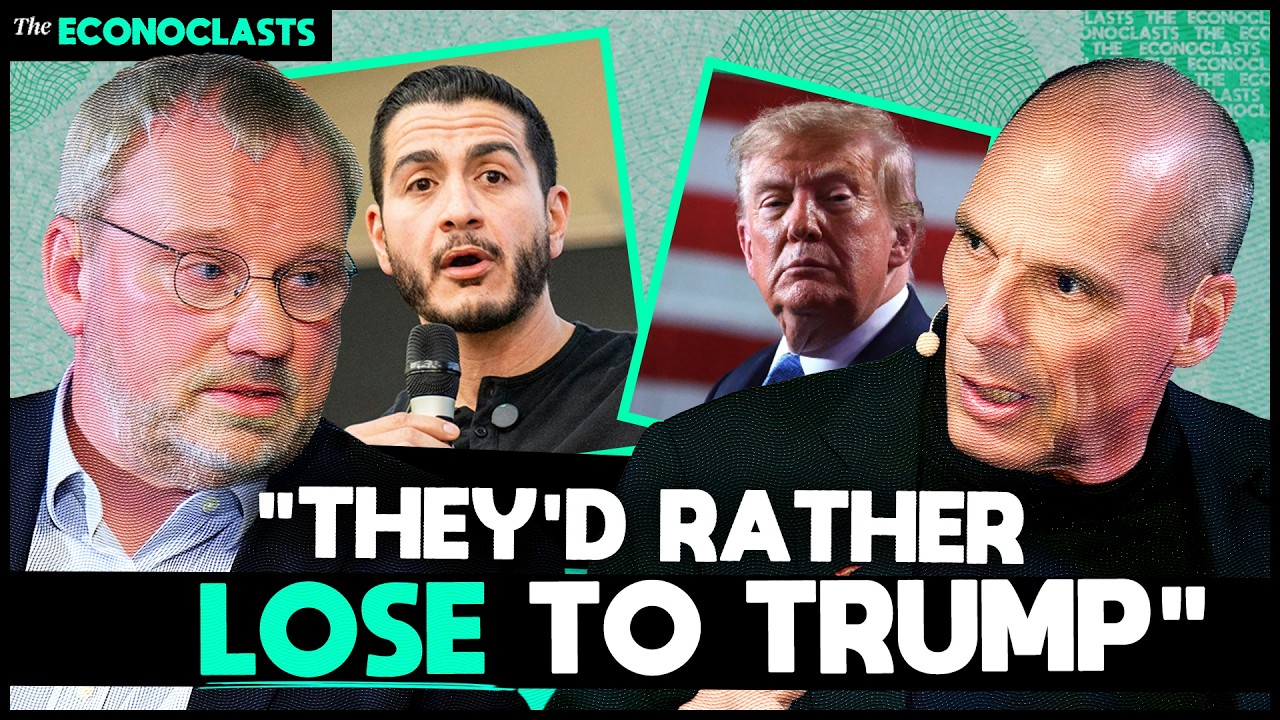
The US Midterms Are Not What They Seem
Introduction Every two years, the world watches the United States midterm elections with bated breath, treating them as a barometer of American democracy. But according to economists Yanis Varoufakis and Wolfgang Münchau, the spectacle we witness is largely an illusion.
Introduction
Every two years, the world watches the United States midterm elections with bated breath, treating them as a barometer of American democracy. But according to economists Yanis Varoufakis and Wolfgang Münchau, the spectacle we witness is largely an illusion. Beneath the surface of partisan warfare and horse-race journalism lies a deeper, more troubling reality: a political system that offers voters the illusion of choice while the fundamental economic architecture remains immune to change. In this discussion, the two analysts dissect the structural failures of the American political economy, arguing that the midterms obscure a bipartisan consensus on policies that serve the few at the expense of the many.
The Illusion of Democratic Choice
The central thesis of the conversation is that American elections function as a form of political theater. While voters are presented with a binary choice between Democrats and Republicans, the parameters of acceptable policy are tightly constrained by corporate interests and the donor class. Both parties, the speakers argue, are structurally beholden to the same financial elites, meaning that regardless of who wins, the essential machinery of wealth extraction remains untouched. The midterms, therefore, are not a referendum on the direction of the country but a managed contest designed to maintain the status quo. This creates a crisis of legitimacy where voters feel their participation is meaningless, yet they are still mobilized through fear and cultural grievances rather than substantive economic debate.
The Bipartisan Consensus on Austerity
A key argument presented is that the United States operates under a hidden form of austerity that transcends party lines. While the US dollar's status as the global reserve currency allows the government to borrow cheaply—unlike nations in the Eurozone—this privilege has not been used to build a fairer society. Instead, both parties engage in a form of "fiscal sadism," where social spending is constantly squeezed to fund military expansion and tax cuts for the wealthy. The speakers note that the debate over the debt ceiling and government shutdowns is not a genuine conflict over fiscal responsibility, but a ritualistic performance that distracts from the fact that the US has the capacity to fund massive social programs but chooses not to. This bipartisan commitment to neoliberal orthodoxy ensures that inequality continues to rise, regardless of which party controls Congress.
The Failure of the Left and the Rise of the Right
The discussion also touches on the failure of the American left to capitalize on the economic discontent that should, in theory, benefit them. The speakers suggest that the Democratic Party has abandoned its working-class base in favor of a professional-managerial class and identity politics, leaving a vacuum that the populist right has exploited. By failing to offer a genuine economic alternative—such as a universal healthcare system or a living wage—the Democrats have ceded the language of class struggle to the Republicans, who use it to fuel cultural resentment. This dynamic ensures that the political center of gravity remains firmly pro-corporate, while the working class remains fragmented and disempowered.
Conclusion
The midterms, therefore, are not a battle for the soul of America, but a symptom of a broken political economy. Varoufakis and Münchau paint a picture of a nation trapped in a cycle of political paralysis, where elections serve to legitimize a system that benefits the few while ignoring the many. Until the structural power of money in politics is addressed, and until a genuine alternative to austerity is offered, the American voter will continue to be presented with a choice that is, in reality, no choice at all.
Related Coverage
Fake Polls and Rigged Odds: America's Political Compass Is Broken
A flood of fabricated surveys and manipulated betting markets is distorting campaign data ahead of the midterms, leaving candidates, donors, and voters unable to tell which numbers are real.
Republicans Poised to Win House, Block Biden Agenda as 435 Seats Up for Grabs
A look at what the U.S. midterm elections mean for Washington and the world.
U.S. Democracy at a Breaking Point: Trump’s Second Year Sparks Fears of Authoritarian Rule
One year into Donald Trump’s second term, historians and scholars warn that the president has pushed American democracy to a breaking point, dismantling federal agencies, purging the civil service, and sidelining Congress at a speed that has stunned observers of authoritarian regimes [52009]. Meanwhile, a separate legal battle over who controls U.S. election rules is intensifying, as state legislatures and Congress fight for power over how Americans vote [166680].
Americans Are Less Polarized Than You Think—Most Sit in the 'Messy Middle'
A majority of Americans hold overlapping political views despite the country's reputation for deep polarization, new research shows. As voters cast ballots in the US midterm elections to decide which party controls Congress, studies suggest Americans overestimate how much they actually disagree with one another.