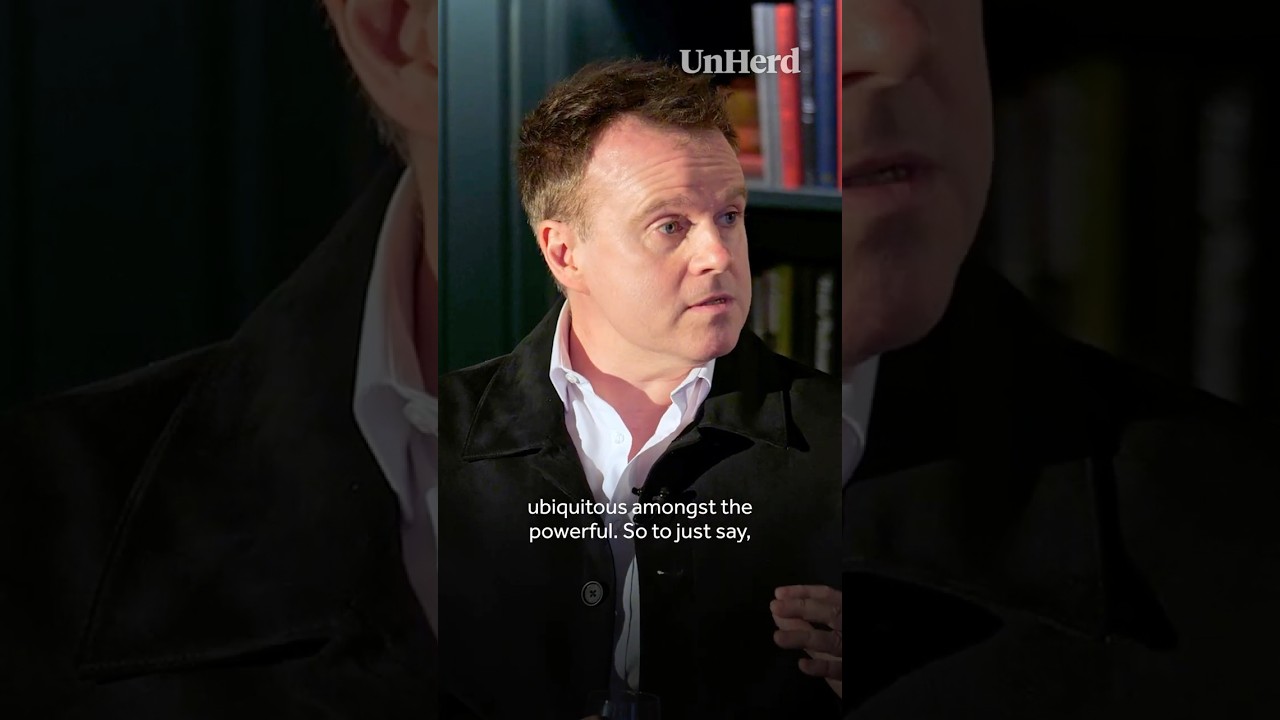
Title: The Wokeness Trap: Why It’s Not a Left-Right Issue
Article: Andrew Doyle, a prominent British commentator and former comedian, argues that the phenomenon of “wokeness” defies simple political categorization. In a recent short video, he makes a compelling case that this cultural force is not inherently left-wing or right-wing, but rather a syste
Article:
Andrew Doyle, a prominent British commentator and former comedian, argues that the phenomenon of “wokeness” defies simple political categorization. In a recent short video, he makes a compelling case that this cultural force is not inherently left-wing or right-wing, but rather a system of control that can be co-opted by any power structure.
Doyle begins by dismantling the common assumption that wokeness is a strictly left-wing ideology. He points out that its core mechanisms—public shaming, compelled speech, and the policing of language—are historically tools of authoritarian regimes, not progressive movements. “The left often mistakes this for a form of social justice,” Doyle explains, “but it’s actually a form of social control.”
He argues that the right, too, can weaponize the same tactics. When conservative institutions demand loyalty oaths or silence dissent under the guise of patriotism, they are engaging in a parallel form of ideological enforcement. The key, Doyle suggests, is not the label but the behavior: the demand for absolute conformity.
The commentator identifies a critical flaw in the current debate: both sides treat wokeness as a political enemy rather than a structural problem. “If you think this is a left-right issue, you miss the point entirely,” he states. “It’s about who gets to define reality and punish those who disagree.”
Doyle’s analysis offers a useful framework for understanding the polarization of modern discourse. By framing wokeness as a tactic rather than a philosophy, he reveals how it can be used by any group to silence opposition—whether from the left, the right, or the center. The real danger, he concludes, is not the ideology itself but the acceptance of a culture where orthodoxy is enforced through fear.
In an era of deepening tribal divisions, Doyle’s argument serves as a reminder that the greatest threat to open debate is not a specific political side, but the erosion of the principle that dissent is permissible.
Related Editorials
Title: The University’s Forgotten Purpose: A Warning from Kathleen Stock
Article: In a recent commentary, philosopher and author Kathleen Stock issued a stark critique of modern higher education, arguing that universities have drifted from their core mission. Her remarks cut to the heart of a growing debate about the role of these institutions in contemporary societ
Why I Am a Communist: Slavoj Žižek’s Unsettling Case for a Radical Idea
In a world where communism is often dismissed as a failed ideology of the past, philosopher Slavoj Žižek offers a provocative defense. Speaking in a concise video, he argues that communism remains the only coherent response to the systemic crises of capitalism—not as a nostalgic dream, but as a pra
Title: Britain’s Dangerous Delusion: Peter Hitchens on a Nation in Denial
In a sharp critique that has sparked debate across the political spectrum, British journalist and author Peter Hitchens argues that the United Kingdom is suffering from a profound and dangerous case of self-deception. Speaking in a recent interview, Hitchens contends that the country’s political an