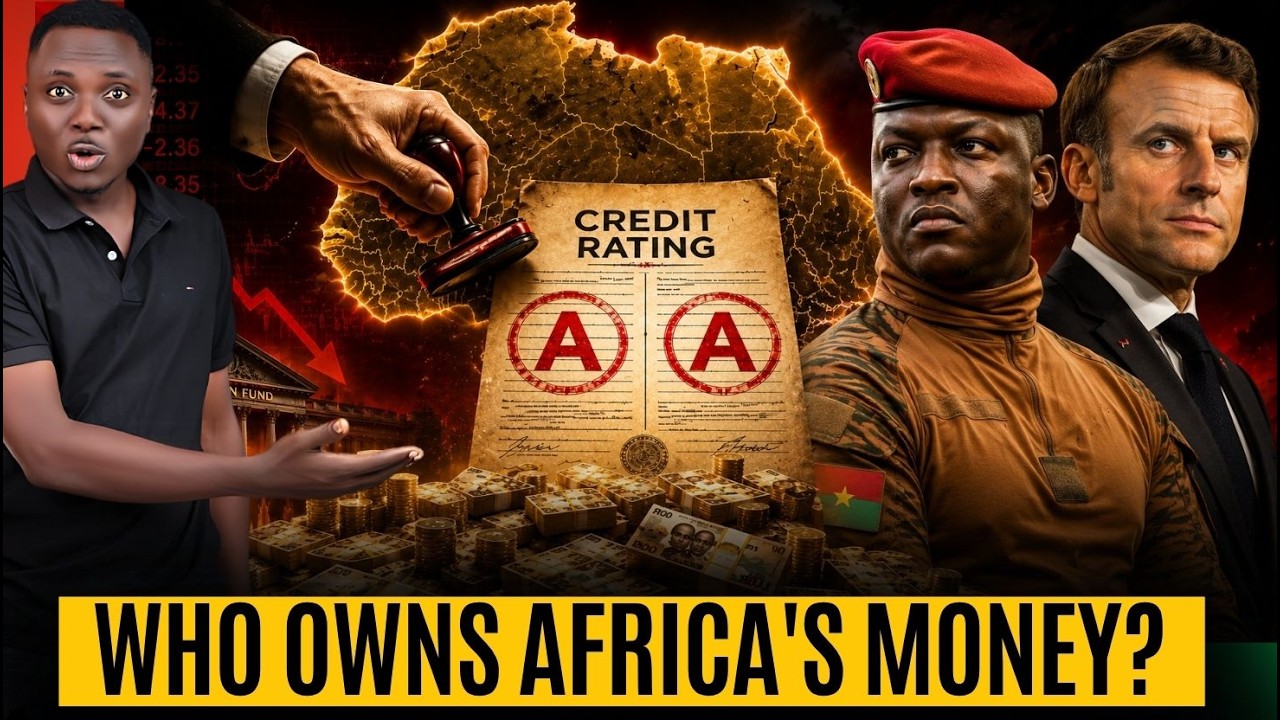
Title: The Hidden Hand Behind Africa’s Currencies: Meet the Company That Sets the Price of Money
Introduction When you exchange dollars for naira in Lagos, or for shillings in Nairobi, the rate you get is rarely a surprise. It moves daily, sometimes hourly, and it feels as natural as the weather.
Introduction
When you exchange dollars for naira in Lagos, or for shillings in Nairobi, the rate you get is rarely a surprise. It moves daily, sometimes hourly, and it feels as natural as the weather. But who actually decides that number? For most African currencies, the answer lies not in a central bank’s marble halls, but in a quiet, data-driven company that most people have never heard of. This is the story of how one firm became the unofficial referee for the value of African money—and why that matters for millions of people.
The Invisible Broker
The company in question operates at the intersection of finance and technology. It does not mint coins or print notes. Instead, it provides the benchmark rates that banks, businesses, and governments rely on to price everything from a sack of rice to a sovereign bond. In technical terms, it is a foreign exchange (FX) data provider. In practical terms, it is the scoreboard for the continent’s economic health.
The core of its work is simple but powerful: it collects real-time prices from hundreds of banks and trading desks across Africa, then aggregates them into a single, authoritative rate. This rate becomes the reference point for transactions worth billions of dollars. Without it, traders would be negotiating in the dark, and central banks would struggle to manage their reserves.
Why Africa Is Different
In Europe or North America, currency prices are set by deep, liquid markets where billions change hands every second. Africa is different. Many of its currencies are thinly traded, meaning there are few buyers and sellers at any given time. This creates volatility and opacity. A bank in Accra might quote a different price for the cedi than a bank in London, and neither may reflect the true market.
This is where the data provider steps in. By aggregating disparate quotes and applying mathematical models, it creates a "fair" price. It smooths out the chaos and provides a single source of truth. For businesses, this reduces risk. For investors, it builds confidence. For central banks, it offers a window into how the world actually values their currency, as opposed to the official peg they might maintain.
The Double-Edged Sword
However, this power comes with a profound responsibility. When a company becomes the de facto price setter for a nation’s currency, it holds a form of sovereignty. A slight change in its algorithm, or a delay in its data feed, can trigger a cascade of effects: inflation, capital flight, or a sudden squeeze on imports.
Critics argue that this creates a dependency. African governments often lack the technical infrastructure to price their own money accurately, so they outsource this critical function to a private firm. The company, for its part, maintains that it is neutral and transparent, providing data that is no better or worse than what the market offers.
The Human Cost
The stakes are not abstract. When a currency is undervalued by a benchmark, imported goods become more expensive. Fuel prices rise. Food costs climb. For a family in Dakar or Kampala, a 2% shift in the exchange rate can mean the difference between a full pantry and an empty one. The company’s decisions, executed in milliseconds and delivered through APIs, ripple through the lives of people who have never heard its name.
A Call for Clarity
As Africa’s economies grow and integrate further into global finance, the role of these data providers will only expand. The question is not whether they should exist—they provide a vital service—but whether their operations are accountable enough. Who audits their models? What happens if their feed goes down? And who holds them responsible when their prices lead a nation astray?
For now, the company remains a silent partner in the continent’s economic journey. It does not seek headlines. It does not court controversy. It simply provides a number, day after day, and lets the world react. But as African nations seek greater financial independence, they may soon ask a harder question: if we are to set the price of our own money, why is it still in someone else’s hands?
Conclusion
The price of African money is not just a statistic; it is a measure of trust, stability, and power. The company that helps decide that price holds a unique position of influence. Whether it uses that influence wisely is a matter of ongoing debate. What is certain is that its role will not diminish. The only question is whether Africa will learn to write its own scoreboard—or continue to rely on an invisible hand.
Related Editorials
Title: The Gathering Storm: How a Continental Shift Is Threatening South Africa’s Regional Dominance
Introduction A quiet but seismic shift is underway in African geopolitics. For decades, South Africa has operated as the continent’s economic and diplomatic anchor, wielding influence from Cape Town to Cairo.
Title: The Hidden Leverage: How a Global Pause in African Exports Would Trigger a Worldwide Crisis
Introduction The global economy runs on a fragile web of supply chains, and no continent is more central to its survival than Africa. Yet, the world often overlooks this dependency.
Paris Makes African Economic Decisions—Not Africans
For decades, the economic policies of many West African nations have been written not in their own capitals, but in Paris. This is not a conspiracy theory; it is the legacy of a colonial-era monetary system that persists into the present day.
Title: Africa’s Hidden Economic Engine: How Tiny Shops Outperform Corporate Offices
Introduction Across Africa, a quiet economic revolution is unfolding—not in skyscrapers or tech hubs, but in the narrow alleyways and dusty roadside stalls of the continent’s busiest cities. Millions of micro-businesses, often dismissed as “informal,” are generating more revenue per square mete
Title: The Real Power Behind Nigeria’s Economy Isn’t in Parliament
Introduction Nigeria is often described as Africa’s largest economy, a nation of vibrant markets, oil wealth, and a youthful population. Yet, for decades, its political class has struggled to deliver consistent electricity, stable currency, or reliable infrastructure.