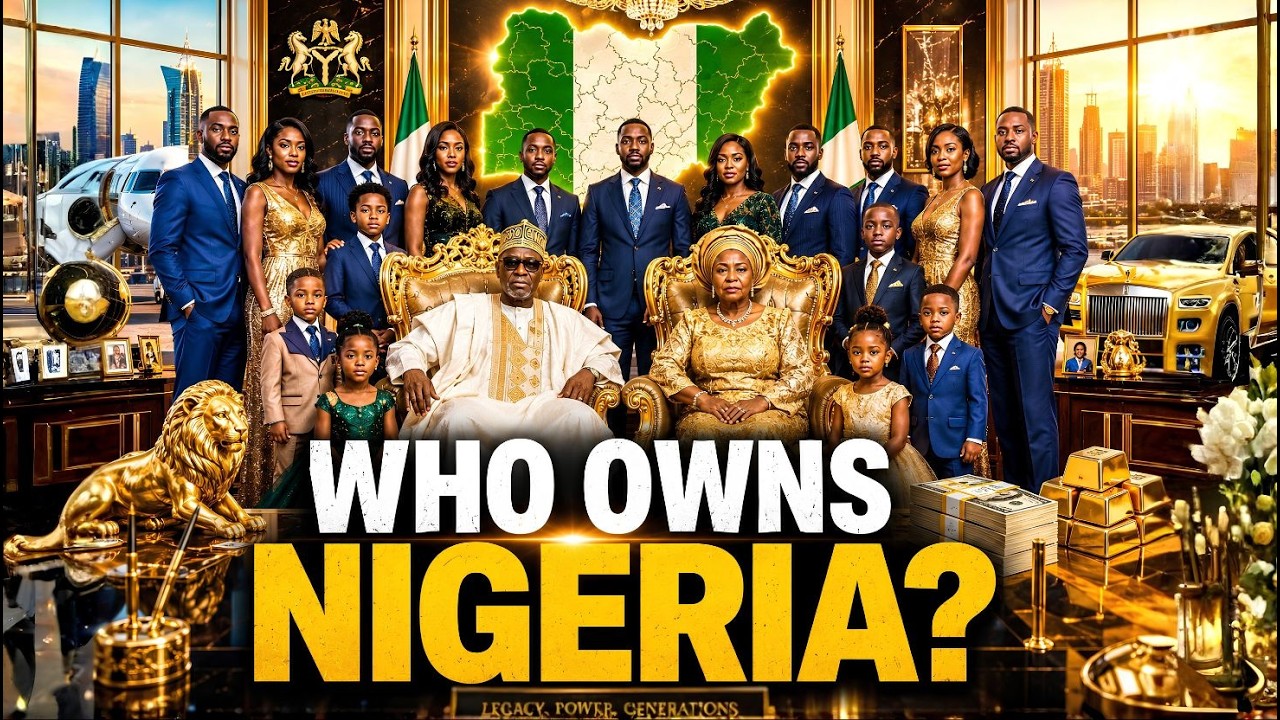
The Real Power Behind Nigeria’s Economy Isn’t in Parliament
Nigeria is often described as Africa’s largest economy, a nation of vibrant markets, oil wealth, and a youthful population. Yet, for decades, its political class has struggled to deliver consistent electricity, stable currency, or reliable infrastructure.
Nigeria is often described as Africa’s largest economy, a nation of vibrant markets, oil wealth, and a youthful population. Yet, for decades, its political class has struggled to deliver consistent electricity, stable currency, or reliable infrastructure. This paradox raises a critical question: If the government does not truly control the country’s economic engine, who does?
The answer lies not in the halls of parliament, but in a far more decentralized, resilient, and ancient network: Nigeria’s informal economy.
The Invisible Giant
The informal economy in Nigeria is not a marginal afterthought; it is the country’s primary economic reality. Estimates from the International Monetary Fund (IMF) and the National Bureau of Statistics suggest that the informal sector accounts for between 50% and 65% of Nigeria’s Gross Domestic Product (GDP). It employs over 80% of the labor force.
This sector includes everything from street vendors selling phone chargers and roasted plantains to motorcycle taxi riders (okada), mechanics working under highway bridges, and thousands of small-scale traders moving goods across borders without official documentation. These are not “side hustles.” For the vast majority of Nigerians, they are the main economy.
Why Parliament Cannot Control It
The formal economy—the one politicians debate, tax, and regulate—is relatively small. It is dominated by oil and gas, banking, and telecommunications. These sectors are vulnerable to global price shocks, corruption, and bureaucratic inefficiency. When parliament passes a budget or a new tax law, it primarily affects this thin layer of formal activity.
The informal economy, by contrast, operates on a different logic. It is cash-based, trust-based, and highly adaptive. It does not rely on government electricity; it uses generators and solar panels. It does not wait for bank loans; it uses rotating savings clubs (esusu) and family networks. It does not obey border tariffs; it navigates them.
The Real Power: Resilience and Adaptation
The true power behind Nigeria’s economy is its ability to survive despite the state, not because of it. During the 2020 COVID-19 lockdowns, while formal businesses shut down or begged for government bailouts, informal traders found ways to deliver goods on foot, negotiate with local authorities, and keep supply chains moving. When the Central Bank devalued the naira in 2023, formal importers struggled, but informal cross-border traders adjusted their pricing and routes within days.
This resilience, however, comes at a cost. Workers in the informal economy lack legal protections, access to healthcare, and pension plans. They are vulnerable to extortion by local officials and police. The government, in turn, misses out on billions of dollars in tax revenue that could fund public services.
A System of Mutual Neglect
The relationship between the formal state and the informal economy is best described as mutual neglect. The government often views the informal sector as “unorganized” or “illegal,” while the informal sector views the government as predatory or irrelevant.
Attempts to formalize the economy—through tax drives or business registration campaigns—have largely failed because they offer little in return. A street trader sees no benefit in paying taxes when the government cannot guarantee security, clean water, or a paved road.
The Path Forward
For Nigeria to truly harness its economic potential, policymakers must stop treating the informal economy as an enemy to be conquered and start treating it as a partner to be integrated.
This does not mean imposing Western-style taxation overnight. It means offering tangible incentives: access to micro-loans, simplified business registration, legal protection from harassment, and investment in the infrastructure that informal businesses already use—markets, transport hubs, and digital payment systems.
Conclusion
Nigeria’s parliament may pass laws, but it does not power the economy. The real power lies with the millions of Nigerians who wake up every morning and build a functioning economy from the ground up, often in spite of their own government. Until that reality is acknowledged and respected, the official economy will remain a shadow of the nation’s true strength.
Related Coverage
Nigeria’s Tinubu Says Country Is Safer and Richer—Opposition Demands Proof as Food Prices Soar
Nigeria’s President Bola Tinubu told Catholic bishops that security and the economy are improving, but opposition parties have publicly rejected the claim, demanding evidence and pointing to persistent kidnappings, farmer-herder clashes, and rising food prices [208059].
Nigeria’s $11 Billion Highway Wipes Out Forests and Livelihoods as Locals Fight Back
Nigeria is pushing forward with an $11 billion coastal highway project along the Atlantic coast, but environmentalists, fishermen, and villagers warn it is destroying forests, accelerating erosion, and crushing the livelihoods of people who depend on the sea and land for food and income [170096]. The project, designed to improve transport and boost tourism, is already raising alarms as construction threatens fragile ecosystems and the communities that rely on them.
Nigeria 2027: Atiku Names El-Rufai, Oyegun to Campaign Team as APC Calls Him Corrupt
Atiku Abubakar has assembled a campaign team for another presidential run, while the ruling party attacks his record and opponents push legal challenges against President Tinubu.
Foreign Fighters Flood Nigeria’s Jihadist War as Boko Haram Trials Target Only Low-Level Scapegoats
Nigeria’s military is losing its 17-year battle against jihadist insurgents as foreign fighters from the Middle East join local militants, bringing deadly new skills and technology—while the government’s terrorism trials focus on punishing poor farmers and herders who paid taxes or fed livestock to Boko Haram.
Nigeria’s $11 Billion Highway Wipes Out Forests, Kills Fishing Livelihoods
Nigeria is building an $11 billion coastal highway along the Atlantic that environmentalists say is already destroying forests and wrecking the livelihoods of fishermen and villagers who depend on the sea and land for food and income [170096]. The project, intended to boost transport and tourism, is speeding up coastal erosion and damaging nearby ecosystems, while local communities watch their traditional way of life slip away [170096].
Nigeria’s 2027 Race Kicks Off: 100 Million Voters, Peace Deal Signed, But Economy and Security Loom Large
Nigeria’s 2027 presidential election campaign is officially underway, with political heavyweights already hitting the trail five months before the vote.
Related Editorials
The Real Power Behind Ghana’s Economy Isn’t in Parliament
In Ghana, the public often looks to Parliament as the primary engine of economic policy and national development. Yet, a closer examination reveals that the true leverage over the country’s financial direction lies elsewhere.
The Unseen Engine of Kenya’s Economy: Why Parliament Isn’t in the Driver’s Seat
When observers analyze Kenya’s economic trajectory, the political drama in Parliament often dominates the headlines. Yet, the true engine driving the nation’s growth—and its vulnerabilities—operates far from the legislative chambers.
Paris Makes African Economic Decisions—Not Africans
For decades, the economic policies of many West African nations have been written not in their own capitals, but in Paris. This is not a conspiracy theory; it is the legacy of a colonial-era monetary system that persists into the present day.
Africa’s Quiet Revolt: Why the Continent Is Tired of South Africa Speaking for It
By [Your Name/Editorial Staff] For decades, South Africa has been the de facto voice of the African continent on the global stage. Its economic power, its history of the anti-apartheid struggle, and its relatively robust media and diplomatic corps have given Pretoria a megaphone that few other Afri
Namibia’s Rare Earth Gambit: How a Tiny African Nation Is Rewiring the Global Tech Supply Chain
For decades, the narrative of China–Africa relations has followed a predictable script: Beijing finances massive infrastructure projects in exchange for raw commodities, leaving African nations as passive suppliers in a global system they do not control. Namibia, a sparsely populated country in sou