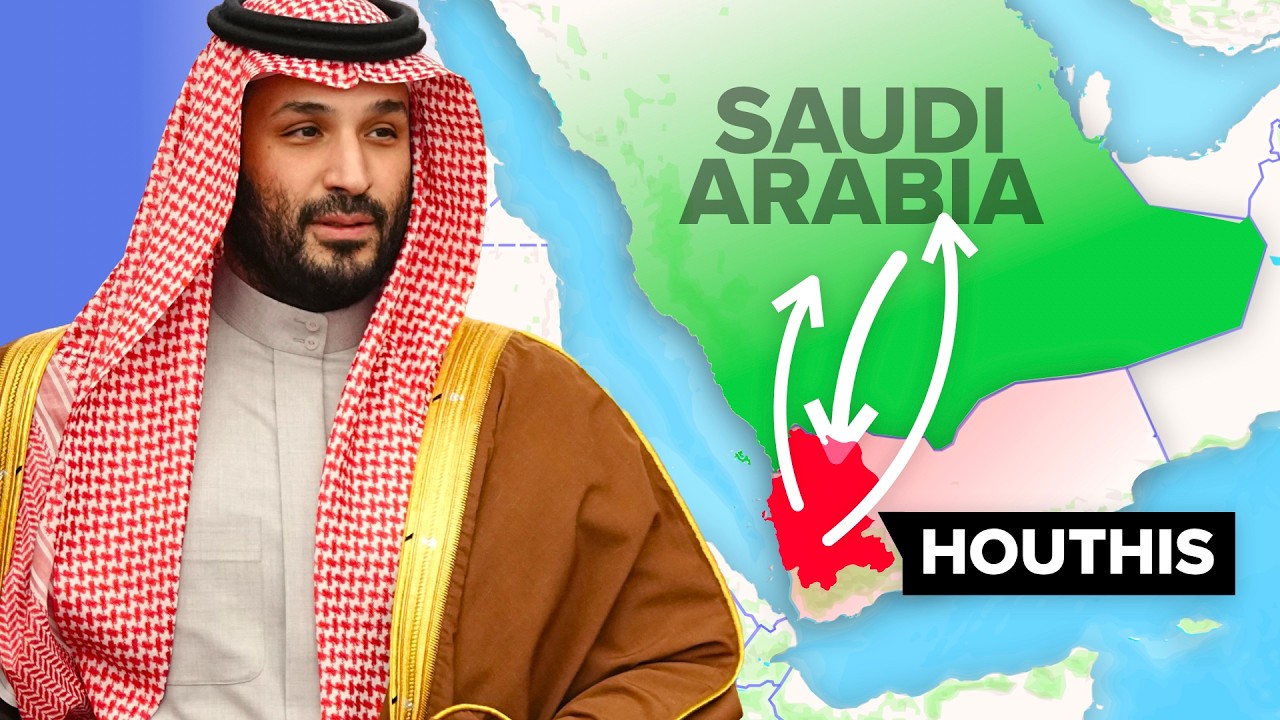
The Saudi-Houthi Truce Shatters: A Return to Yemen’s Endless War
The fragile calm that had settled over Yemen’s front lines has evaporated. After months of relative quiet and tentative diplomatic overtures, the truce between the Saudi-backed coalition and the Houthi movement has collapsed, plunging the region back into active conflict.
The fragile calm that had settled over Yemen’s front lines has evaporated. After months of relative quiet and tentative diplomatic overtures, the truce between the Saudi-backed coalition and the Houthi movement has collapsed, plunging the region back into active conflict. The resumption of hostilities marks a significant setback for de-escalation efforts and raises urgent questions about the future of the Arabian Peninsula’s poorest nation.
For observers, the breakdown was not entirely unexpected. The initial ceasefire, brokered in 2022, was never a formal peace agreement but a temporary measure. While it succeeded in halting large-scale aerial bombardments and cross-border strikes, the underlying political grievances remained unresolved. The Houthis, who control the capital Sanaa and much of the country’s northwest, continued to demand full payment of public sector salaries from oil revenues—a condition the internationally recognized government rejected without a comprehensive political settlement.
The immediate trigger for the renewed fighting stems from a dispute over the distribution of resources and the reopening of key trade routes. The Houthis have escalated their rhetoric, accusing the coalition of blocking humanitarian aid and fuel imports. In response, Saudi Arabia has resumed airstrikes targeting Houthi military positions, signaling the end of its patience with the stalemate.
This is not a new war, but a continuation of an old one. The conflict, which began in 2014 when the Houthis ousted the government, has already created one of the world’s worst humanitarian crises. The collapse of the truce threatens to reverse the modest gains made in reducing civilian casualties and improving aid access.
The strategic calculus for the key players remains complex. For Saudi Arabia, the war has become a costly quagmire, draining its treasury and tarnishing its international reputation. Yet, the kingdom views the Houthis as a proxy for its arch-rival, Iran, and remains determined to prevent a hostile force from controlling its southern border. For the Houthis, the war has solidified their grip on power, but at the cost of international isolation and economic ruin.
The international community now faces a difficult choice. A return to full-scale conflict risks further regional instability, potentially drawing in other actors. However, forcing a return to the negotiating table without addressing the core economic and security concerns will likely prove futile. The path forward requires a renewed diplomatic push that pressures both sides to make concessions, particularly on the issue of revenue sharing and the demilitarization of key ports.
Without a credible political horizon, Yemen faces the grim prospect of another cycle of violence, famine, and disease. The world watched as the truce offered a glimmer of hope; its collapse is a stark reminder that peace, once achieved, is never permanent.
Related Coverage
Trump’s Ceasefire Collapses as Israel Strikes Beirut, Iran Fires Missiles Back
Israel bombed southern Beirut and Iran responded with ballistic missiles, shattering a fragile U.S.-brokered truce and pushing the region toward a new open war.
Trump Demands Ceasefire as Iran-Israel Fighting Escalates
A fragile ceasefire between Iran and Israel has collapsed, with both sides exchanging direct military strikes and President Donald Trump calling for an immediate halt to the fighting.
Trump Demands Ceasefire as Iran and Israel Trade Strikes
The fragile ceasefire between Iran and Israel has collapsed, with both sides launching direct attacks on each other's territory for the first time in months.
Trump’s Iran Options Run Out: Airstrikes Resume, Ceasefire Dead, Strait Threat Looms
The United States and Iran are back in open conflict after President Donald Trump declared the June ceasefire “over” on July 8, ordering intensive airstrikes and reinstating an economic blockade on Tehran [197134]. With diplomatic options exhausted, Iran is now threatening to close a key international waterway—described by experts as a “nuclear option”—that could cripple global oil shipments and challenge US naval dominance [197160].
Iran and Israel Trade Strikes as Ceasefire Collapses, Oil Prices Spike
Iran launched its first missile attacks on Israel since a ceasefire was agreed in April, calling the strikes the start of "a full week" of operations, which pushed oil prices higher as markets reacted to the renewed conflict [167961]. Israel retaliated with air strikes on Iran, testing the fragile two-month truce [167976]. The direct exchanges mark the collapse of the ceasefire and have sparked fears of a wider regional war [168078].
US and Iran Trade Strikes Again, Strait of Hormuz Blocked – 20% of Global Oil at Risk
The United States and Iran have launched multiple rounds of military strikes against each other, effectively killing a recent peace agreement and bringing traffic in the Strait of Hormuz to a standstill. The narrow waterway, which carries about one-fifth of the world’s traded oil, is now at the center of an escalating conflict that has returned both sides to square one.
Related Editorials
The Afghan-Pakistan War Restarts: How Does This End?
The fragile peace along the Afghanistan-Pakistan border has shattered. A new phase of conflict, distinct from the two-decade American occupation, is now underway.
The Houthi Blockade of Bab al-Mandab: A Strategic Chokepoint Under Siege
In a dramatic escalation of regional conflict, the Houthi movement has effectively closed the Bab al-Mandab strait, one of the world’s most critical maritime chokepoints. This narrow waterway, connecting the Red Sea to the Gulf of Aden, handles roughly 10% of global seaborne trade.