The Silent Siege: How the Global Economy’s Core Is Being Hollowed Out
The world’s financial system is not collapsing. There is no dramatic crash, no frantic trading on the floor of a stock exchange, and no central bank emergency meeting.
The world’s financial system is not collapsing. There is no dramatic crash, no frantic trading on the floor of a stock exchange, and no central bank emergency meeting. Yet, according to two of Europe’s most prominent economic minds, a crisis of historic proportions is quietly consolidating power in the hands of a few, while dismantling the foundations of the middle class.
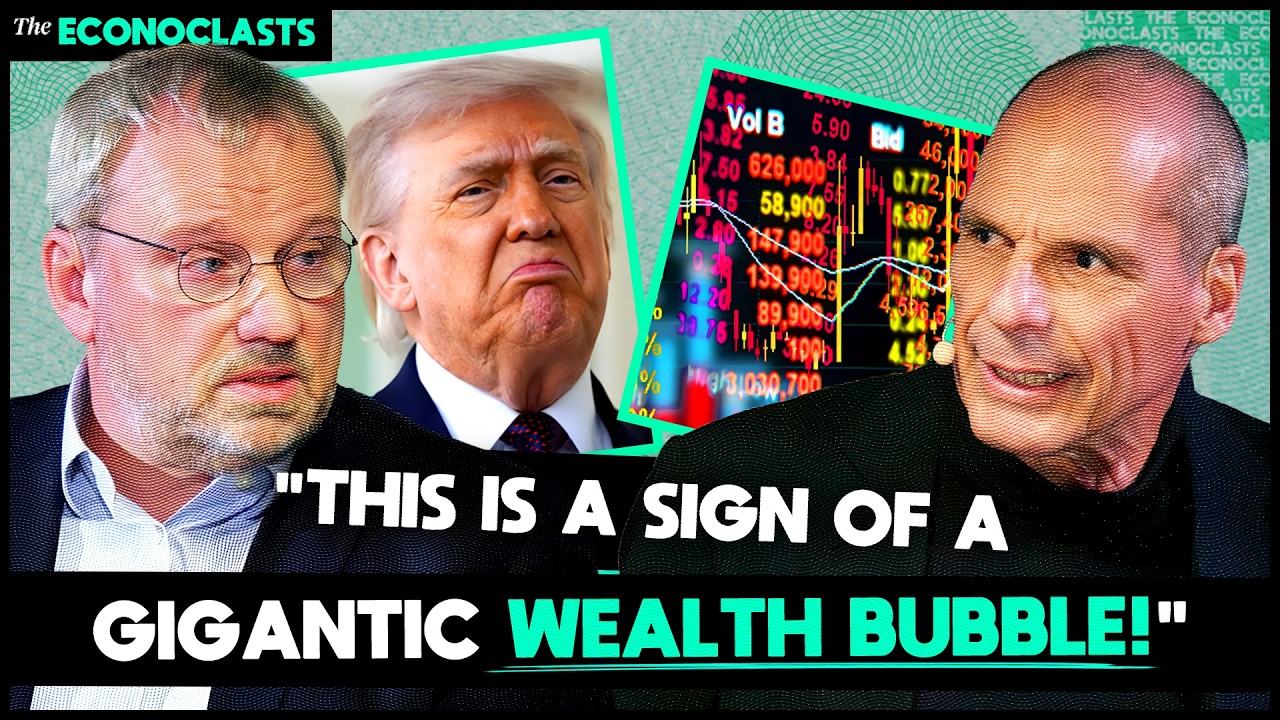
In a recent conversation between economist and former Greek Finance Minister Yanis Varoufakis and Financial Times columnist Wolfgang Münchau, the pair outline a disturbing thesis: the current stability of the global economy is an illusion, masking a structural shift toward a "neo-feudal" era defined by private monopolies and the weaponization of debt.
The Myth of the "Free Market"
For decades, Western policymakers have operated under the assumption that capitalism is synonymous with competition. Varoufakis and Münchau argue that this is no longer the case. The modern economy is no longer driven by the efficient allocation of resources, but by the exponential growth of "cloud capital"—the intangible assets, algorithms, and server farms controlled by a handful of tech conglomerates.
These platforms, they argue, function less like companies and more like private governments. They set the terms of trade for millions of small businesses, extract rents from their users, and dictate the pace of innovation. This is not the level playing field promised by classical economics; it is a new form of monopoly that operates outside the reach of traditional antitrust law, which was designed for an era of physical factories and railroads.
The Debt Trap
The conversation pivots to the specific mechanism that enables this concentration of power: debt. The speakers suggest that the post-2008 recovery was built not on wage growth or productive investment, but on a mountain of public and private borrowing. While this credit kept the system afloat, it has created a structural dependency.
Governments, particularly in the Eurozone, are trapped in a cycle where they must guarantee the debt of their banking systems, yet lack the fiscal sovereignty to manage their own economies effectively. This creates a "doom loop" where the health of the state is inextricably tied to the solvency of private financial institutions. The result is a system where "too big to fail" has evolved into "too big to govern."
The Inflation Conundrum
The discussion tackles the current inflationary wave, offering a contrarian view. Rather than viewing inflation as a simple case of "too much money chasing too few goods," they posit that it is a symptom of the supply-side bottlenecks created by the new monopolies. When a few players control the logistics, energy, and data infrastructure, they possess the pricing power to pass costs onto consumers while simultaneously padding their margins.
This dynamic creates a dangerous political vacuum. As real wages stagnate, the political center collapses, paving the way for populist movements that offer simplistic solutions to complex structural problems. The experts warn that this is not a bug of the current system, but a feature—a direct consequence of an economy designed to reward capital extraction over labor contribution.
A Call for De-Globalization?
The dialogue concludes with a stark prediction: the era of hyper-globalization is over. The next decade will be defined by fragmentation, as the US, China, and Europe retreat into their respective spheres of influence. While this may reduce the risk of systemic contagion, it also signals the end of the "cheap goods" era that kept Western inflation low.
The editors suggest that the only way to avert a "digital serfdom" is a radical rethinking of property rights. They argue that data, like land in the 19th century, must be treated as a common good rather than a commodity to be hoarded. Without such a shift, the invisible crisis will continue to deepen, not with a bang, but with the quiet erosion of economic democracy.
Related Coverage
Strait of Hormuz, Drought, and Debt: The Global Economy Strains Under War and Climate Chaos
A global economy built on the promise of open trade and cheap energy is buckling under the weight of geopolitical conflict, strategic blockades, and a technological gold rush that is straining the very limits of infrastructure, leaving ordinary citizens to bear the brunt of inflation, fuel shortages, and a widening gap between the wealthy and the rest [15239].
The Price of Power: How Sanctions, War, and Climate Chaos Are Reshaping the Global Economy
A global economy built on the promise of open trade and cheap energy is now buckling under the weight of geopolitical conflict, strategic blockades, and a technological gold rush that is straining the very limits of infrastructure. From the closed oil lifeline of the Strait of Hormuz to the drone-struck refineries of Russia and the record-breaking rallies in tech stocks, the global financial system is being pulled in opposing directions. While investors chase artificial intelligence (AI) profits and safe-haven assets like gold, millions of ordinary citizens are facing the harsh realities of inflation, fuel shortages, and a widening gap between the wealthy and the rest [15239].
Social Security’s Clock Is Ticking—Why Nobody’s Talking About It
The Social Security trust fund is projected to run short of money in the coming years, yet the issue has barely registered as a top campaign priority, leaving many Americans unaware of the program’s financial shortfall and the painful choices ahead.
Title: A World Held Hostage: How a System Built for Profit Fuels Endless War, Climate Chaos, and Global Instability
A fragile peace deal between the United States and Iran that briefly promised to unlock vital global oil routes is collapsing under renewed violence, even as a record-breaking climate disaster threatens worldwide hunger and an economic model built on extraction and profit leaves the most vulnerable to bear the cost.
A World Held Hostage: How a System Built for Profit Fuels Endless War, Climate Chaos, and Collapsing Peace
A fragile peace deal between the United States and Iran that briefly promised to unlock vital global oil routes is collapsing under renewed violence, even as wars in Ukraine and Gaza rage on and a record-breaking climate disaster threatens worldwide hunger, revealing a global economic order that prioritizes military spending and corporate profit over human welfare.
Global Economy on a Knife’s Edge: War, Sanctions, and Energy Chaos Reshape Markets
A world economy built on the promise of open trade and cheap energy is now buckling under the weight of geopolitical conflict, strategic blockades, and a technological gold rush that is straining the very limits of infrastructure. From the closed oil lifeline of the Strait of Hormuz to the drone-struck refineries of Russia and the record-breaking rallies in tech stocks, the global financial system is being pulled in opposing directions. While investors chase artificial intelligence (AI) profits and safe-haven assets like gold, millions of ordinary citizens are facing the harsh realities of inflation, fuel shortages, and a widening gap between the wealthy and the rest.
Related Editorials
The $3.5 Trillion Shadow: Why the Global Debt Time Bomb Is Still Ticking
A financial crisis is unfolding in plain sight, yet it remains largely absent from mainstream headlines. It is not a bank run, a stock market crash, or a sudden currency devaluation.
Title: The Quiet Unraveling of Dollar Hegemony
The global financial order is not built on treaties or pacts. It is built on a single currency, the US dollar, which underpins international trade, central bank reserves, and the pricing of commodities from oil to wheat.
The Coming Insurance Crisis: Why Climate Change Is Quietly Making Homes Uninsurable
Article: Across the globe, a silent crisis is brewing in the real estate market. It is not driven by interest rates or housing shortages, but by the physical reality of a warming planet.
The Next Financial Crash: Why “Uninvestable” Assets Are the Real Threat
The global financial system is a complex web of interdependencies. When a major shock occurs—like a pandemic or a sudden spike in interest rates—the initial damage is often visible.
The $600 Billion Shadow: How the US Quietly Backstopped Japan’s Markets
In the high-stakes world of global finance, the term "bailout" usually conjures images of frantic lawmakers and taxpayer-funded rescue packages. But one of the most significant financial interventions of the modern era occurred not through legislation, but through the silent mechanics of central ba
Africa’s Silent Giant: The $5 Billion Megaproject Reshaping the World’s Economy
While global attention fixates on trade wars and energy crises, a quiet revolution is underway in North Africa. Morocco has just completed a project that analysts are calling the most consequential infrastructure development for the continent in decades—yet it has barely made headlines.