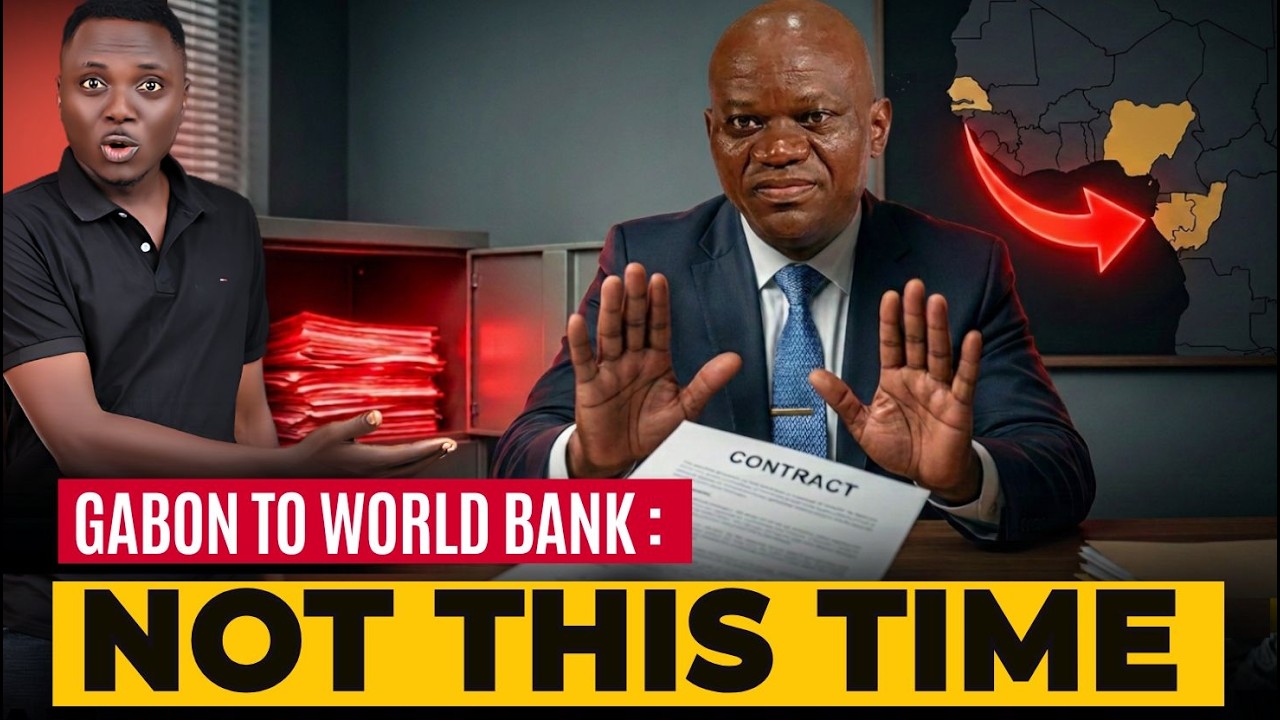
Gabon Demands Proof: Why a $500 Million World Bank Deal Hangs in the Balance
In a rare standoff between a resource-rich African nation and a global financial institution, Gabon is refusing to sign a $500 million carbon credit agreement with the World Bank—unless the bank can prove the deal actually works. The Central African nation, home to one of the world’s most biodivers
In a rare standoff between a resource-rich African nation and a global financial institution, Gabon is refusing to sign a $500 million carbon credit agreement with the World Bank—unless the bank can prove the deal actually works. The Central African nation, home to one of the world’s most biodiverse rainforests, has taken an unprecedented stance: it wants verifiable evidence of impact before accepting millions in conservation funding.
The dispute centers on the World Bank’s Carbon Fund, a mechanism designed to pay developing countries for reducing emissions from deforestation and forest degradation (REDD+). Gabon, which has already achieved an impressive 90% forest cover and maintains a low deforestation rate, is one of the first countries eligible for these payments. Under the proposed terms, the World Bank would pay Gabon for carbon credits generated by keeping its forests standing—credits that could then be sold to polluting nations to offset their emissions.
But Gabon’s government is pushing back. The country’s officials argue that the current methodology for measuring carbon credits is opaque and potentially overinflated. They want independent auditors to verify the actual carbon stored in their forests, not just rely on satellite imagery and models. “We are not asking for special treatment,” a senior Gabonese negotiator stated. “We are asking for proof. If we cannot verify the carbon, the credits have no real value, and the deal is meaningless.”
This demand has stalled negotiations for months. On one side, the World Bank insists its protocols are scientifically rigorous and have been vetted by international experts. On the other, Gabon points to a history of failed conservation projects where money was paid but carbon benefits were not realized. The country is also wary of “carbon colonialism”—a scenario where wealthy nations pay for credits from developing countries without actually reducing their own emissions.
The stakes are enormous. Gabon’s forests store an estimated 1.5 billion tons of carbon, roughly equivalent to three years of global fossil fuel emissions. If the deal goes through, it could set a precedent for how tropical nations are compensated for preserving their ecosystems. If it collapses, it could undermine trust in the entire carbon credit market.
The core of Gabon’s argument is simple: transparency. The government has proposed a joint verification mechanism involving independent scientists, local communities, and international observers. They want to measure carbon stocks on the ground—in specific plots of forest—rather than relying solely on remote sensing. “A satellite can tell us where trees are,” one Gabonese forestry official explained. “But it cannot tell us how much carbon is inside them. We need boots on the ground.”
The World Bank has responded cautiously, acknowledging Gabon’s concerns but defending its methodology. In a statement, a Bank spokesperson said the institution is “committed to robust and transparent carbon accounting” and is willing to “explore additional verification measures.” However, the Bank has not agreed to Gabon’s specific demand for ground-level, plot-by-plot measurement, citing cost and logistical constraints.
This impasse highlights a broader tension in global climate finance: who decides what counts as a real environmental benefit? For Gabon, the answer is clear: the country that owns the forest must have the final say. By demanding proof before payment, Gabon is not just protecting its own interests—it is challenging the entire architecture of carbon trading.
Whether the World Bank will meet this challenge remains to be seen. But one thing is certain: Gabon’s forests are too valuable to be traded on faith alone.
Related Coverage
Africa’s 54 Votes vs. 5: The Fight to Fix the UN’s Most Powerful Club
The UN Security Council faces growing pressure to give Africa a permanent seat, with 54 member states currently shut out of the veto-holding group.
G20 Finance Chiefs Demand Safe Passage Through Strait of Hormuz as China Blocks Trade Deal
A push by the world's largest economies to secure safe shipping routes through a critical oil artery has hit a wall, with China refusing to back a separate trade agreement.
Iran Demands $100 Billion Back Before Signing Any Peace Deal
The United States and Iran are closer than ever to signing an agreement to end their war, but a critical dispute over approximately $100 billion in frozen Iranian assets threatens to derail the entire deal.
Judge Warns DOJ: “Don’t Play Possum” on $1.8 Billion Anti-Weaponization Fund
A federal judge has rejected a watchdog group’s request to block the Trump administration’s $1.8 billion “Anti-Weaponization Fund,” but warned the Department of Justice not to secretly misuse the money.
Macron Bends to Trump: 'Climate Change' Axed from G7 Papers as 20,000 Swiss Protesters Rage
As the G7 summit kicks off in France, French President Emmanuel Macron has quietly removed the term “climate change” from all official summit documents to avoid a confrontation with U.S. President Donald Trump, while across the lake in Geneva, at least 20,000 anti-Trump protesters gathered chanting "Do not negotiate with such a man."
Senegal Votes to Slash Presidential Powers – Reform Passes by a Hair
Senegal’s parliament has approved a constitutional amendment that reduces the powers of the president, shifting key executive authorities to the prime minister and parliament following a controversial vote on July 1, 2026 [186530]. The reform, which passed with a narrow majority, sparked protests in the capital, Dakar, as critics argued the process lacked transparency while supporters said it strengthens democratic checks and balances [186530].