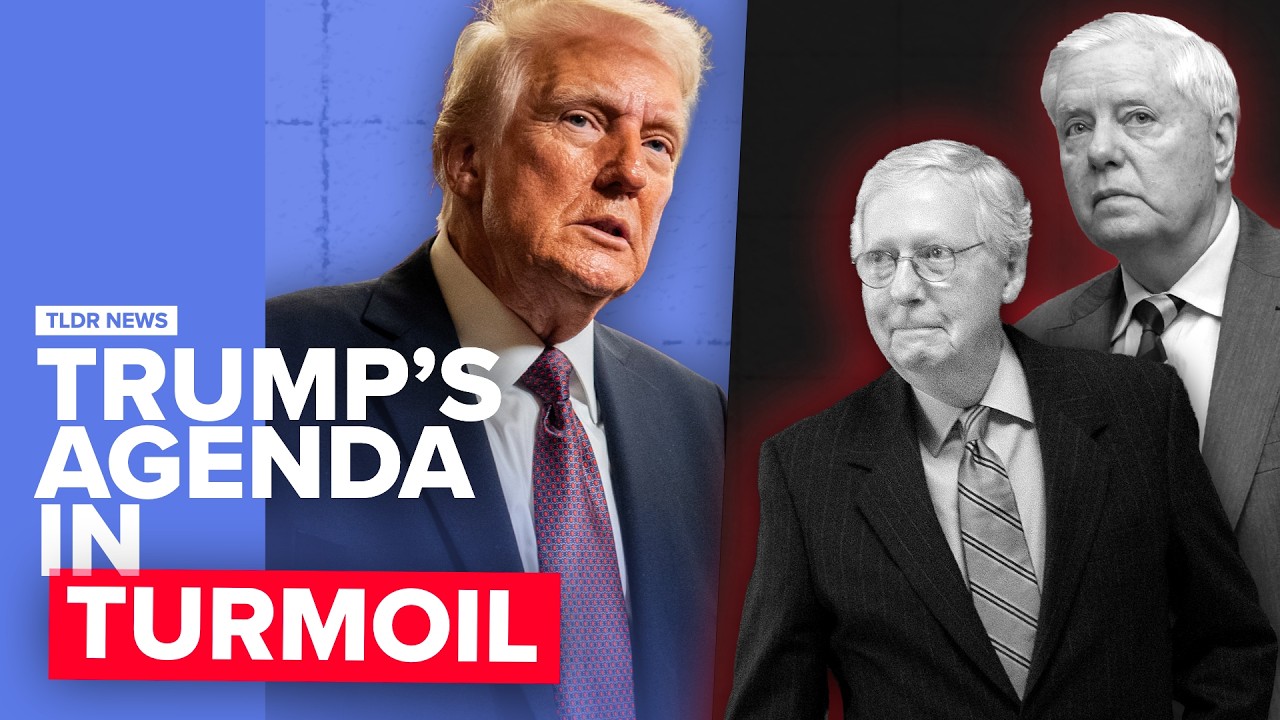
Trump’s Legislative Agenda Faces a Steep Climb: The Math and the Mess
The promise of a sweeping legislative victory for President-elect Donald Trump is colliding with the hard realities of Capitol Hill. While the Republican Party holds a majority in the House of Representatives, that majority is historically narrow.
The promise of a sweeping legislative victory for President-elect Donald Trump is colliding with the hard realities of Capitol Hill. While the Republican Party holds a majority in the House of Representatives, that majority is historically narrow. With a current margin of just a handful of seats, the path to passing any major bill is fraught with peril.
The core problem is not a lack of ideas, but a lack of votes. To pass legislation through the House without Democratic support, Republicans can afford to lose only a few of their own members. This creates a dynamic where a small faction of lawmakers can effectively veto the party’s entire agenda. Any bill that fails to satisfy the most conservative members of the caucus—or, conversely, those from competitive districts—risks immediate collapse.
This internal friction is already visible. The House Freedom Caucus, a group of hardline conservatives, has made it clear they will not support any spending bill that does not include deep, structural cuts to federal programs. At the same time, moderate Republicans, many of whom represent districts won by President Biden in 2020, are wary of voting for cuts that could be used against them in the next election. The result is a legislative stalemate before the new Congress has even begun its work in earnest.
The Senate presents a similar, albeit slightly less severe, challenge. While the filibuster remains a powerful tool for the minority party, the real bottleneck is the House. A bill cannot become law unless it passes both chambers in identical form. If the House cannot produce a clean bill, the Senate has nothing to vote on.
Furthermore, the clock is ticking. The federal government faces a funding deadline in the coming weeks. If a budget agreement is not reached, a shutdown looms. This is not a hypothetical risk. Past shutdowns have damaged the public’s trust in government and caused significant economic disruption. The pressure to avoid a shutdown will force leadership to make difficult choices, likely alienating one wing of the party or another.
In short, the President-elect’s legislative agenda is not just in trouble; it is at a critical juncture. The combination of a razor-thin majority, deep ideological divides within the party, and an inflexible legislative calendar creates a perfect storm. To succeed, Republican leadership will need to perform a delicate balancing act, securing the support of both the party’s most conservative and most moderate members. Without a unified front, the agenda will remain stalled, and the promise of swift, transformative change will remain unfulfilled.
Related Coverage
House GOP Infighting Threatens Largest Veterans Benefits Expansion in a Decade
A massive expansion of veterans benefits—the largest in over a decade—is at risk of collapse as House Republicans feud over attaching a voting-related bill to the legislation. Critics accuse some GOP lawmakers of holding the veterans package “hostage” to advance their own political agenda [193862].
US Adds Only 57,000 Jobs in June — Economy Stalls as Trump’s Party Faces Midterm Wipeout
The United States added far fewer jobs than expected in June, signaling new trouble for the economy ahead of the midterm elections and putting President Donald Trump’s Republican Party under intense pressure.
Desalination or Cloud Seeding? Trump’s $14m Plan to Save the Drying Colorado River Falls Apart
A massive water crisis is brewing in the U.S. Southwest as the Colorado River shrinks, forcing the Trump administration to consider expensive and experimental fixes like desalination and cloud seeding. Meanwhile, a tiny Texas agency is pushing to build the nation’s largest desalination plant, while a rushed $14 million renovation of Washington D.C.’s Reflecting Pool has failed, plagued by algae and peeling paint.
Iran Walks Out of 80-Minute US Talks After Trump Threat – But ‘Progress’ Reported
Both sides say they are making progress toward ending the four-month conflict, but the talks hit a major snag when Iran’s delegation walked out of an 80-minute meeting after President Donald Trump issued new threats [178797]. The walkout came during direct negotiations in Switzerland, where U.S. Vice President JD Vance and Iranian chief negotiator Mohamed Baqer Qalibaf are leading the discussions [178626]. Despite the disruption, mediators from Qatar and Pakistan kept channels open, and diplomats describe the overall atmosphere as constructive [178843][178797].
Ukraine Needs More Patriots Now, Says Top US Lawmaker — But New Missile Deal Is Years Away
Ukraine is gaining momentum on the battlefield but urgently needs more Patriot missile interceptors and stronger air defenses to stop Russia's escalating attacks, says a top US lawmaker. However, a newly signed missile deal between Trump and Zelensky could take years to implement, leaving a critical gap in Ukraine's defense.
U.S. Democracy at a Breaking Point: Trump’s Second Year Sparks Fears of Authoritarian Rule
One year into Donald Trump’s second term, historians and scholars warn that the president has pushed American democracy to a breaking point, dismantling federal agencies, purging the civil service, and sidelining Congress at a speed that has stunned observers of authoritarian regimes [52009]. Meanwhile, a separate legal battle over who controls U.S. election rules is intensifying, as state legislatures and Congress fight for power over how Americans vote [166680].