Africa's Water Data Gap: 1.4 Billion People at Risk as Demand Surges
A new assessment reveals that African countries lack detailed water demand data, leaving governments unable to plan for growing populations and economic expansion. Meanwhile, South African activists warn that water-hungry AI data centres could drain resources from communities already facing shortages.
---
African countries are facing a critical water management crisis, with new research revealing that governments lack the detailed data needed to plan for future demand as populations grow and economies expand [1].
A new assessment aims to measure water demand across the continent — by location and by economic sector. The study focuses on "spatial and sectoral water demand," examining how much water is needed in specific places and for specific uses, including agriculture, industry, and households [1].
Currently, such detailed data for Africa is limited. Without it, governments and planners struggle to prepare for growing populations and economic expansion. The assessment seeks to map where water demand is rising and which sectors are driving that demand — information described as critical for managing shared water resources and avoiding shortages [1].
The findings could help policymakers prioritize investments in infrastructure and water conservation. As Africa's cities grow and its economies develop, the pressure on water supplies will only increase. Reliable demand estimates are seen as a first step toward securing water for the future [1].
Separately, a new accounting review reveals that Africa has enough water data to track its resources, but not enough systems to manage them. The gap is not in measurement but in governance [2].
Across the continent, agencies collect rainfall, river flow, and groundwater figures. Yet these numbers rarely connect to budget decisions, infrastructure planning, or drought response. Water accounts exist on paper but seldom guide policy. The result is a paradox: countries can describe their water, but many cannot manage it [2].
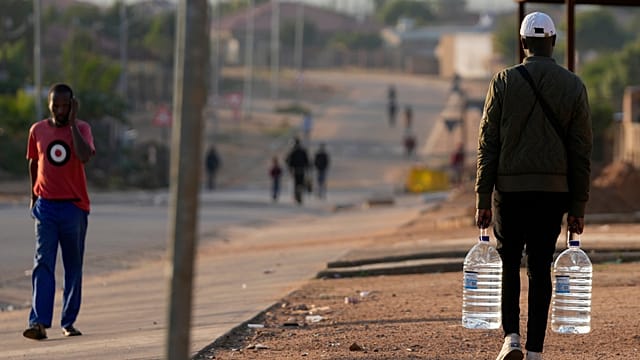
In South Africa, civil society groups are calling for a halt to the construction of new artificial intelligence (AI) data centres. Activists warn that hyperscale data centres — massive facilities that consume large amounts of water and electricity — could be built near city areas where thousands of people already lack reliable access to these resources [3].
The groups say the growing demand for AI infrastructure must not come at the expense of local communities' basic needs [3].
The developments highlight mounting pressure on water resources across the continent, where reliable data and responsible management are increasingly seen as essential to ensuring access for all communities.
---