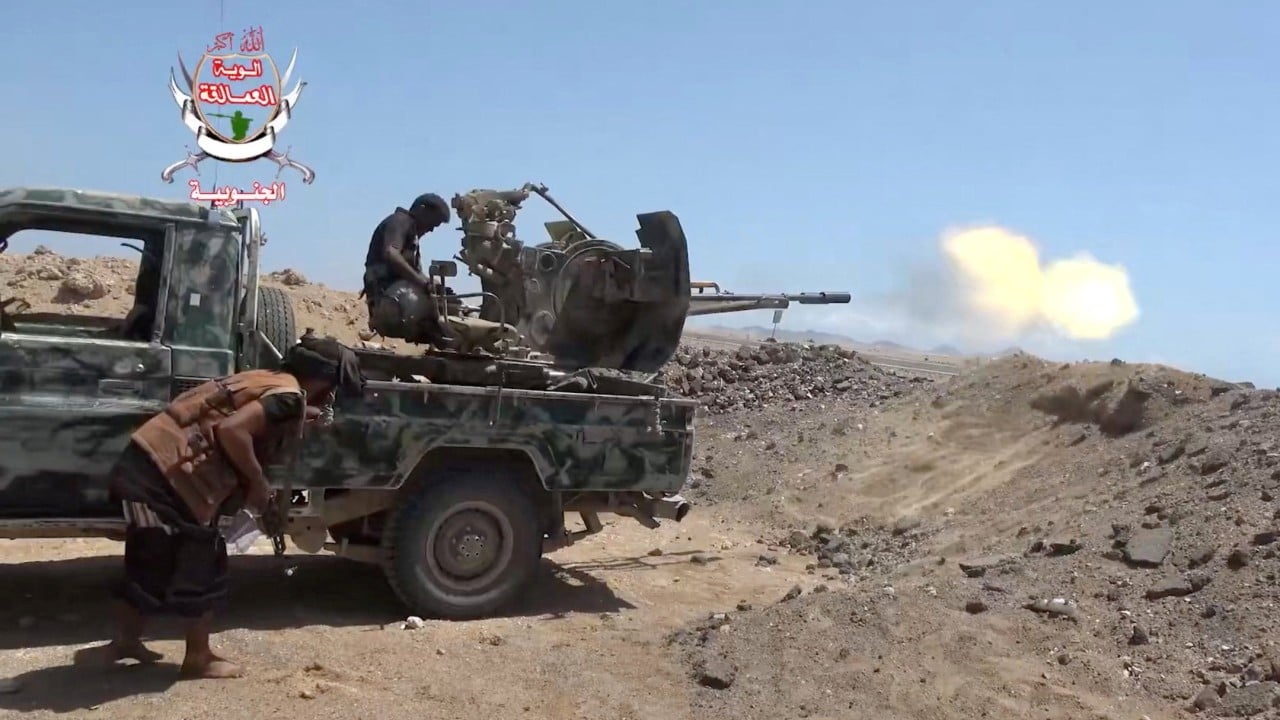
Houthi Strikes Kill 13 at Riyadh Airport as Saudi Arabia Resumes Yemen Bombing After 4-Year Pause
Saudi Arabia's capital has been hit by two consecutive Houthi attacks on its international airport, killing at least 13 people and injuring over 300, as the kingdom resumes major airstrikes on Yemen for the first time in four years.
Saudi Arabia resumed major air strikes on Yemen's Houthi rebels on Monday, ending a four-year pause in bombing and raising the risk of direct conflict with Iran [255279]. More than 100 Saudi warplanes struck rebel positions, helping Yemeni government forces retake most of the Red Sea coastal territory the Houthis had seized last month [255279]. Iranian military advisers had been embedded with the Houthis, according to reports [255279].
The Houthis retaliated with missile and drone strikes on Saudi airports and energy facilities [259863]. On Saturday, an attack on Saudi Arabia's largest airport killed at least 12 people and injured more than 300, described as the largest attack on a Gulf state since the war with Iran began [260152]. A second strike on Riyadh's international airport on Sunday killed one person and wounded 11 others [260249][260164]. The attacks forced authorities to suspend operations at the airport [260249].
The United Nations Special Envoy to Yemen, Hans Grundberg, condemned the Houthi attacks on Saudi territory and called for an immediate end to them [258572]. Türkiye, Egypt, Pakistan, and Saudi Arabia also condemned the attacks and demanded an "immediate, unconditional" halt, reaffirming solidarity with Riyadh [259946].
US President Donald Trump said he is considering joining Saudi Arabia's military campaign against the Houthis [259916]. Pakistan has confirmed that its troops are stationed in Saudi Arabia, with Lt. Gen. Ahmed Sharif Chaudhry telling CNN, "The forces of Pakistan are already there. That I can share with you" [259969].
Saudi and Iranian foreign ministers discussed the regional escalation and efforts to address it, according to the Saudi Foreign Ministry [259941].
A former US energy official warned that threats to the Middle East's energy core are becoming chronic. "We are entering an age of prolonged insecurity," he said, noting that the Iran war's reach is extending further and testing the world's energy order again [260329].