Tiny Islands Take Climate Fight to World's Top Court as Maldives Joins Chagos Dispute
Some of the world's smallest nations are pushing climate accountability to the highest international court, while the Maldives opens a new front in the Indian Ocean.
Some of the world's smallest countries are taking their climate battle to the highest international court, shifting the debate from pleas for help to questions of human rights and state responsibility [254049]. At the same time, the Maldives is formally challenging Britain's claim to the Chagos Islands, adding a new dimension to an already complex sovereignty dispute in the Indian Ocean [254169].
The climate case before the International Court of Justice represents a significant shift in how small island nations are approaching the global climate crisis. Rather than simply requesting assistance, these nations are now framing the issue in terms of legal responsibility and human rights obligations [254049]. This approach could establish new precedents for how countries are held accountable for climate-related harm.
The Maldives' challenge to Britain's sovereignty over the Chagos archipelago adds another layer to an ongoing territorial dispute. President Mohamed Muizzu has promised to submit evidence supporting the Maldives' claim to relevant international bodies, though he did not specify which organizations would be approached or when the evidence would be presented [254169]. The Chagos Islands are currently controlled by the United Kingdom, while Mauritius also maintains a sovereignty claim over the territory [254169].
The question of historical responsibility for climate change remains central to these international legal efforts. A new map tracking carbon dioxide (CO2) emissions from 1742 to the present day shows a sharp divide between industrialized nations that produced most of the emissions and countries that contributed very little [254046]. Because CO2 stays in the atmosphere for centuries, emissions released long ago continue to affect the climate today [254046].
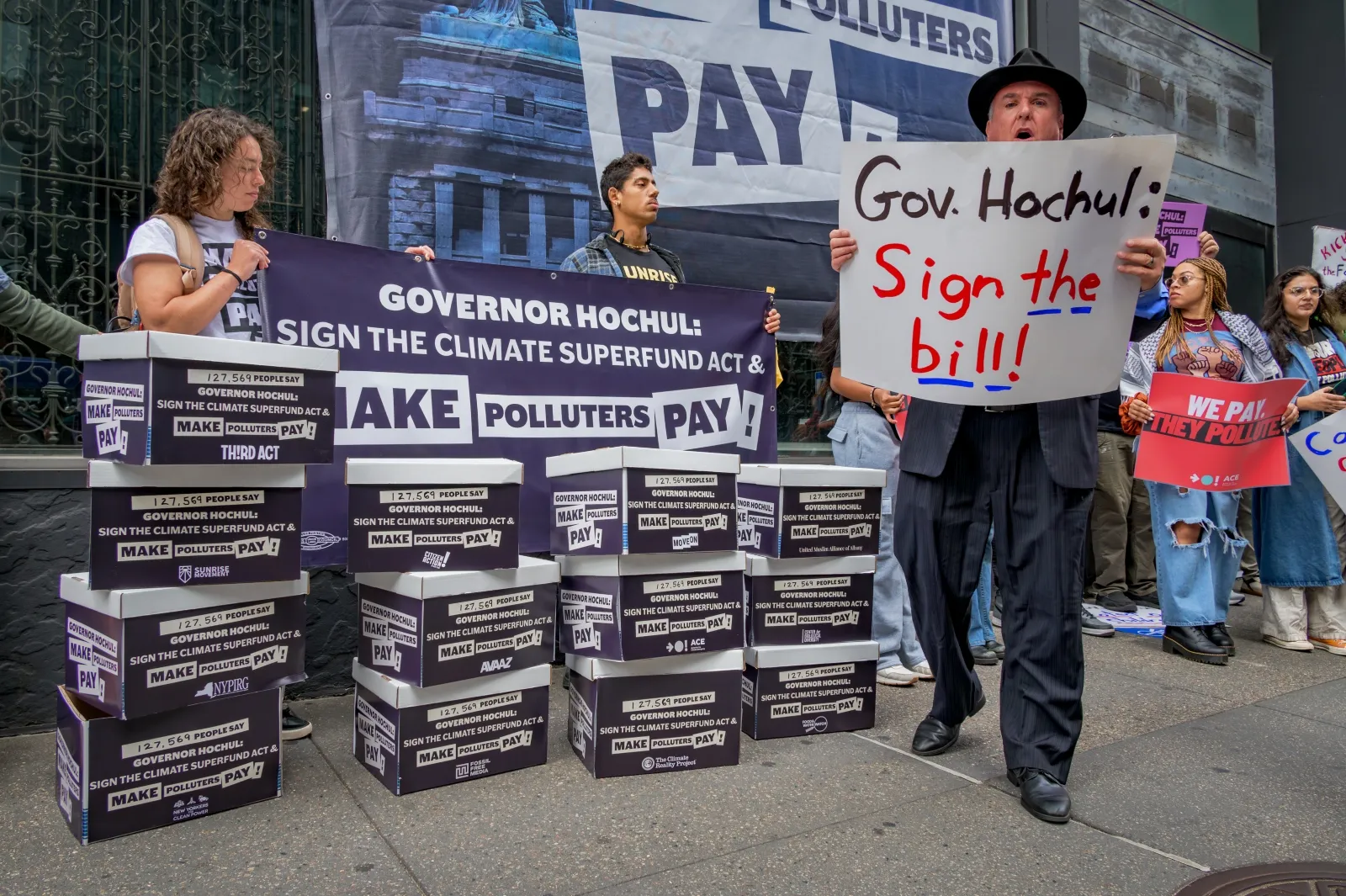
These developments come as courts in various countries grapple with how to assign financial responsibility for climate damage. New York's "climate superfund" law, which would force major oil companies to pay for climate-related damage, has been struck down in court twice [253498]. A U.S. Supreme Court case could determine whether similar laws across the country survive, potentially shaping how states hold fossil fuel companies financially responsible for climate harm [253498].