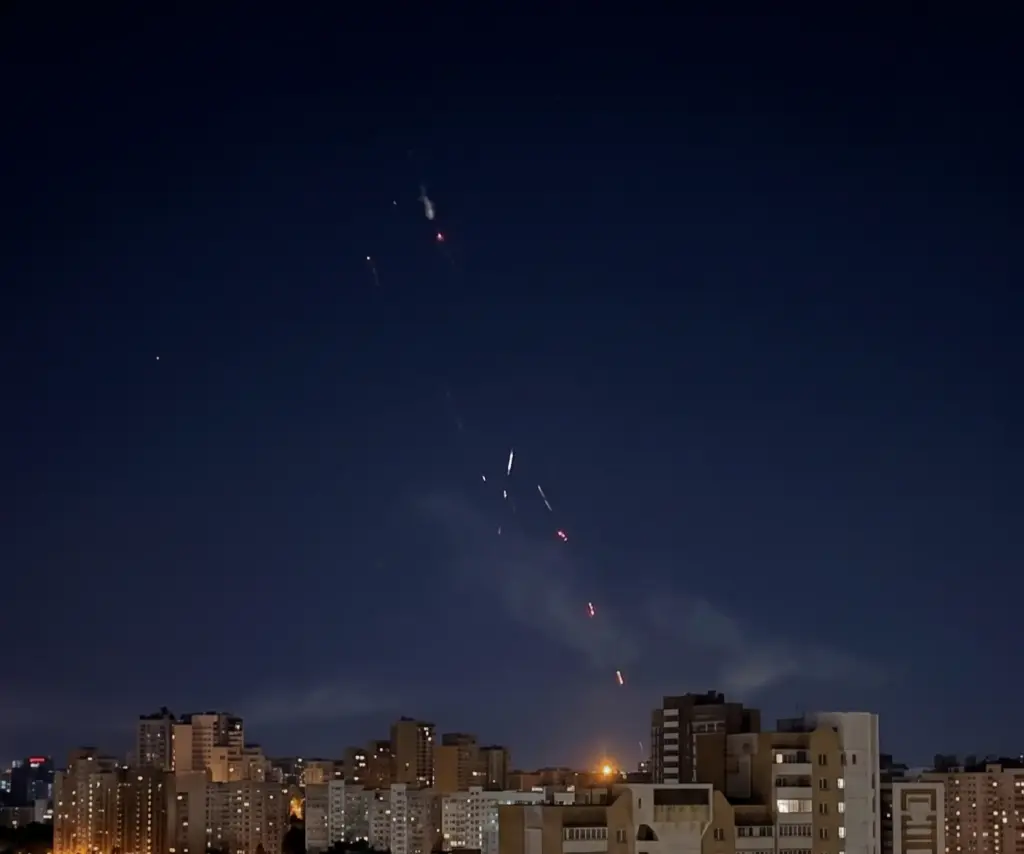
Russia's New Jet Drones Hit 300mph as Germany Accuses Moscow of Airport Attack
Russia is escalating its war on multiple fronts—unleashing faster drones, targeting civilian supply lines, and facing fresh accusations of sabotage in Europe.
Germany has accused Russia of orchestrating an attack on Leipzig airport, marking the latest in a string of suspicious incidents across Europe [236230]. The German government did not provide specific evidence publicly, but officials pointed to a broader pattern of sabotage activity that European security agencies have been tracking for months [236230]. The accusation comes as European nations report unexplained events including damaged undersea cables, fires at industrial sites, and GPS interference near military facilities [236230].
In a separate development, Germany announced plans to take tougher action against Russia's shadow fleet, joining other European Union countries [239196]. Berlin accuses these ships of helping Moscow avoid sanctions and carry out sabotage [239196].
Meanwhile, Russia is deploying new jet-powered drones that fly faster than Ukraine's air defense interceptors can catch [238847]. The drones reach speeds of up to 300 miles per hour, quicker than the interceptors Ukraine uses to shoot them down [238847]. Moscow is now sending these drones out every day, stepping up pressure on Ukraine's air defenses [238847].
The new aerial tactics are taking a toll on Ukraine's capital. Russia has shifted to launching strikes around the clock, pushing air raid alerts in Kyiv to a record high [237178]. Schools, businesses, and public transport are struggling to cope with the surge in attacks [237178]. The constant threat is disrupting daily life, with air raid sirens sounding multiple times a day and night [237178].
Russia has also struck food storage facilities around Kyiv as Ukraine's stretched air defenses struggle to intercept the faster drones and ballistic missiles [237382]. In response, the capital is stockpiling food and water ahead of a potentially brutal winter [237382]. Ukrainian officials say the recent attacks are part of a broader shift in Russian tactics, with Moscow now using more advanced weapons that are harder to shoot down, including glide bombs and hypersonic missiles [237382]. Kyiv's current air defense systems were designed for older threats and are often too slow to track the new projectiles [237382].
Local authorities have begun emergency preparations, filling warehouses with grain, canned goods, and bottled water [237382]. "We are preparing for the worst," one city official said. "If the strikes continue, we need enough reserves to last through the winter" [237382].
The strategy mirrors earlier Russian campaigns that targeted energy grids, leaving millions without heat or light [237382]. Now, food and water have become the primary targets [237382].
On the ground, Ukraine says Russia has gathered 150,000 soldiers for a push westward in the Zaporizhzhia region [238712]. Military expert Johan Huovinen says the units involved are "the best of the best," though he believes the troop number is likely exaggerated [238712]. "Ukraine should still be worried," he said [238712].
Residents of Kramatorsk and Slovyansk have been told to evacuate immediately as these two cities in eastern Ukraine become the main focus of Russian ground assaults [238844]. Moscow is pushing to take full control of the Donbas region [238844].
In other developments, a Russian strike on a gas station in Kyiv killed two people as Moscow increasingly hits civilian targets while front-line fighting remains largely stalled [239180]. Ukraine has also launched drone attacks on Russia, killing three people on Friday [239180].
A Ukrainian drone attack killed two people and injured two others in Russia's Belgorod region, local officials said [236853]. Belgorod Governor Vyacheslav Gladkov confirmed the casualties in a statement on Telegram, saying the victims were civilians [236853].
Ukrainian special forces have also attacked targets in the Russian Arctic, about 3,000 kilometers from the Ukrainian border [238812]. The strike comes at a time when Russia faces a shortage of air defenses [238812].
Anthropic says Russian developers used artificial intelligence to build software for "kamikaze" attack drones [239309]. The company also found that hackers used AI to attack Ukrainian government, military and diplomatic targets [239309].