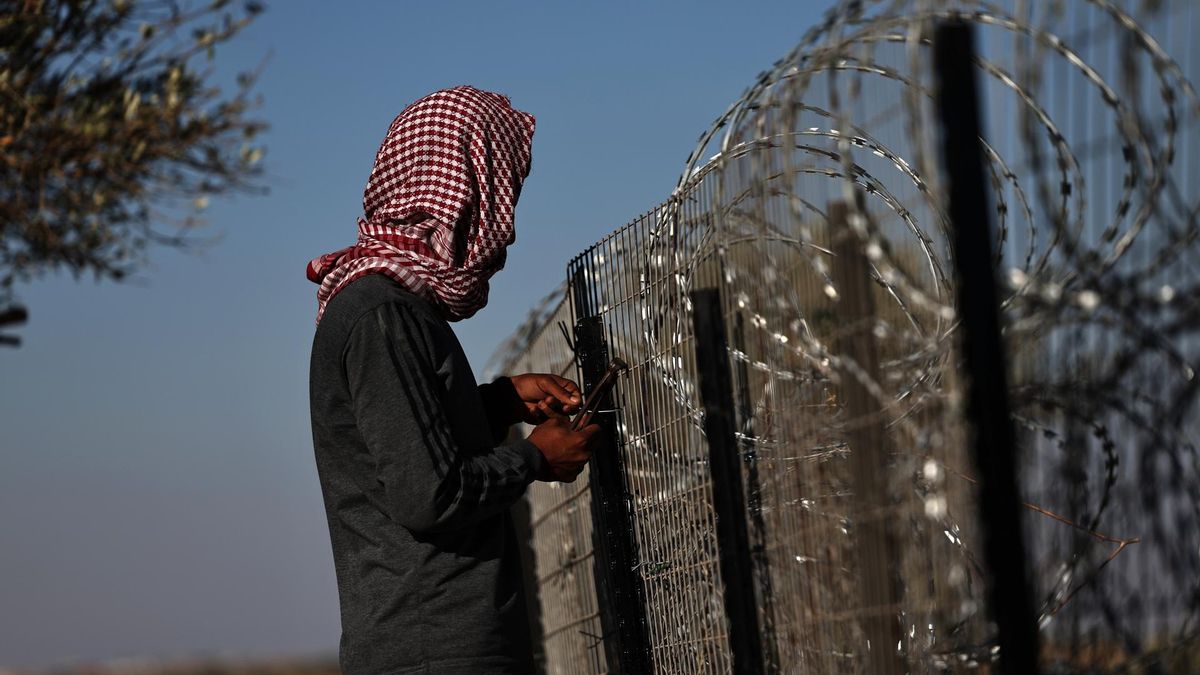
B'Tselem Report: Israel Killed 1,087 Palestinians in the West Bank Since October 2023
A new report from the Israeli human rights group B'Tselem accuses Israel of systematically making Palestinian life impossible in the occupied West Bank through five connected methods, while European countries move to criminalize trade with Israeli settlements.
Israeli human rights group B'Tselem has released a report accusing Israel of carrying out a deliberate plan to erase Palestinian existence in the occupied West Bank, documenting what it calls a "comprehensive mechanism of elimination" affecting more than 3 million Palestinians [1][2].
The report, titled "The Elimination Project," identifies five interconnected methods driving this project: violence and intimidation, movement restrictions, economic strangulation, social and political destruction, and ethnic cleansing and land appropriation [1][2]. According to B'Tselem, these mechanisms reinforce one another — movement restrictions and economic pressure cut Palestinians off from work, services, and social ties, weakening institutions and leaving communities with fewer resources to defend their rights or maintain connections to their land [2].
The report states that Israel killed 1,087 Palestinians in the West Bank and East Jerusalem between October 7, 2023, and June 30, 2026, including 242 children [2]. It also documents that 32 Palestinians from the occupied West Bank died in Israeli detention over the same period [2].
B'Tselem says the project has "accelerated and intensified" since late 2022, when Prime Minister Benjamin Netanyahu formed Israel's current government with ministers openly hostile to Palestinians, and has sped up further since the war in Gaza began [2]. The report draws a direct link between Gaza and the West Bank, stating that "in Gaza, the logic of elimination has reached its most extreme expression; in the West Bank, it takes other forms" [2].
The report also highlights that Israeli settlers have increased violent attacks on Palestinian communities, property, and livestock, with B'Tselem saying settler militias receive state support and some settlers serve in official security forces [2]. "Israeli civilians, settlers, have received weapons, equipment, training, and funding from the State of Israel," said Yuli Novak, B'Tselem's executive director [2].
B'Tselem points to the "Decisive Plan" presented in 2017 by Bezalel Smotrich, now Israel's finance minister and a key figure in West Bank settlement policy. The plan offers Palestinians three options: live under Jewish supremacy and give up political claims, leave, or face violent repression if they resist [2]. While the plan was never formally adopted as government policy, B'Tselem warns its core logic has shaped recent policies, budgets, and practices on the ground [2].
Separately, Norway is moving to impose prison sentences of up to three years for dealings with Israeli settlements, according to a report by Israel's Channel 7 [5]. The same report warns that Europeans could face up to 10 years in prison for such trade [5]. The settlements are Israeli communities built on land captured in 1967, and most countries consider them illegal under international law, though Israel disputes this [5].
The international community's response has been criticized as insufficient. On September 8, the UK foreign secretary announced new sanctions against Israeli settlements as part of a joint effort by twelve countries [3]. Ed Miliband, the foreign secretary, told the House of Commons that "ethnic cleansing" was taking place in the West Bank [3]. The sanctions target specific companies and individuals providing services for settlement expansion, including construction, infrastructure, financing, and real estate [3].
Meanwhile, twenty Israeli families have moved into a new settlement outpost called Bitron in the eastern occupied West Bank's Jordan Valley, according to reports [6]. Under international law, Israeli settlements in the occupied West Bank are considered illegal [6].