Israel's 'Elimination Project': A Plan to Make Palestinian Life Impossible in the West Bank
Part of composite article B'Tselem Report: Israel Systematically Displacing Palestinians in West Bank, 66 Communities Forced Out Since October 2023 View full article →
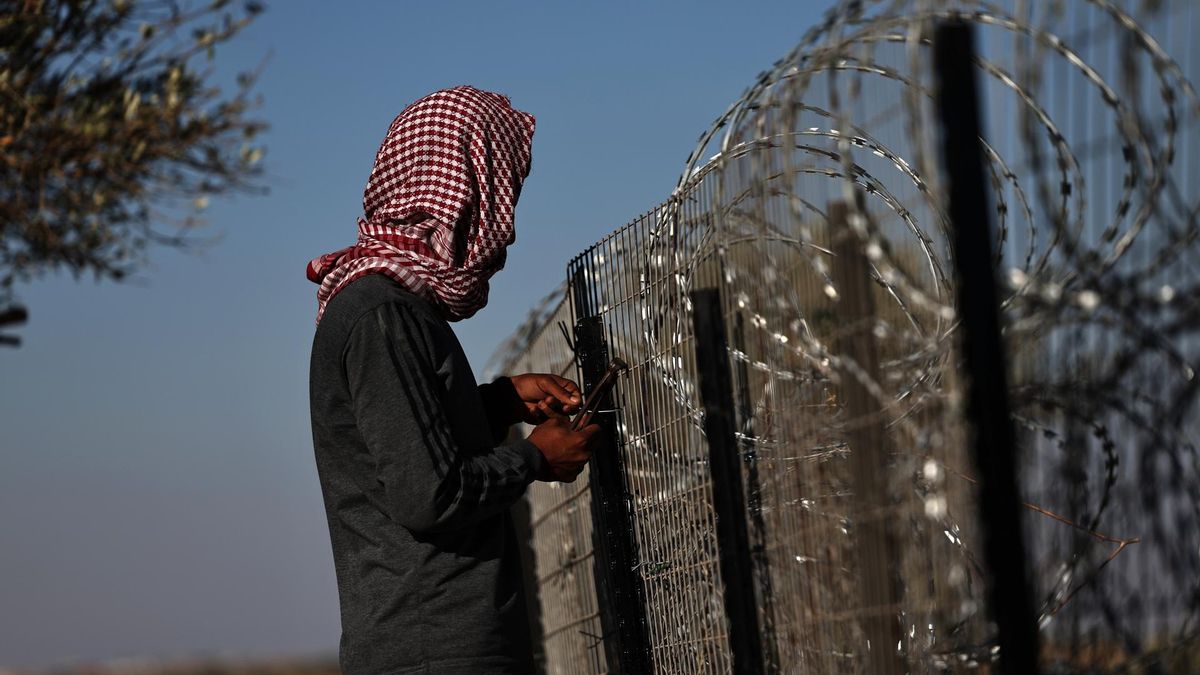
More than 3 million Palestinians in the occupied West Bank face a daily reality of violence, restricted movement, and economic strangulation. A new report by the Israeli human rights group B'Tselem says these are not isolated incidents, but part of a deliberate plan to dismantle Palestinian society.
The report, titled "The Elimination Project," documents what it calls a "combined attack" on Palestinians as individuals and as a community. Its goal, according to B'Tselem: to destroy "the material, social, and political conditions that make Palestinian existence possible" — both now and in the future.
"Israel's actions in the West Bank are not simply a series of isolated violations of individual and collective rights," the group states. "Rather, they form part of a comprehensive mechanism of elimination."
**Five mechanisms of elimination**
The report identifies five methods driving this project: violence and intimidation; movement restrictions; economic strangulation; social and political destruction; and ethnic cleansing and land appropriation.
These mechanisms reinforce one another. Movement restrictions and economic pressure cut Palestinians off from work, services, and social ties. This weakens institutions and political life, leaving communities with fewer resources to defend their rights or maintain connections to their land. The result, the report says, is easier Israeli control and the displacement of Palestinian residents.
B'Tselem says the project is not new, but has "accelerated and intensified" since late 2022, when Prime Minister Benjamin Netanyahu formed Israel's current government with ministers openly hostile to Palestinians. It has sped up further since October 7, 2023, when the war in Gaza began.
**From Gaza to the West Bank**
The report draws a direct link between Gaza and the West Bank. "In Gaza, the logic of elimination has reached its most extreme expression; in the West Bank, it takes other forms," B'Tselem writes. It adds that the scale of destruction in Gaza has "drastically expanded the limits of violence" Israel considers legitimate against Palestinians.
Methods once rare in the West Bank — such as destroying large residential areas and civilian infrastructure, or mass displacement — are now more common. According to the report, Israel killed 1,087 Palestinians in the West Bank and East Jerusalem between October 7, 2023, and June 30, 2026. Of those, 242 were children.
The report also says Israel has expanded its prison system as a tool of repression. It has detained elected officials, activists, academics, students, and journalists, raided Palestinian organizations' offices, restricted nonviolent protests, and increased surveillance and arrests linked to social media posts. Thirty-two Palestinians from the occupied West Bank have died in Israeli detention over the same period.
**Settler violence backed by the state**
Beyond official actions, Israeli settlers in the occupied West Bank have increased violent attacks on Palestinian communities, property, and livestock. B'Tselem says settler militias receive state support, and some settlers serve in official security forces — all part of what it calls a "single system" of violence.
"Israeli civilians, settlers, have received weapons, equipment, training, and funding from the State of Israel," said Yuli Novak, B'Tselem's executive director, in a video. "They carry out violence for the 'elimination project,' even though technically what they do is illegal."
**A plan with three choices**
The report points to the "Decisive Plan" presented in 2017 by Bezalel Smotrich, now Israel's finance minister and a key figure in West Bank settlement policy. The plan offers Palestinians three options: live under Jewish supremacy and give up political claims, leave, or face violent repression if they resist.
B'Tselem notes the plan was never formally adopted as government policy or passed into law. But it warns that its core logic has shaped recent policies, budgets, and practices on the ground.