Turkey Passes Framework Law, Sets August 24 Meeting for Disarmament Council
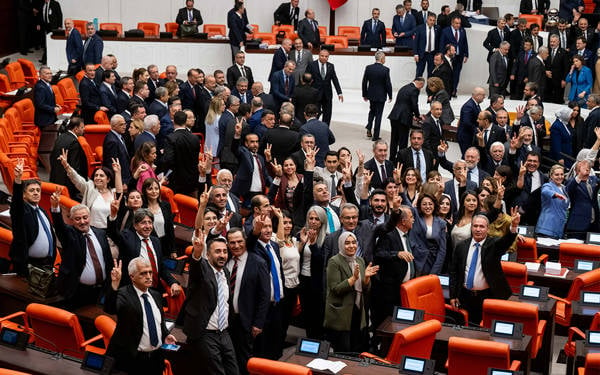
Turkey has taken a concrete legislative step toward peace with the passage of a new Framework Law, which took effect on August 18, and officials have scheduled the first meeting of the new Disarmament Council for August 24.
Turkey’s Deputy President Cevdet Yılmaz announced that the council will hold its inaugural gathering on August 24, focusing on setting internal rules and forming sub-committees to support disarmament and dissolution efforts [222591]. According to the latest information, four separate sub-committees will be created during this meeting to oversee the law’s application across different areas [222563].
The legislation, officially numbered 7595 and formally titled the “Law on Strengthening National Solidarity and Social Cohesion,” was published in Turkey’s Official Gazette on Wednesday and immediately entered into force [221369]. President Recep Tayyip Erdoğan publicly thanked lawmakers for passing the legislation, framing its passage as a step toward deeper national unity [221369].
While the law represents a crucial first step, officials and analysts agree that it alone is not enough [222588]. Observers note that thousands more actions will be required to reach the goal of lasting peace, and the current period will be defined by what happens next [222588].
Tülay Hatimoğulları, co-chair of the pro-Kurdish Democratic Equality Party (DEM), stressed that a genuine peace effort cannot rely on promises alone [221384]. She argued that the government must take steps that make the process “irreversible,” pointing to the failed 2015 peace talks as a warning of how quickly dialogue can collapse without strong safeguards [221384]. She also called for “socializing peace,” saying lasting stability requires involving ordinary citizens, civil society, and local communities in the process [221384].
The hope is that the ongoing process concludes as quickly as possible, and once it does, the central challenge will shift from achieving peace to making that peace permanent [222574]. The responsibility for making this moment historic now rests with the country’s leaders and citizens [222588].