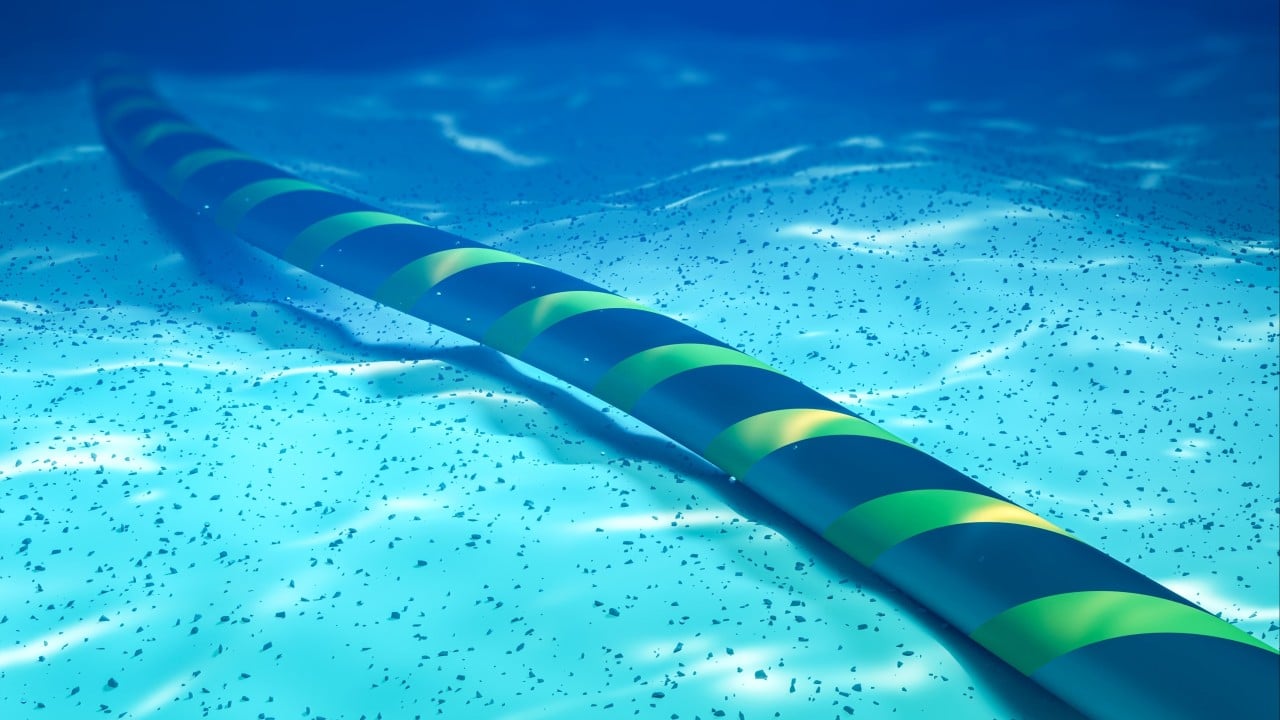
US and China clash over undersea cables that power AI
The United States and China are locked in a new fight over the undersea fiber-optic cables that carry nearly all intercontinental data, with Beijing accusing Washington of “politicising” the global network that underpins the artificial intelligence boom.
The cables transmit about 99 per cent of cross-border data traffic, making them the backbone of the digital economy and a critical asset in the race to train and run AI systems. On Tuesday, Beijing said Washington was pressuring allies to block Chinese firms from building or maintaining new cable routes. China has also launched its own competing project: the SEA-H2X cable, led by China Mobile, began commercial operations on July 22, connecting Southeast Asia with Hainan and Hong Kong to reduce reliance on older routes [205871].
The dispute is part of a broader US-China tech rivalry. Washington this week added 43 Chinese firms to a forced-labour blacklist, expanding its entity list by 30 percent under the Uyghur Forced Labour Prevention Act. Beijing called the move a “classic act of economic coercion” and vowed to protect Chinese companies [208918].
The undersea cable clash marks a new front in that stand-off. Both nations view control over data infrastructure as essential to economic and security interests, and the cables—once seen as neutral utility infrastructure—are now central to a high-stakes geopolitical battle [208923]. China is also pushing to break US-led chokepoints along the “first island chain,” a string of allied bases from Japan to the Philippines, as part of its centenary military goals [208908]. The US, meanwhile, faces warnings that its reliance on China in critical sectors—including biopharmaceuticals—poses a growing national security risk [208366].