China’s AI Supernodes Take Center Stage at Shanghai Conference as US Congress Visit Gets Snubbed
China is accelerating its push for AI self-reliance, showcasing homegrown “supernode” computing systems at the World Artificial Intelligence Conference in Shanghai while simultaneously snubbing a visiting US congressional delegation, signaling a deepening technological divide.
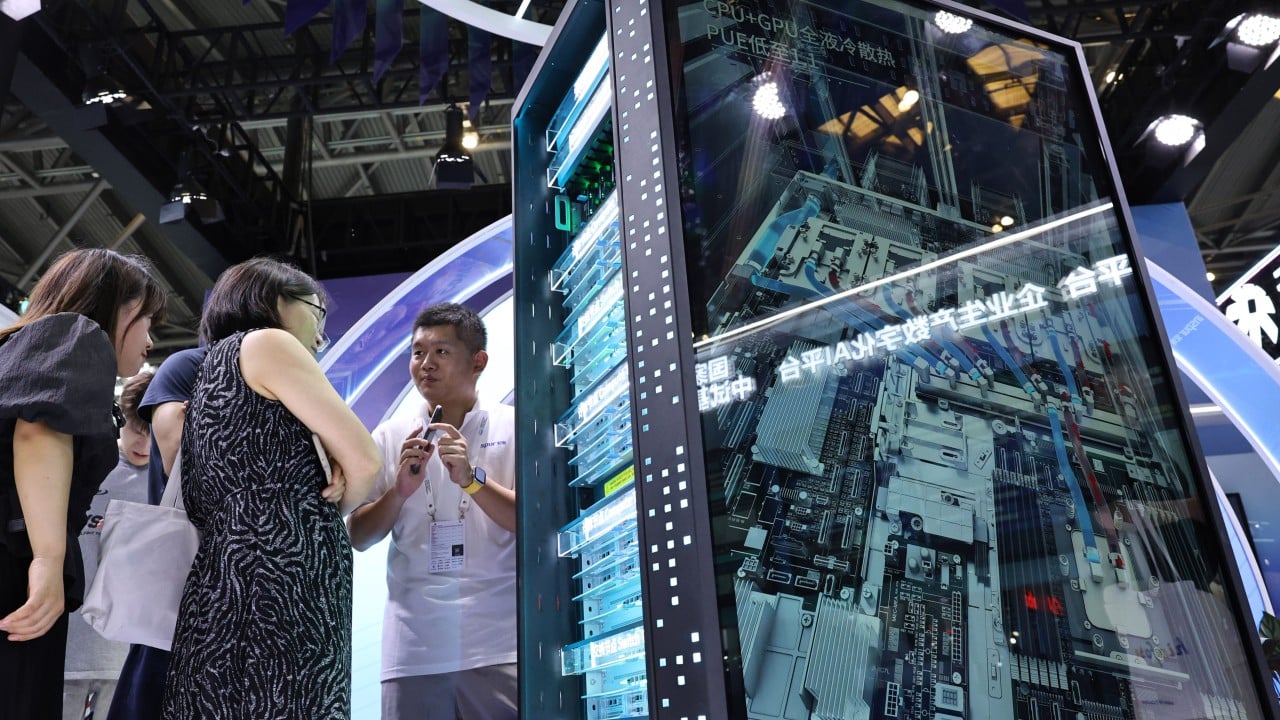
At this year’s World Artificial Intelligence Conference (WAIC) in Shanghai, domestic “AI supernode” products became the main attraction [203868][200082]. These supernodes are giant supercomputers made by linking hundreds or thousands of individual chips to work as one unit, allowing companies to run massive AI models that a single chip cannot handle [203868]. Huawei Technologies and Biren Technology both unveiled new hardware designed to create supernodes, signaling a major shift in strategy for Chinese firms, which are now racing to master chip networking instead of competing solely on individual chip performance [203868]. Industry experts at the event noted that the products signal a growing shift toward self-reliance in China’s AI infrastructure, as they allow companies to process data faster without relying on foreign-made chips [200082].
Meanwhile, shares of Chinese artificial intelligence company Zhipu surged 37 percent in Hong Kong after the firm completed a massive 1-gigawatt data centre running entirely on Chinese-made chips [201619]. The facility is an AI computing centre used to train and run complex AI models, and the company will use it to develop its GLM series of AI models [201619].
The push for technological independence comes as China’s biggest technology companies refused to meet a visiting US congressional delegation, denying American officials a rare look inside one of the world’s fastest-moving AI industries [203829]. Analysts say the snub highlights Beijing’s increasingly selective approach to AI diplomacy, revealing a paradox: while the US and China continue to talk about AI safety, the channels that once helped them understand each other are closing [203829].