Ukraine's 40-Day Drone Blitz Cripples 42% of Russia's Oil Refining, Sparks Fuel Crisis and Political Panic
Ukraine has launched a coordinated 40-day campaign of deep strikes that has disabled over 42% of Russia's oil refining capacity, causing fuel shortages in Moscow and St. Petersburg and shaking public confidence in President Vladimir Putin's ability to protect the country.
KYIV, Ukraine – In late June, President Volodymyr Zelensky ordered an intensive 40-day campaign to "influence the aggressor country and force it to end the war." Three weeks in, the results are stark. Ukraine has dramatically increased long-range missile and drone attacks on Russian supply lines, military industry, and critical infrastructure, bringing the war directly to major Russian cities [198078].
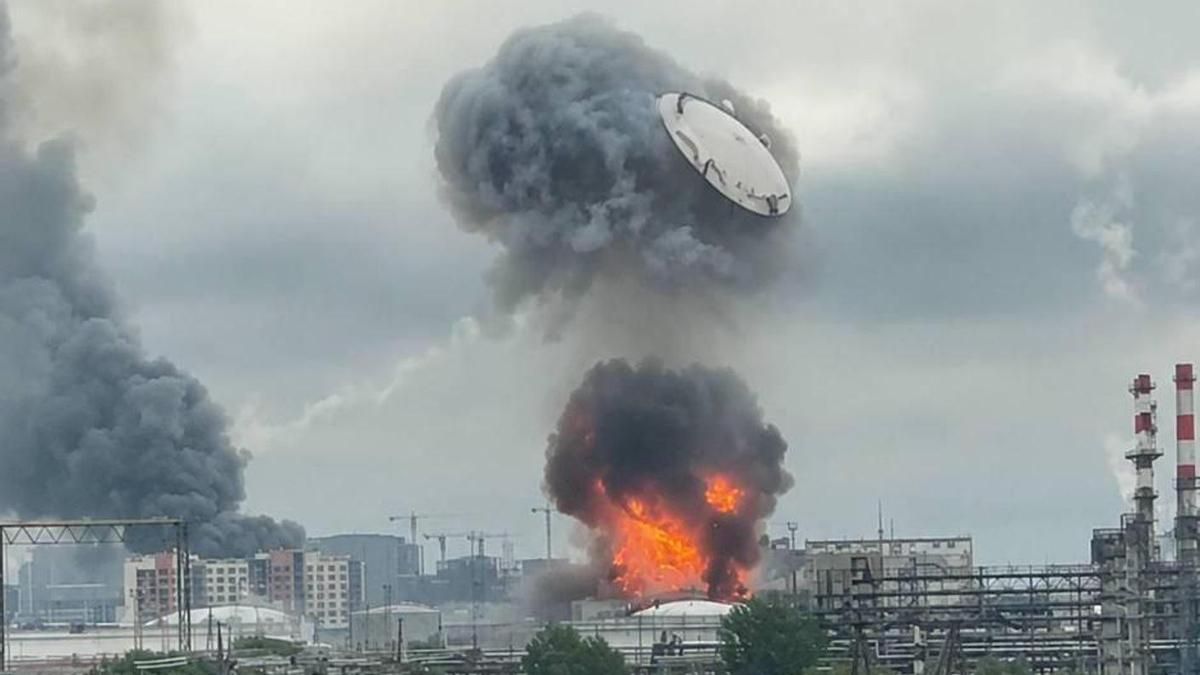
By July 5, Ukraine's military reported it had disabled 42.74% of Russia's oil refining capacity. The campaign has hit eight refineries, damaged over 60 storage tanks, and caused an estimated $13.5 billion in losses [198078]. Recent operations included 13 medium- and long-range strikes on key targets, including airfields in Crimea, a fuel terminal in St. Petersburg, and refineries near Moscow [198078].
For ordinary Russians, the war has arrived in their daily lives. Long lines at gas stations are common, with some people sleeping in their cars for days to get fuel. In occupied Crimea, attacks on bridges and roads have caused power cuts and a sense of siege [198078]. Huge drone swarms over Moscow and St. Petersburg have shocked residents, and videos of burning refineries flood social media [198078].
The psychological impact is significant. Analysts say the campaign is a "psychological campaign" aimed at showing Russians that the Kremlin can no longer guarantee their safety [198078]. The Institute for the Study of War reports that successful Ukrainian attacks have forced a rethink within the Russian ultranationalist information space, with analysts blaming the government for failing to protect critical infrastructure [198078].
Public anxiety is growing. Many Russians now question whether the Kremlin can guarantee their basic safety and economic stability. The widening conflict is eroding the unspoken agreement that the state protects citizens in exchange for loyalty. With the economy worsening, this erosion threatens to undermine President Vladimir Putin’s domestic support [199750].
Meanwhile, Ukrainian drones known as "Fedorov's middle-strike drones" are throttling Russian supply lines near the town of Lyman, slowing the Russian advance. The success of these strikes depends on the man who leads them, and analysts warn that if he is removed, the Russian push could speed up [199746].
Some experts predict Ukraine may launch new, high-impact attacks to humiliate Putin and weaken his support, possibly targeting key military sites in Moscow with new ballistic missiles in September [198078]. Analysts expect the campaign to intensify and extend beyond the announced 40 days [198078].