Ukraine's 40-Day Campaign: Cutting Russia's Oil, Shaking Putin's Power
Part of composite article Ukraine's 40-Day Drone Blitz Cripples 42% of Russia's Oil Refining, Sparks Fuel Crisis and Political Panic View full article →
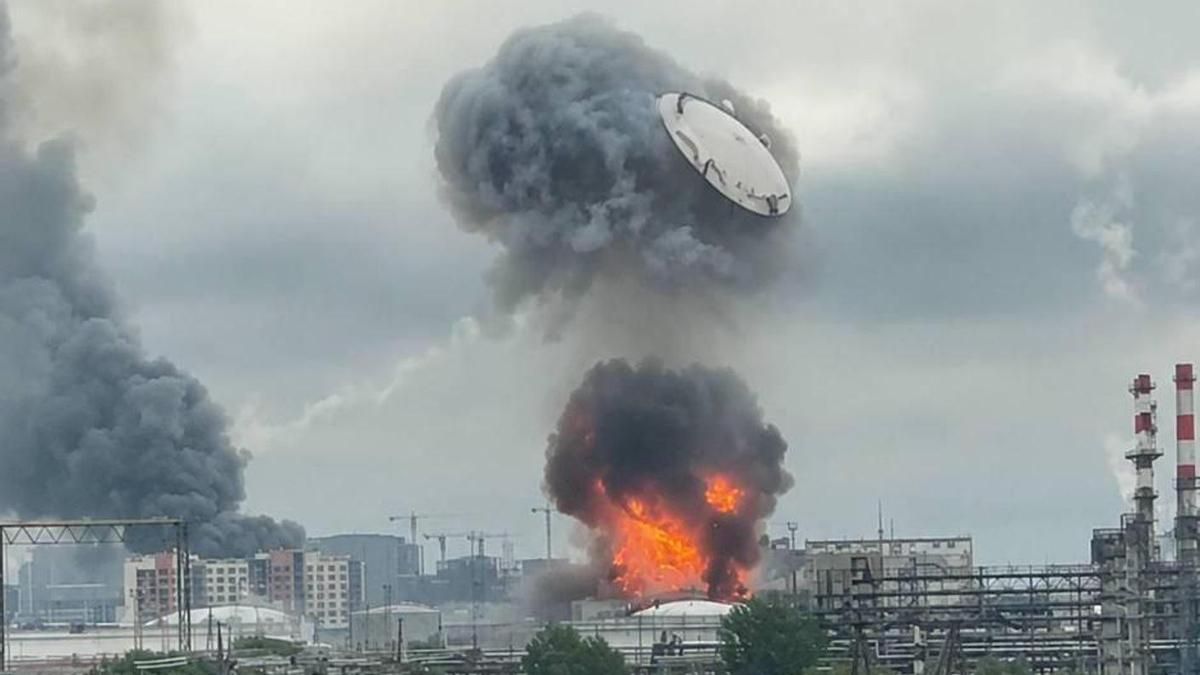
KYIV, Ukraine – On June 26, President Volodymyr Zelensky ordered a 40-day campaign against Russian targets. His goal: "influence the aggressor country and force it to end the war."
Three weeks in, the results are visible. Ukraine has dramatically increased attacks on key Russian supply lines in occupied Ukrainian territory and Crimea. It has also hit Moscow and St. Petersburg with long-range missiles, sparking a fuel crisis.
**Why 40 days?**
Analysts say the number is a religious reference. Orysia Lutsevych of Chatham House calls it a "Christian Orthodox reference" aimed at Russia and President Vladimir Putin. "The message is: 'We already consider you dead. Now it's up to you to decide if you save yourselves or not,'" she says.
The timing also has political weight. "Elections to the Duma [the Russian parliament] are in September," Lutsevych notes. "Bringing the war to Moscow and St. Petersburg shows Putin how his control is weakening."
Phillips O'Brien, a professor at the University of St Andrews, calls it a "psychological campaign." He adds: "I don't think it will force Russia to surrender. It is a way to say, 'We can bring the war to your home.'"
**What is the campaign?**
Zelensky did not give details at first. But officials later confirmed it includes several ongoing operations: attacks on Russian supply lines, long-range strikes on military industry, refineries, shipping, and major cities.
Retired Australian General Mick Ryan describes it as a "coordinated campaign of deep attacks" aimed at pressuring Moscow. He calls the refinery strikes an "attempt at strategic coercion through attrition."
By July 5, Ukraine's military said it had disabled 42.74% of Russia's oil refining capacity. It reported hitting eight refineries, damaging over 60 storage tanks, and causing $13.5 billion in losses.
Recent operations included 13 medium- and long-range attacks on key military targets, including airfields in Crimea, a fuel terminal in St. Petersburg, and refineries near Moscow.
**What is the impact?**
For Russians, the war has arrived in their cities. Huge drone swarms over Moscow and St. Petersburg have shocked residents. Videos of burning refineries flood social media.
Daily life has changed. Long lines at gas stations are common. Some people sleep in their cars for days to get fuel. In occupied Crimea, attacks on bridges and roads have caused power cuts and a sense of siege.
The Institute for the Study of War says this may be creating political friction in Russia. "Successful Ukrainian attacks have forced a rethink within the Russian ultranationalist information space," it reports. "Analysts are blaming the Russian government for failing to create an air defense system that can protect critical infrastructure."
**How does this help Ukraine internationally?**
Lutsevych believes Ukraine's success in taking the war to Russia may have shifted the Trump administration's attitude toward Kyiv.
In February 2025, Trump shouted at Zelensky in the Oval Office, saying, "You don't have the cards." But at last week's NATO summit in Ankara, Trump suggested allowing Ukraine to manufacture Patriot interceptor missiles under license.
"It was the biggest visible success in Ankara," Lutsevych says. "Psychologically, it is important. Before, it seemed impossible that the US would authorize Ukraine to make such a sophisticated weapons system."
**What comes next?**
Some experts predict Ukraine may launch new, high-impact attacks to humiliate Putin and weaken his support. Denys Shtilerman, a Ukrainian missile factory co-founder, suggests targeting key military sites in Moscow with new ballistic missiles, possibly in September.
"First is Moscow, where military installations are protected," he said. "With almost 100% certainty, I can say they will not be able to intercept them effectively."
Analysts also expect Ukraine to try to reclaim occupied territory. Russian forces are stretched thin in many areas. Lutsevych and Shtilerman say the campaign will likely intensify and extend beyond the announced 40 days.