US Bombs 90 Iranian Targets in Second Night of Strikes, 14 Dead as Strait of Hormuz Ceasefire Collapses
The United States launched a second night of airstrikes against Iran, hitting about 90 military targets and killing at least 14 people, after Tehran attacked commercial ships in the Strait of Hormuz, shattering a fragile truce agreement signed last month.
The renewed fighting began after Iran struck civilian vessels in the Strait of Hormuz, a narrow waterway through which about 20% of the world’s oil passes [191904]. The United States responded with two consecutive nights of airstrikes, targeting missile launchers, air defense systems, radar stations, command centers, and logistics facilities across multiple Iranian cities [192641][192229]. U.S. Central Command confirmed hitting 90 targets in the latest round [192229]. The Iranian health ministry reported 14 people killed since Tuesday, with casualties including soldiers, firefighters, and civilian personnel [192229][192641].
Iran retaliated by launching dozens of attacks on U.S. bases in the Gulf, including the U.S. Fifth Fleet base in Bahrain and the Ali Al Salem air base in Kuwait [191904]. Explosions were also reported in Bahrain, Qatar, and Kuwait [191777]. Tehran has vowed to retaliate further, with officials stating, “You’ll get hit” [192430]. A security source told Iranian state media that Iran is prepared to close the strait completely, warning: “After any attack, the strait will be totally closed. Iran will also hit enemy targets at least double the number we hit before” [191904].
The violence marks the most serious violation yet of a memorandum of understanding signed on June 17, which had halted direct hostilities and established a 60-day window for negotiations [192398][191904]. Both sides now accuse each other of breaking the deal [192855]. President Donald Trump, speaking at a NATO summit in Turkey, declared the agreement “over” and called Iranian leaders “sick people” and “garbage,” though he also suggested talks might continue [191904]. He threatened new strikes and said the U.S. could take Iran’s main oil terminal on Kharg Island [191904].
The Strait of Hormuz remains at the heart of the conflict. About 20% of the world’s oil passes through this strategic waterway [191904]. Iran’s Revolutionary Guard has demanded that ships use a specific route near Iranian coasts and ask for permission to pass [191904]. Experts say Iran views the strait as its primary leverage tool. “Tehran is determined not to give up this influence. They want to maximize it through greater operational control of the strait,” said Sina Toossi, a senior analyst at the Center for International Policy [191904]. Ellie Geranmayeh, a Middle East expert at the European Council on Foreign Relations, described the strait as Iran’s “weapon of mass disruption” [191904].
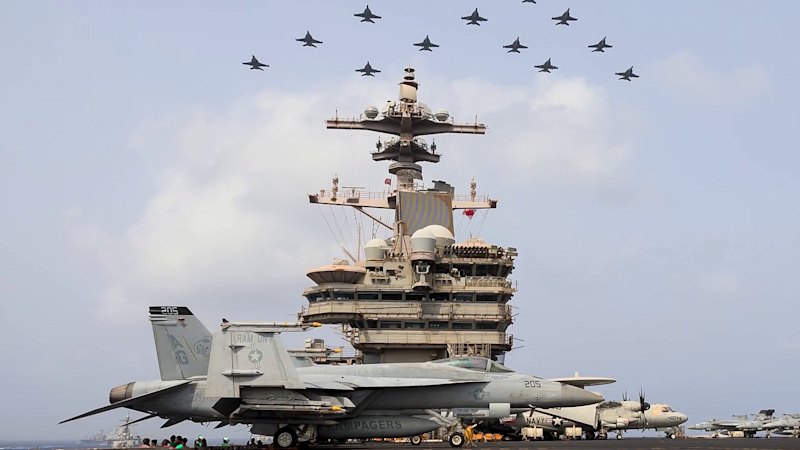
Diplomatic channels remain open through mediation by Qatar and Oman, but no formal talks have been announced [192668]. China has called on both sides to resolve their differences through dialogue, warning that further escalation would harm regional stability and global security [191598]. More than 20 U.S. warships are currently patrolling the region’s waters [191904].