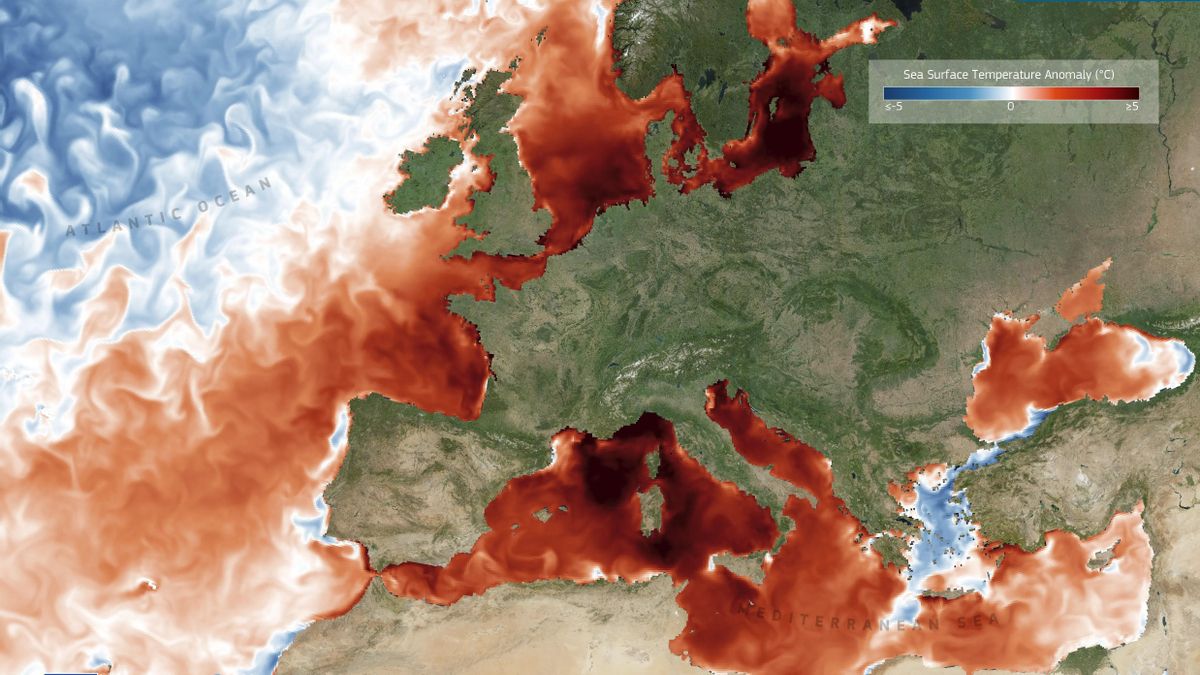
Ocean Heat Hits Record 20.86°C, Unleashing Storms, Droughts, and Fire Threats Worldwide
The world’s oceans have never been this hot, hitting a record 20.86°C in June, as scientists warn we are entering "unexplored territory" where human-driven climate change is now actively fueling disasters once blamed on nature alone [187104][187140].
On June 21, the global sea surface temperature broke the previous record of 20.83°C set in 2023 and 2024, according to data from the Copernicus Climate Change Service and Copernicus Marine Service [187104][186475]. This extreme ocean heat comes from two forces: climate change and the start of an El Niño event. El Niño is a natural phenomenon where warm water builds up in the equatorial Pacific Ocean, changing rainfall and drought patterns across much of the planet [187104].
UN Secretary-General Antonio Guterres said El Niño will "pour more gasoline on the fire of climate change" [187104]. Carlo Buontempo, director of Copernicus, warns the situation "could indicate the start of a new phase that takes us into unexplored territory" [187104].
A warmer ocean has serious effects. Hot water evaporates more, and the warm atmosphere holds that moisture longer, giving storms more energy and raising the risk of extreme floods [187104]. Warmer oceans also raise sea levels, melt sea ice, and disrupt marine ecosystems [187104].
Carlos García-Soto, a researcher at the Spanish Institute of Oceanography, says impacts like marine heat waves, droughts, floods, fires, and crop losses are happening more at the same time. "This increases pressure on ecosystems and on our societies' ability to respond," he said [187104].
In New Zealand, a strong El Niño is now projected to bring an increased risk of drought and wildfires. Officials warn that drier conditions in the east and north, with less rainfall and higher temperatures, could lead to water shortages and a higher chance of bushfires in vulnerable regions [186938].
In Spain’s Doñana wetlands, scientists warn the risk of wildfires is high despite a rainy winter. The wet winter created abundant vegetation, and with very high summer temperatures, that dry vegetation is now fuel for fires. “The risk of fire is elevated because of the temperatures and the abundant vegetation,” said station director Eloy Revilla [187103].
Meanwhile, a new study reveals that moderate volcanic eruptions and extreme wildfires are adding significant moisture to the stratosphere. When volcanoes erupt or massive fires burn, they send plumes of smoke and ash high into the air, injecting large amounts of water vapor that can trap heat. This creates a feedback loop: as climate change fuels more wildfires, the stratosphere becomes even more humid, accelerating warming [186793].
Thousands of acres have burned across Utah and other Western states, with firefighters dying while trying to contain the flames [185003]. In the Northwest Territories, 66 active fires are burning, sparked by thousands of lightning strikes over the weekend, with an evacuation alert still in place for Fort Simpson [183627].
José Ovejero, a writer, challenges the old idea that natural disasters are beyond human control: “Before, we could say storms or wildfires were acts of God or nature. But today we know that humans have become willing helpers in causing catastrophes” [187140].