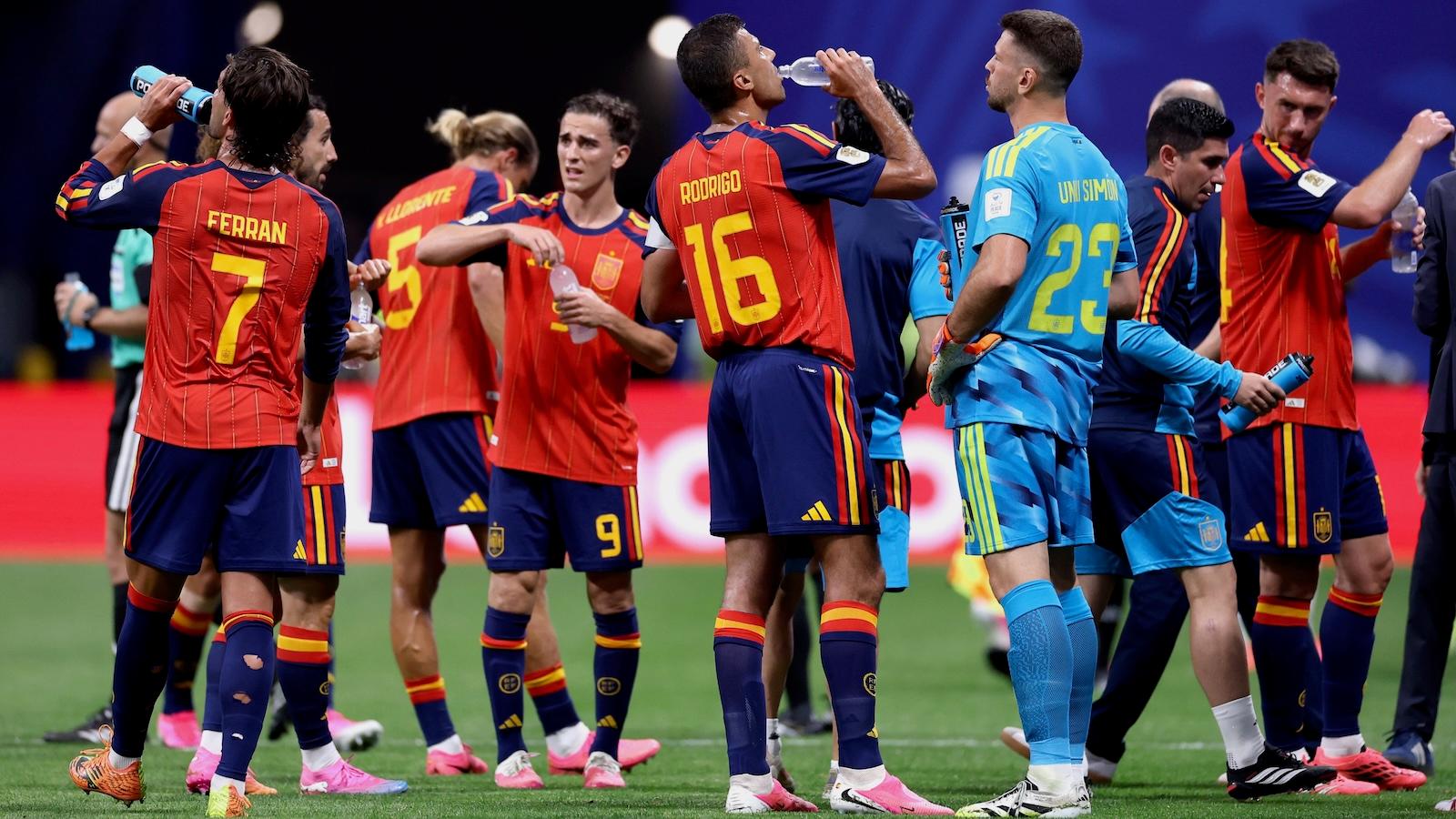
Water Breaks Exposed as Cash Grabs: FIFA Stops World Cup Games for Commercials, Not Player Safety
FIFA’s new “hydration breaks” at the 2026 World Cup are actually three-minute commercial pauses that stop play in every match—regardless of temperature—sparking outrage from players and coaches who say the sport is being sacrificed for profit.
The breaks, officially introduced to protect players from extreme heat, have become a flashpoint as evidence shows they are driven by advertising, not safety. In the opening match between Mexico and South Africa, referee Wilton Sampaio made players wait to restart because TV commercials had not finished [173887]. The same scene played out during USA vs. Paraguay, where a man in a suit on the sideline held a tablet and gave the fourth referee an “ok” signal only after the TV station had sold its ads [173887]. The breaks happen in every match, even when conditions do not require them. In the opening game, it was only 25 degrees Celsius and raining; in the Germany vs. Curaçao match, the stadium was indoors with air conditioning—the game still stopped [173887].
Critics argue the pauses fundamentally alter the sport. France coach Didier Deschamps complained: “It is good for your TV channel to have a commercial break, but those three minutes change football completely” [173887]. Teams have begun using the breaks for tactical huddles, with USA coach Mauricio Pochettino gathering his players around a laptop to give new instructions during the Paraguay game, a scene that looked more like an NBA timeout than a football match [173887]. Swedish journalist Jesper Högström compared the practice to a sign of “Sauron’s empire,” suggesting the pauses are less about player safety and more about control and profit [174054].
The controversy, dubbed “water-gate” by some, highlights growing tension between player welfare and tournament integrity [177436]. FIFA also banned fans from bringing water bottles into stadiums, then reversed the decision after complaints, and introduced a “Super Shoutout” service where fans pay $79 to have their name appear on the stadium screen before a group-stage match [173887]. Meanwhile, an analysis by The Guardian found that two World Cup matches were played in conditions classified as “severe heat,” a level that a global football players’ union has said should trigger a delay or postponement [176993]. A further four matches were held in cities where outside temperatures reached that dangerous level, though air conditioning inside those stadiums reduced conditions [176993].
The biggest skeptic of the new water-break rule is reportedly using them better than anyone else so far [177781]. But as one commentator noted: “The most hydrated thing about this World Cup is FIFA’s bank account” [173887].