Netanyahu's Rival Promises Change, But Offers More War
Part of composite article Netanyahu Vows West Bank Crackdown After 2 Soldiers Killed Days Before Election View full article →
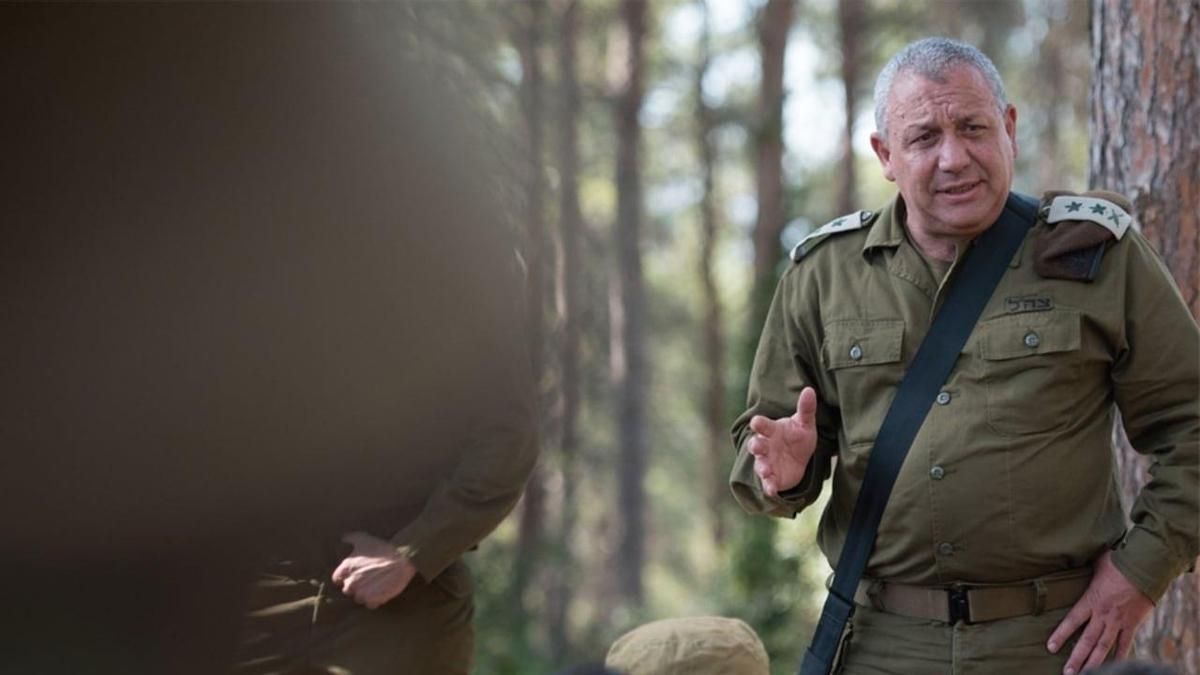
Gadi Eisenkot is the only Israeli politician who can take power from Benjamin Netanyahu. He campaigns with a friendly face and a hard line. But his policies look much like the current prime minister's.
Eisenkot, 66, is the opposition's most popular figure before the October 27 election. He has no guarantee he can form a governing coalition with other parties in the anti-Netanyahu bloc.
His political career is short. He was first elected to parliament in 2022 and founded his party, Yashar!, in 2025. His main credential is his military record. He served as chief of staff of the Israel Defense Forces (IDF) from 2015 to 2019. During that time, the army violently suppressed the Great March of Return protests at the Gaza border, where about 200 Palestinians died.
Eisenkot was a key architect of the "Dahiye doctrine." This policy calls for a disproportionate response to any attack. "What happened in the Dahiye neighborhood in Beirut in 2006 will happen in every village from which Israel is fired on," he said. "We will use disproportionate force and cause great damage and destruction there. From our point of view, these are not civilian villages, but military bases."
The doctrine is named after the crowded southern suburbs of Beirut, where the Shia group Hezbollah has a strong presence. During the 2006 war against Lebanon, Israel bombed Dahiye heavily and indiscriminately. The doctrine was applied again during the genocide in Gaza, taken to its extremes with devastating results.
As former chief of staff, Eisenkot joined the war cabinet that Netanyahu formed days after launching the offensive on Gaza in response to the Hamas attack of October 7, 2023. He left the cabinet in June 2024, but took part in war decisions during the first eight months. In that time, the government approved the mass displacement of Gaza's population and its killing, and cut off basic goods like water, food and medicine.
Other former senior military and security officials join him on the party list. The second candidate led the Shin Bet, Israel's domestic security and intelligence agency. Two generals and a colonel are further down the list, along with some former ministers. Ilana Shpaizman, a professor in the political science department at Israel's Bar-Ilan University, told elDiario.es that Yashar!'s list is "very religious and right-wing," even though the party calls itself center-right and Eisenkot has been labeled a "centrist." The political scientist says it is hard to define the candidate's ideology, but his list aims to attract right-wing voters from parties like Likud. After all, this election is not a contest between left and right, but between Netanyahu and anti-Netanyahu.
"The security and prosperity of Israel are my life's mission. I am determined to fulfill this mission," Eisenkot says on his campaign website.
During the campaign, he has also tried to show a friendlier face than Netanyahu: that of a family man who lost one of his five children in Gaza in December 2023. Two of his nephews also died in combat in the brutal war against Gaza, where nearly 500 Israeli soldiers and more than 74,000 Palestinians have died since 2023.
His official biography highlights more than 40 years of service in the IDF, from 1978 as a soldier to chief of staff in 2015. Militarism shapes his election program, just as it has shaped his professional and personal life.
**Opposition to Two States**
Eisenkot's defense, security and Palestinian policies are unlikely to differ much from Netanyahu's. He opposes an independent Palestinian state, but does not want to follow the current government's path toward de jure annexation of occupied territories. He recently said annexing the West Bank, with more than 3 million Palestinians, and Gaza, with another 2 million, would be "a disaster for the State of Israel." "I don't want them," he said.
At a campaign event near Gaza in mid-October, he promised to end Hamas within 18 months of taking office, either by applying Donald Trump's plan to disarm the group or through a military operation. Eisenkot puts the IDF at the center of his program.
One of his main promises is an official commission of inquiry into Hamas's October 7 attack on southern Israel, in which more than 1,200 people were killed and 251 taken hostage. This is probably his biggest difference with Netanyahu, who has resisted from the start any commission investigating what went wrong in the government and all state security agencies. According to sources close to Eisenkot cited by the US outlet Axios, his main goal is to replace the man he considers responsible for failing to prevent the October 7 attack.
The fact that his children fought in the subsequent war against Gaza, while Netanyahu's did not, brings him closer to most voters. They or their family and friends have been called up at least once since 2023 — not only in Gaza, but in Lebanon, Syria, and the bombing campaigns against Iran and Yemen.
Another key point in his program, which sets him apart from Netanyahu, is a law requiring all citizens to serve in the IDF or other state bodies, including ultra-Orthodox Jews. Their exemption from compulsory military service has been one of the most controversial issues of the outgoing term and a major headache for Netanyahu, who has governed with the support of two ultra-Orthodox parties. Ending the privileges the Haredi community has long enjoyed and sharing the "war effort" is something many citizens support, according to polls, as do the opposition parties Eisenkot aims to unite in a coalition that sets the "straight path" for Israel, according to his campaign slogan.
**Approachable and Uncharismatic**
Some of Eisenkot's personal traits set him apart from Netanyahu and have attracted voters who reject the prime minister's performance and the behavior of him and his wife. Netanyahu is accused of fraud and breach of trust for accepting nearly $300,000 in gifts, including champagne and cigars.
In contrast, Eisenkot presents himself as an honest, approachable candidate. "He is perceived as an ordinary person, which represents a significant and positive change in the eyes of many who see Netanyahu as arrogant and distant from the public," says Shpaizman of Bar-Ilan University. She adds that Eisenkot's personality is working in his favor in the campaign. However, she notes that he has not taken a clear stance on many issues, making it hard to know what he will do if he reaches government.
The former general comes from a humble family that emigrated to Israel from Morocco. He is a Mizrahi (Eastern) Jew, while Israeli politics has been dominated for decades by Jews of European origin. He was born in Tiberias in northern Israel and lived in Eilat in the far south, so he knows the circumstances of the country's periphery, whose population he says is marginalized and forgotten, far from the urban centers of Tel Aviv and Jerusalem. One of his campaign points is developing the periphery. Still, Eisenkot knows how power works: he has led one of Israel's most important institutions and knows his rival well. Netanyahu was prime minister when Eisenkot led the army.