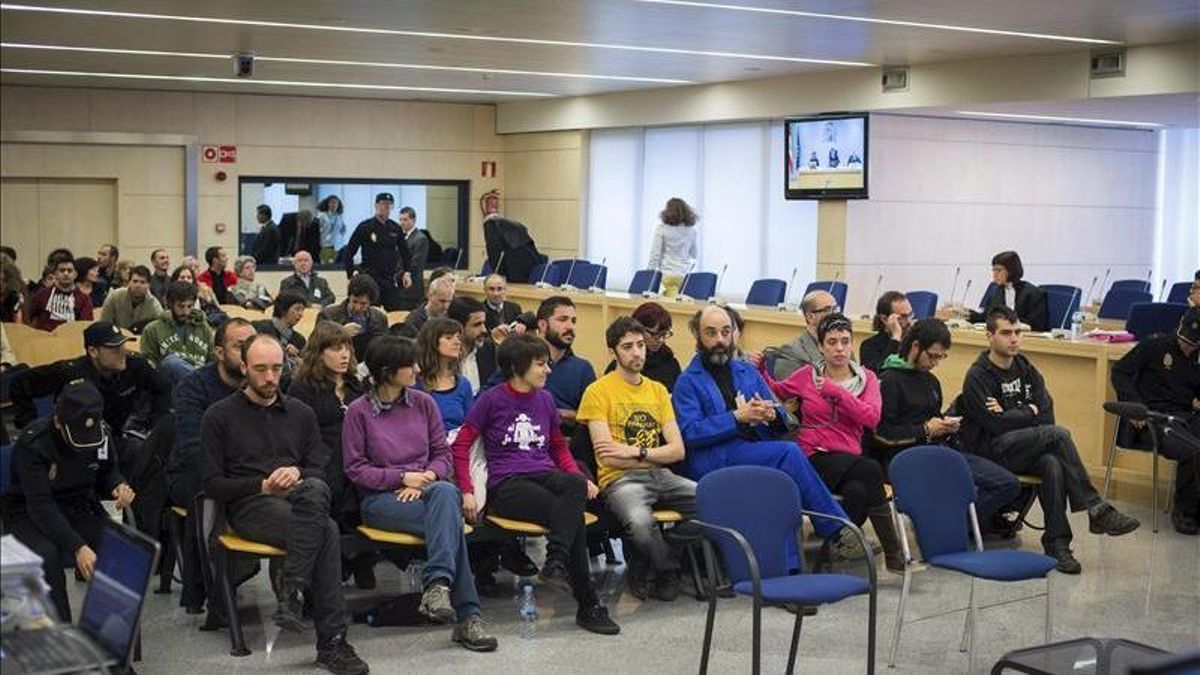
Spain’s Top Court Upholds “Banality” Convictions? A Legal Analysis of the Catalan Parliament Protests.
Spain’s Supreme Court has upheld prison sentences for protesters involved in the 2011 blockade of the Catalan Parliament, a ruling that critics argue stretches the law beyond its limits. The decision has reignited a fierce debate over the boundaries of protest rights and the legacy of legal frameworks rooted in a pre-democratic era.
The case centers on a demonstration aimed at "paralyzing the Parliament" during a period of intense social unrest. However, the specific actions of the convicted individuals were remarkably non-violent. Court records show their conduct consisted of blocking paths with outstretched arms, following and surrounding regional lawmakers while shouting slogans, unfurling a banner that criticized austerity policies, and in one instance, spray-painting a deputy's jacket.
The convictions were based on Article 498 of the Spanish Criminal Code, a provision that is a direct descendant of a law from the Franco dictatorship. This article makes it a crime to use "force, violence, intimidation, or serious threat" to prevent an elected official from attending parliamentary sessions. The prosecution and the Supreme Court’s Second Chamber argued that the context of the protest—a mass mobilization with the stated goal of stopping the legislature—met this legal threshold.
In overturning the initial acquittals by the Audiencia Nacional (Spain's High Court), the Supreme Court appeared to consider the overall intent of the demonstration, rather than just the individual acts of the defendants. The lower court had reasoned that the accused’s actions, which took place within a police-designated protest zone, lacked the "necessary aggressiveness" to constitute a serious impediment to parliament's functioning.
Legal experts and critics of the ruling contend that the Supreme Court's interpretation is a dangerous overreach. They argue that the convicted individuals were held responsible for the actions and intentions of other, unidentified protesters who engaged in more serious disturbances. This, they say, violates fundamental legal principles of culpability, which requires a direct link between an individual's actions and the resulting harm, and lesividad, which posits that an act must cause demonstrable harm to be criminalized.
The ruling has also been criticized for ignoring the social context of the protest. The Audiencia Nacional’s initial decision noted that the demonstration was a response to severe social and economic hardship, with many participants from marginalized communities having limited avenues for political expression. While this context was not intended to excuse violence, it was meant to inform the interpretation of the protestors' conduct. The Supreme Court dismissed this as "ideological," a charge critics now level back, suggesting the higher court's decision may have been influenced by the political climate rather than strict legal analysis.
The verdict raises profound questions about the health of democratic freedoms in Spain. By criminalizing what appears to be symbolic and non-violent protest, the ruling risks chilling legitimate dissent. The case is now widely expected to be taken to the European Court of Human Rights in Strasbourg, which has previously ruled on the importance of protecting peaceful protest under the European Convention on Human Rights. The outcome in Strasbourg could have significant implications for how Spain balances public order with fundamental rights to freedom of assembly and expression.