Spain’s Supreme Court Just Quietly Changed Border Rules—And No One Saw It Coming
Spain’s Supreme Court has issued a ruling that is already reshaping the country’s migration policy, and the decision came from an unexpected corner: conservative judges.
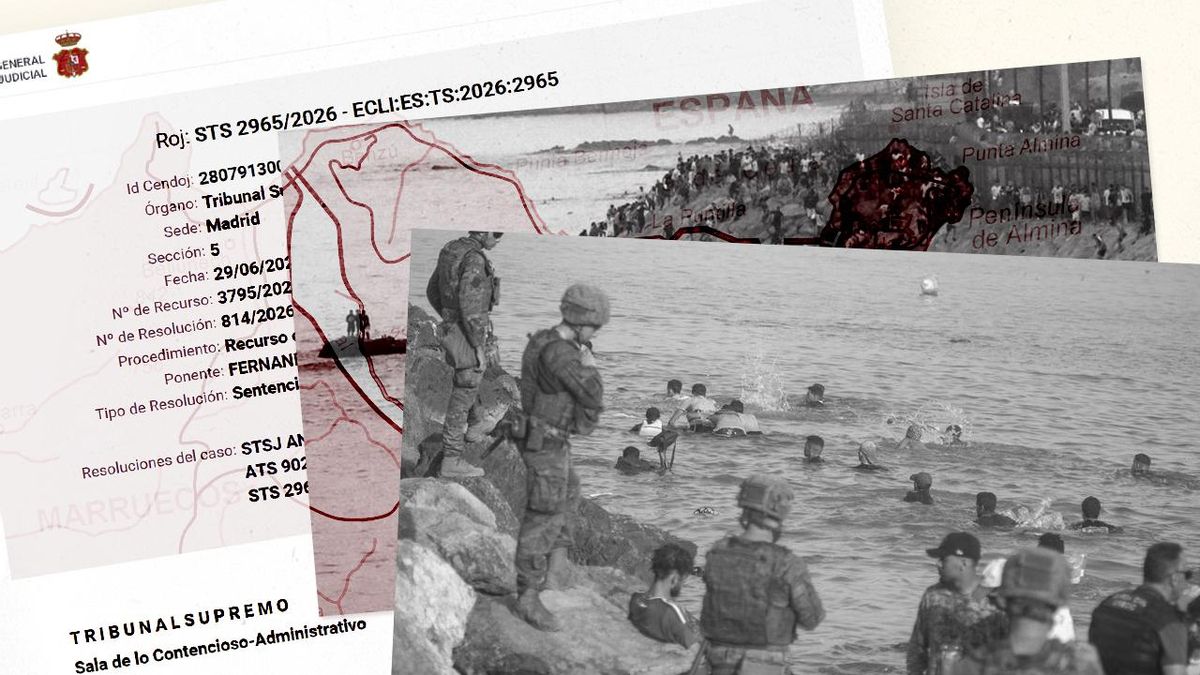
The court ruled that so-called "hot returns"—the fast-track expulsion of migrants who enter Ceuta or Melilla irregularly—are illegal when people arrive by swimming around the border barrier. The ruling applies only to these two Spanish enclaves on Africa’s northern coast, where the practice was previously allowed under a special legal exception.
The decision stems from a case involving an Algerian migrant who swam into Ceuta. The court argued that the law only permits hot returns when migrants try to cross "border containment elements"—like fences. In the sea, the judges said, there are no fences.
That logic has surprised many, because the hot return rule was created in 2015, after a deadly incident in which migrants swam into Ceuta and were pushed back from the beach. The new ruling effectively reverses that policy for similar cases.
The ruling was unanimous among the five judges on the panel. But the details are striking. One of the judges who backed the decision, Fernando Román García, previously served as Spain’s Secretary of State for Justice under former Prime Minister Mariano Rajoy, of the conservative Popular Party (PP). The head of the panel, Carlos Lesmes, also held senior justice roles under PP governments.
In other words, the judges who once served the government that created the hot return rule have now limited it.
The Spanish government, led by Socialist Prime Minister Pedro Sánchez, has applied the rule since taking office, even though Sánchez opposed it while in opposition. Government sources now argue that removing hot returns entirely would leave Ceuta and Melilla in a critical situation.
The ruling has had real-world consequences. In late July, thousands of people entered Ceuta after news of the court decision spread on social media in Morocco. Many were told that swimming into Spanish territory would allow them to stay. Spanish authorities say the situation was made worse by the inaction of Moroccan border forces, who did little to stop the crowds for hours.
The government has offered three possible explanations for that inaction: the sheer number of people, unauthorized actions by factions within Morocco’s power structure, or a decision by Morocco’s King Mohammed VI that was later reversed after the scale of the crisis became clear.
A police report leaked this week suggested Morocco may have deliberately opened the border. The report was requested by a judge with ties to the PP and was prepared by a police unit whose head previously worked for a PP political brigade leader. The government says it only learned of the report through the media.
The crisis has also exposed poor humanitarian management. Thousands of migrants were left without shelter for days, and local residents stepped in to provide food and protection.
The Supreme Court has suggested a simple fix to align with its ruling: install buoys extending the border line into the sea, so that swimming around the barrier would count as crossing a containment element. One government source called the situation absurd, saying "all this mess, and all they need is a rope."
Still, the deeper issue remains. The court’s decision may change one legal mechanism, but it does not address why so many people risk their lives to reach Europe. As one observer noted, the real pull factor is not a court ruling or a policy change—it is the vast inequality between continents.