Germany 2033: A Journalist's Fictional Warning About Far-Right Rule
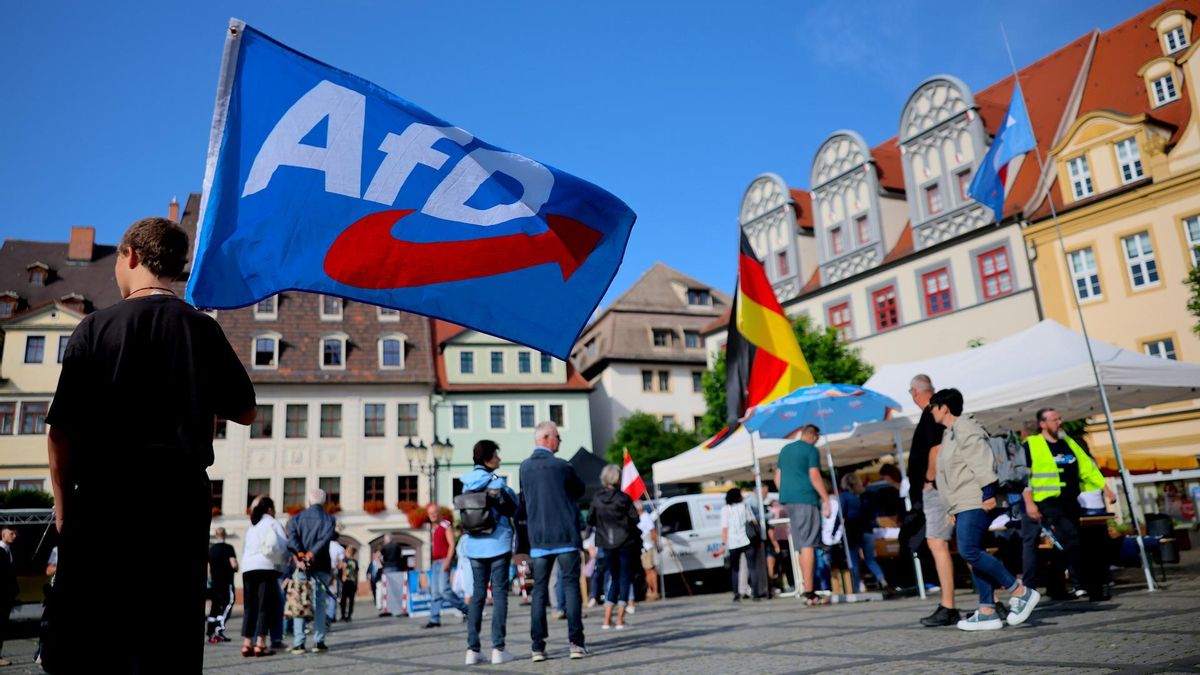
BERLIN — Imagine Germany's far-right party, Alternative for Germany (AfD), winning federal elections with 36% of the vote. This is the starting point of a new book by journalist Justus Bender.
The book, *Deutschland 2033. Ein Szenario* (Germany 2033. A Scenario), is not a novel. It is a political analysis using fiction to show how current trends could reshape Europe's largest economy.
In Bender's scenario, AfD becomes indispensable for forming a government. The conservative CDU-CSU party faces a difficult choice. They can try an unlikely four-party coalition with social democrats, greens, and post-communists—a formula the press mocks as the "Zimbabwe-Ghana Coalition" for its many colors. Or they can break a long-standing political barrier and negotiate with the far right.
The second option has a major complication. As the largest party, AfD can demand its leader, Alice Weidel, become Chancellor. She further pressures conservatives by demanding a "public apology to the German people" for past immigration policies.
In the book, the CDU-CSU eventually accepts negotiations, dismantling the so-called "firewall" against the far right. Weidel is elected Chancellor within weeks. Her government then moves quickly to implement radical policies: mass deportations of asylum seekers without waiting for court rulings, jailing people without residence permits, stripping citizenship from people with foreign roots, and criminalizing the "spread of fake news." The scenario also includes jailing journalists, raiding critical media outlets, and cutting public broadcasting funds. A constitutional reform declares Germany a Christian country where its culture must prevail over others.
Bender, a political correspondent for the conservative daily *Frankfurter Allgemeine Zeitung*, chose the year 2033 deliberately. It marks one century after Adolf Hitler's rise to power.
"The title is an allusion to 1933, to the seizure of power by the National Socialists," Bender told elDiario.es. "I chose it for a simple reason: I have been reporting on AfD for 13 years and know the party very well. Whenever I read reports from the 1930s, I notice the tone was very similar."
He points to how Nazis mocked critics by dismissing them as lies from the "liberal press," a tactic he sees echoed by AfD leaders today when accused of planning ethnic-based citizenship or mass deportations.
Bender's fictional scenario is grounded in real polling. Surveys currently place AfD between 27% and 29% support, more than six points ahead of the CDU-CSU. This is not a temporary spike but a months-long trend. AfD is now competitive across Germany, not just in its traditional eastern strongholds.
For those who argue letting AfD govern would lead to its failure, Bender offers a warning.
"I have often heard people say, 'What bad can happen? Either they govern correctly, or if they do something illegal, the courts will stop them,'" he said. "I wrote this book as a response, because I wanted to show that it is not that simple. A government has enormous power and can do many things without anyone stopping it."
What could Germany look like under AfD? Bender does not predict a return of Nazism. Instead, he suggests a model closer to Hungarian Prime Minister Viktor Orbán's "illiberal democracy."
"Germany would not stop being democratic because there would be elections," he explained. "But liberal institutions, a free press, public opinion formation, and the equality of citizens regardless of ethnic origin would be threatened."
The first real test may come sooner than 2033. Regional elections in Saxony-Anhalt are scheduled for this Sunday. AfD's candidate, Ulrich Siegmund, is close to an absolute majority in polls there. The region could become a testing ground for the Germany AfD envisions.