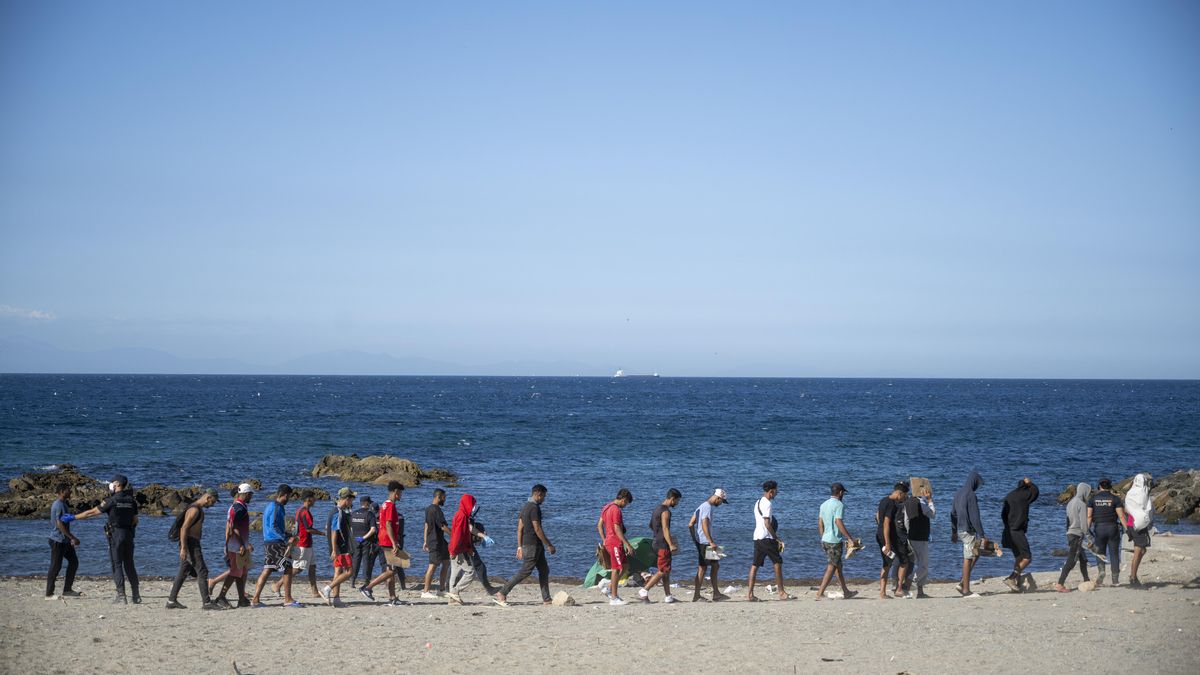
Spain’s Worst Failure: Ceuta Border Crisis Exposes Government’s Weakness
Spain’s handling of the migrant surge in Ceuta has been a disaster on every level—political, practical, and humanitarian. The government’s response to the events of July 31, when Morocco used a wave of migrants to pressure the Spanish enclave, has been marked by confusion, inaction, and poor communication.
Prime Minister Pedro Sánchez called the incident an “attack” but refused to name Morocco, instead blaming vague “mafias.” Foreign Minister José Manuel Albares pointed to a Supreme Court ruling on border returns, but neither explanation addressed the real issue: Spain’s structural weakness in its relationship with Morocco.
Spain has effectively handed control of its borders to Morocco, treating it as a trusted partner while Rabat uses migration as a political weapon. The government’s submissive stance has only emboldened Morocco, which sees Ceuta as a prize it can claim whenever it chooses. This is not speculation—Morocco has already tested Spain’s limits, and Spain has shown it will not push back.
The communication strategy has been equally poor. Sánchez disappeared on vacation during the crisis, reappearing only occasionally. This gave the far-right ammunition to frame the government as absent and indifferent.
The humanitarian response was also shameful. Twenty-two days after the surge, the government had still not implemented a decree to distribute unaccompanied minors across regions. Migrants were left in inadequate conditions, and social services were not reinforced. The delay suggested the government hoped the migrants would simply leave on their own, as most did in the first hours.
The root problem remains unresolved. Even if this wave of migrants is relocated, nothing prevents Morocco from using the same tactic again. The government’s failure has not only weakened Spain’s position but also fueled far-right narratives. No one has done more to boost Vox this term than the government’s own mishandling of Ceuta.