Deià Cuts Water to Luxury Hotel as Drought Grips Mallorca
Part of composite article Balearic Islands Pump 22 Billion Extra Litres From Aquifers Amid Urban Boom View full article →
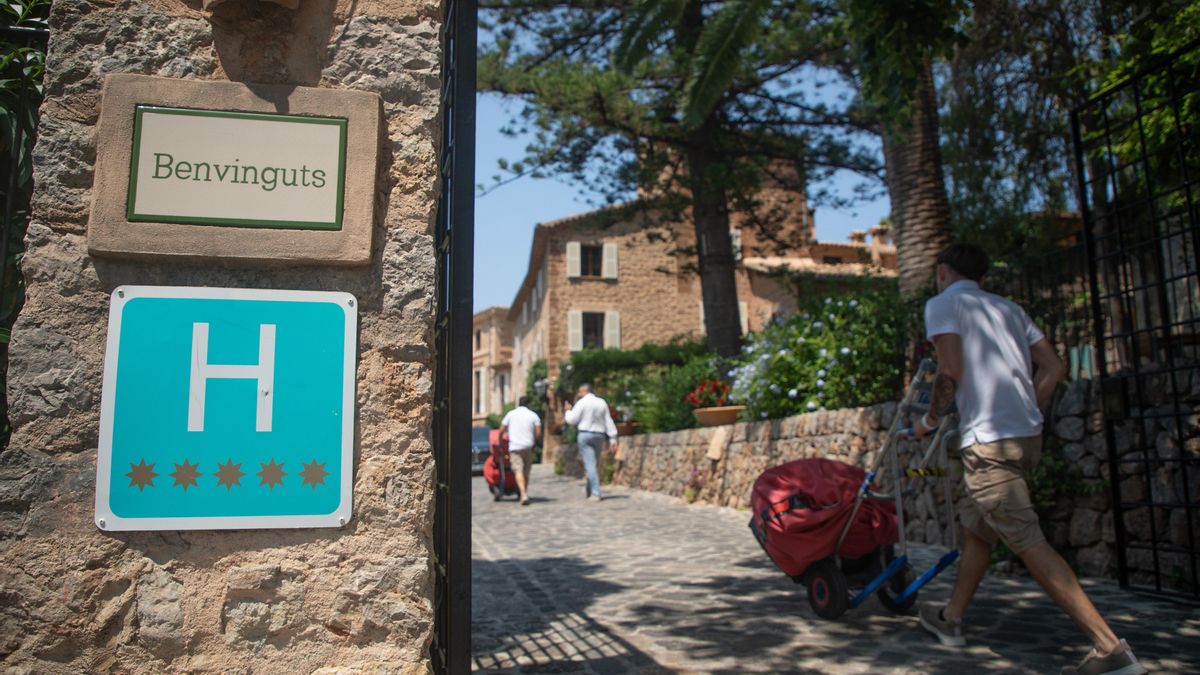
The Mallorcan village of Deià, once the refuge of poet Robert Graves and now a hotspot for wealthy tourists, will cut water supplies three days a week starting Friday, August 14. The measure targets several areas, including the luxury hotel La Residencia, which currently uses about 20,000 liters of water per day.
Mayor Joan Ripoll signed the order, calling the decision "unpleasant and inevitable." The cuts will apply on Mondays, Wednesdays, and Fridays in the Llucalcari sector, as well as in s'Empeltada, ses Coves de can Puigserver, la Cala, and the road toward Sóller. The restrictions will remain until the town has enough water resources to guarantee supply.
Deià consumes roughly 3,500 cubic meters of water per week, according to municipal data. About 35% of that volume—some 1,225 cubic meters—must be delivered by truck. In the affected zones, daily demand reaches around 250 cubic meters.
The village has changed dramatically since the 1950s, when Graves' presence and the international image of an open, bohemian Deià drew foreigners seeking property. Later, the town became a hippie icon, and in the 1980s, the opening of La Residencia by businessman Richard Branson turned it into a retreat for musicians, actors, and other wealthy figures.
Today, Deià is among the Balearic towns with the highest share of non-primary homes. According to the 2021 Housing Census from Spain's INE statistics agency, 65% of Deià's residential stock is not used as a main residence. The figure is even higher in Fornalutx (66.8%) and exceeds 60% in Banyalbufar (62.7%) and Andratx (60.6%). Across the Balearic Islands, non-primary homes make up 33.3% of all housing—more than 210,000 properties.
The influx of large fortunes has intensified pressure on these villages. A recent report by this newspaper detailed how foreign investors are buying estates and homes in Deià, Fornalutx, Banyalbufar, and Valldemossa, reshaping communities where second homes and holiday rentals already dominate.
Deià's situation reflects a broader problem. Water has become a major point of tension in the Balearic tourism model, especially in summer, when the floating population multiplies demand on limited resources.
A study by the University of the Balearic Islands (UIB) estimates that non-residents directly consume 24.2% of the water used in the islands during peak season. On Mallorca, consumption is driven by the spread of swimming pools, gardens, and large homes. On Ibiza, big tourist villas push up demand, and water truck prices rise sharply in July and August.
On Menorca, a luxury hotel with suites costing up to $3,000 per night and 15 pools was recently fined for illegally extracting up to 40,000 liters of water per day from a clandestine well, while the island faced one of its worst droughts.